

Boeing wins 3-year lifeline for 777 freighters as air cargo crunch bites
FAA grants exemption for 35 Boeing 777 freighters beyond 2028 emissions deadline, easing global capacity squeeze
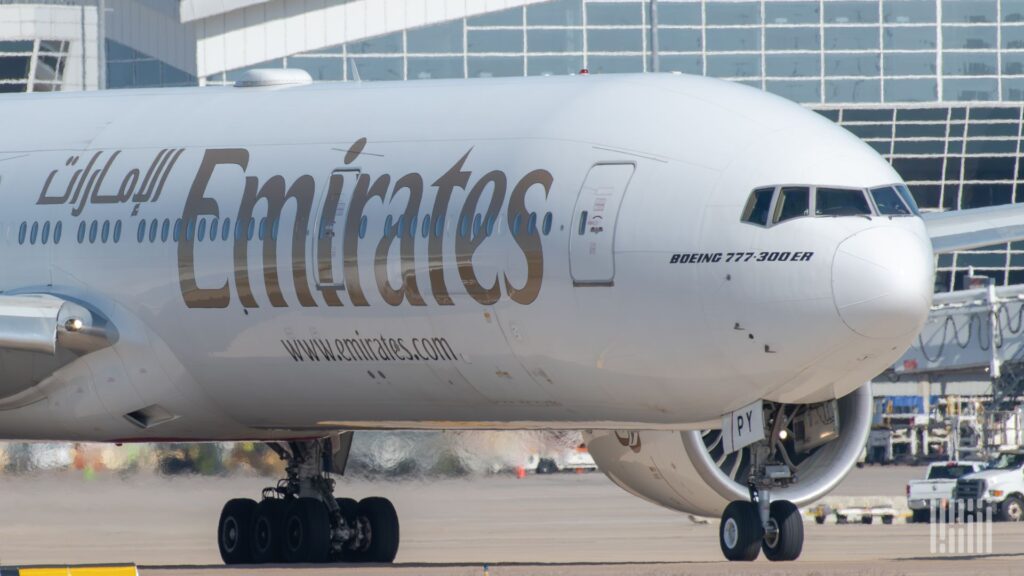
The exemption, granted last week, allows the U.S. aerospace giant to continue producing the workhorse freighter until beyond the Jan.
Without the exemption, Boeing would have been barred from selling the 777F after 2027, a scenario that threatened to deepen the capacity crisis. The FAA’s ruling, however, comes with strict conditions: the 35 exempted aircraft must be sold by beyond the Jan. 1, 2028 international deadline, and their additional fuel burn represents only a fraction of a percent of global aviation emissions. The exemption also aligns with International Civil Aviation Organization guidelines, which permit such waivers when next-generation alternatives are unavailable.
The capacity crunch: why freighters are now king
The air cargo market has undergone a seismic shift since the pandemic. Before COVID-19, widebody passenger aircraft carried roughly 50% of global air cargo in their lower holds. The imbalance is stark: while air cargo demand has climbed 4.7% year-over-year through August, capacity growth has barely kept pace, sending spot rates soaring by more than 25% compared to 2023.
“In 2019, Airbus and Boeing delivered 345 large passenger aircraft,” he notes. “Last year, that number was just 179. With engine quality issues and supply chain bottlenecks persisting, we’re on track for only marginal improvements in 2026.
The 777 freighter, a large widebody aircraft favored by carriers like FedEx, DHL, and Lufthansa Cargo, is the linchpin of long-haul, intercontinental routes. Boeing’s next-generation 777-8 freighter, which will comply with the new standards, isn’t expected to enter service until late 2028 or 2029, leaving a multi-year gap that the exemption now fills.
Boeing’s narrow window: 35 aircraft, three years, and a race against time
The FAA’s exemption is a narrowly tailored solution. Boeing may produce and sell 35 additional 777 freighters by beyond the Jan. 1, 2028 international deadline, a three-year window that the company must maximize to meet customer demand. Chamber of Commerce, all of which argued that the economic benefits outweighed the marginal environmental impact.
Yet the exemption is not without risks. While the FAA has extended flying privileges for the 777F beyond U.S. airspace, foreign governments retain the right to ban the aircraft from their skies, a potential headache for carriers like Korean Air, China Airlines, and Saudia, which have placed orders for the classic 777F in recent months. Boeing’s challenge is twofold: ramp up production to deliver the exempted aircraft on time while accelerating the development of the 777-8 to ensure a smooth transition once the waiver expires.
The stakes are high. Boeing estimates that without the exemption, it would lose $15 billion in export sales, a blow that could ripple through the U.S. aerospace supply chain. The company’s original plan to halt 777F production by the end of 2024 has been scrapped, and with Congress granting an additional five years to produce the 767 freighter, Boeing now faces a delicate balancing act: keep legacy programs alive while investing in next-generation platforms like the 777-8 and the Airbus A350 freighter, which is slated for a late 2027 debut.
For the air cargo industry, the exemption offers a temporary reprieve, but the underlying capacity crisis shows no signs of abating. With e-commerce growth slowing due to new import restrictions in the U.S. and Europe, the sector’s resilience will be tested in the coming years. Tom Crabtree observes, “By the end of 2030, Boeing will likely have delivered between 390 and 400 777 freighters, making it the most popular widebody freighter ever. But the real question is whether that will be enough to meet the demands of a global economy increasingly reliant on air logistics.”
“I believe that by the end of 2030, Boeing will probably have delivered between 390 and 400 units, based on my estimates, making it the most popular widebody freighter ever.”
Tom Crabtree·Air freight consultant
The FAA’s decision underscores the delicate balance between environmental goals and economic realities. While the exemption buys time for Boeing and its customers, it also highlights the fragility of an air cargo sector stretched thin by geopolitical disruptions, supply chain bottlenecks, and the relentless march of technological progress. For now, the 777F remains the industry’s stopgap, but its days are numbered, and the clock is ticking.


Sign up free to ask CAMAL AI for a summary, the key points or anything else about this story.
Related stories
CAMAL AI
 Financial Ports Newsletter
The maritime economy, every morning
Ports, shipping and freight markets in one short email. Free.
Financial Ports Newsletter
The maritime economy, every morning
Ports, shipping and freight markets in one short email. Free.



