

958 Ships Stranded: How Gulf Biofouling Is Costing Millions
Over 600 vessels idle for 100+ days in the Arabian Gulf face severe biofouling.
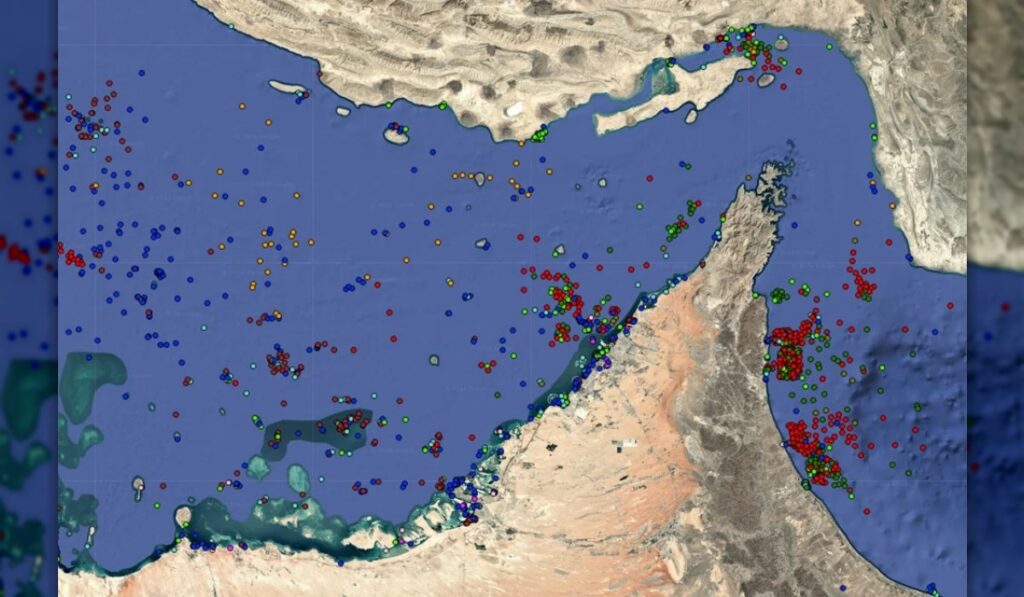
The Arabian Gulf’s shipping crisis has left 958 vessels stranded, with over 603 idle for more than 100 days, creating a perfect storm for biofouling. As marine growth accelerates on static hulls, operators face soaring fuel costs, regulatory penalties, and denied port access, threats that could cost the industry billions.
Marine growth begins within minutes of a hull meeting seawater, forming a slime layer of bacteria and algae. Over weeks, barnacles, mussels, and seaweed colonise the surface, increasing drag and reducing fuel efficiency. Jotun’s 2025 survey of 1,000 shipowners revealed that 50.4% had already experienced higher fuel consumption due to poor biofouling management, even before the Gulf’s prolonged anchorage crisis.
Why the Arabian Gulf is a Biofouling Hotspot
The Gulf’s warm waters, high salinity, and nutrient-rich runoff create ideal conditions for marine growth. Vessels anchored for months in these waters face accelerated fouling, particularly when antifouling coatings degrade from prolonged inactivity. The result?
The environmental risks extend beyond operational inefficiencies. Invasive species hitchhiking on fouled hulls can disrupt local ecosystems, prompting stricter enforcement by coastal states.
For operators, the challenge is twofold: managing the immediate financial impact of fouling while navigating a patchwork of global regulations. Vessels failing inspections face costly delays, mandatory cleaning, or even expulsion from Australian waters. But the regulatory landscape is evolving.
Global Regulatory Crackdown: Who’s Enforcing What?
Australia’s Biosecurity Act 2015 requires vessels to demonstrate proactive biofouling management through cleaning, a Biofouling Management Plan, or pre-approved methods. Non-compliance can mean mandatory cleaning or outright denial of entry.
California’s regulations, under the California Code of Regulations, require vessels of 300 GT or larger to maintain a Biofouling Management Plan and Record Book. Vessels idle for more than 45 days face extra scrutiny.
Jotun’s 2025 survey found that 41% of respondents faced regulatory penalties, while 38% were denied port access. Nearly half, 49%, now avoid ports with stringent biofouling rules, a strategy that grows riskier as more jurisdictions tighten regulations.
The Asia Pacific region has emerged as a focal point for biofouling enforcement, with Australia and New Zealand leading the charge. Australia’s Biosecurity Act 2015 is one of the most stringent in the world, requiring vessels to demonstrate compliance through one of three methods: recent cleaning, a Biofouling Management Plan, or pre-approved alternative measures.
New Zealand’s approach is equally rigorous, with vessels assessed against clean hull thresholds before being granted entry. Both nations have invested heavily in inspection infrastructure, including underwater drones and diver teams, to enforce their regulations.
Biofouling doesn’t just increase fuel consumption, it also heightens the risk of mechanical failures. Fouled hulls can clog seawater intakes, leading to overheating in critical systems such as engines and cooling units. In extreme cases, this can cause engine damage or even total failure, leaving vessels stranded at sea. For operators, the cost of such failures can run into millions of dollars, not including the reputational damage of delays or accidents.
Security risks are another growing concern. Law enforcement agencies, including Pole Star Global, have documented cases of smugglers exploiting fouled hulls to transport contraband. Illegal packages can be attached to underwater cavities, evading detection during routine inspections.
The Arabian Gulf’s prolonged anchorage crisis has exacerbated this risk, as vessels remain static for extended periods, making them easier targets for criminal activity. Operators are now advised to conduct thorough underwater inspections before resuming service, with diver surveys and ROV inspections recommended as best practice.
For shipowners and charterers, the message is clear: biofouling management is no longer optional. Capt. Harshvardhan Kumar, Director of Marine Technical Services at Charles Taylor, warns that prolonged delays in the Gulf could lead to “higher fuel costs, added maintenance, and compliance exposure”, a triple threat that no operator can afford to ignore. Kumar’s advice underscores the need for proactive measures, including regular hull inspections and adherence to global biofouling standards.
Hull inspections are now critical. Operators should watch for telltale signs: declining speed, rising fuel consumption, or increased engine loading. Diver surveys and ROV inspections are the most reliable methods to assess fouling levels. But inspections alone aren’t enough. Security measures must be tightened during underwater cleaning to prevent contraband smuggling, a growing concern as law enforcement agencies document cases of illegal packages attached to hulls.
The biofouling crisis in the Arabian Gulf is a microcosm of broader challenges facing the maritime industry. As global trade routes become more congested and environmental regulations tighten, operators must adapt or risk falling behind. The 958 stranded vessels in the Gulf are a stark reminder of the financial and operational risks of prolonged inactivity, but they also present an opportunity for the industry to rethink its approach to biofouling management.
For shipowners, the path forward is clear: invest in proactive biofouling management, prioritise regular hull inspections, and stay ahead of regulatory changes. The cost of compliance may be high, but the cost of non-compliance is higher. With nations like Brazil and California leading the charge in enforcement, the industry can expect more jurisdictions to follow suit. Operators who fail to adapt risk not only financial penalties but also reputational damage, as ports increasingly prioritise vessels with clean hulls and robust biofouling management plans.
Technology is playing an increasingly important role in addressing these challenges. Companies like MarineTraffic and Weathernews are leveraging AIS data and predictive analytics to help operators monitor vessel performance and anticipate biofouling risks. Meanwhile, advancements in antifouling coatings, such as those developed by Jotun, are providing more durable and environmentally friendly solutions. These innovations, combined with stricter regulations, are driving a shift toward more sustainable and efficient maritime operations.
As the Gulf crisis drags on, the industry faces a stark choice: treat hull inspections as a condition for returning to service or risk financial and regulatory fallout. With 958 vessels still stranded, the clock is ticking. For operators, the time to act is now, before the next regulatory crackdown leaves them scrambling to comply.
For those seeking to stay ahead of the curve, official channels such as the IMO’s biofouling guidelines and national regulatory bodies like Australia’s Department of Agriculture, Fisheries and Forestry provide up-to-date information on compliance requirements. Operators are also encouraged to consult industry reports, such as Jotun’s 2025 survey, to benchmark their biofouling management practices against global standards.


Sign up free to ask CAMAL AI for a summary, the key points or anything else about this story.
Related stories
CAMAL AI
 Financial Ports Newsletter
The maritime economy, every morning
Ports, shipping and freight markets in one short email. Free.
Financial Ports Newsletter
The maritime economy, every morning
Ports, shipping and freight markets in one short email. Free.



