

Chevron Drops $2bn Guyana Port Study as Oil Giants Clash
The US oil major withdraws funding for the Berbice deepwater port feasibility study.
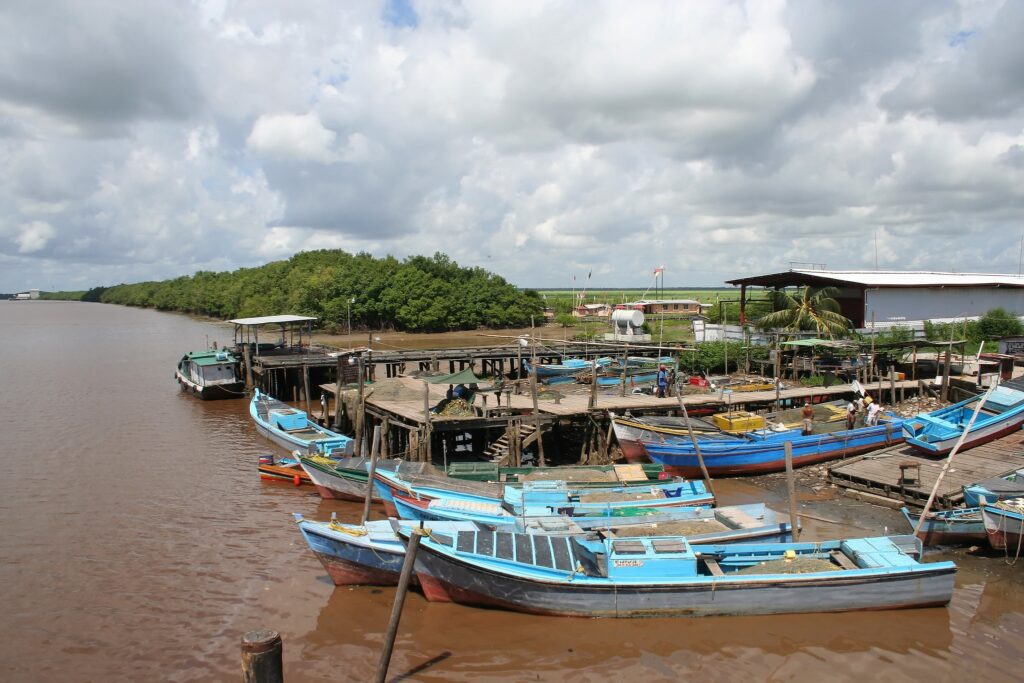
The decision was confirmed last week by Harry Pastuszek, Guyana Engineering Director at Bechtel, the American engineering firm leading the project’s initial design. Pastuszek revealed that Hess Corporation, which Chevron acquired in el año pasado, had previously financed the pre-front-end engineering and design (pre-FEED) phase.
The proposed facility would not only serve offshore energy operations but also include an industrial complex featuring data centres, a fertilizer plant, and a refinery.
Bechtel completed the pre-FEED phase in 2023, but the project has stalled due to the lack of funding for the full feasibility study. “Hess financed the preliminary engineering and design for the project,” he stated, adding that there was “no shade thrown at Chevron” for its decision.
The country’s main port, Georgetown, is constrained by a shallow channel with a maximum allowable draft of just 9.7 metres. This limitation restricts access for larger vessels, including those servicing the offshore oil and gas industry, which is centred around the Stabroek Block.
The Stabroek Block, operated by ExxonMobil with a 45% stake, is Guyana’s most valuable offshore asset. Chevron’s acquisition of Hess in 2025 secured it a 30% interest in the block, while China National Offshore Oil Corporation (CNOOC) holds the remaining 25%. Production from the block is expected to ramp up through 2030, increasing the need for deeper port facilities to handle specialised vessels and equipment.
The Berbice port was envisioned as a solution to these logistical challenges. Its deepwater design would accommodate larger ships, reducing reliance on transshipment hubs in neighbouring countries and lowering costs for Guyana’s energy sector. The port’s strategic location near the Atlantic Coast would also position Guyana as a key player in regional trade, particularly for northern Brazil, a market with limited direct access to deepwater ports.
Funding Uncertainty and Alternative Backers: berbice deepwater port
Chevron’s withdrawal has forced Guyana to seek alternative funding sources to complete the feasibility study. The Export-Import Bank of the United States (EXIM) has already pledged support for the phase three engineering design study, following a meeting between Guyana’s President, Mohammed Irfaan Ali, and EXIM Chairman John Jovanovic in New York last month. However, the bank’s commitment covers only a portion of the overall costs, leaving a significant funding gap.
President Ali has also indicated that Qatar has expressed interest in participating in the port’s development, though no formal agreements have been announced. The involvement of international partners underscores the project’s geopolitical significance, particularly as Guyana seeks to diversify its economic partnerships amid its energy boom.
The feasibility study, which would update the findings of the 2016 IDB report, is critical to attracting further investment. Without it, the project cannot progress to the detailed engineering and construction phases. Bechtel’s Pastuszek emphasised that several development partners had shown interest in the port, but none could proceed without the study’s completion.
What’s Next for Guyana’s Maritime Ambitions?
Guyana’s government faces a tight timeline to secure funding and revive the Berbice port project. The country’s energy sector is expanding rapidly, with offshore production set to double by 2030. Delays in port infrastructure could bottleneck logistics, increasing costs for operators and potentially slowing investment in the Stabroek Block.
For now, the focus remains on completing the feasibility study. EXIM’s involvement is a positive sign, but Guyana will need additional backers to bridge the funding gap. The government has not ruled out public-private partnerships or direct investment from energy companies operating in the Stabroek Block, though Chevron’s withdrawal complicates those efforts.
Industry observers will be watching closely to see whether Qatar or other Gulf states step in to fill the void left by Chevron. The port’s development is not just a logistical necessity but a strategic opportunity for Guyana to cement its role as a regional energy and trade hub. With the right funding and partnerships, the Berbice deepwater port could still become a reality, but the clock is ticking.


Sign up free to ask CAMAL AI for a summary, the key points or anything else about this story.
Related stories
CAMAL AI
 Financial Ports Newsletter
The maritime economy, every morning
Ports, shipping and freight markets in one short email. Free.



