

Blackout at the Dock: What Happens When a Port’s Automation Fails?
A single software crash can paralyse an entire terminal, leaving ships stranded and cargo lost in the dark.
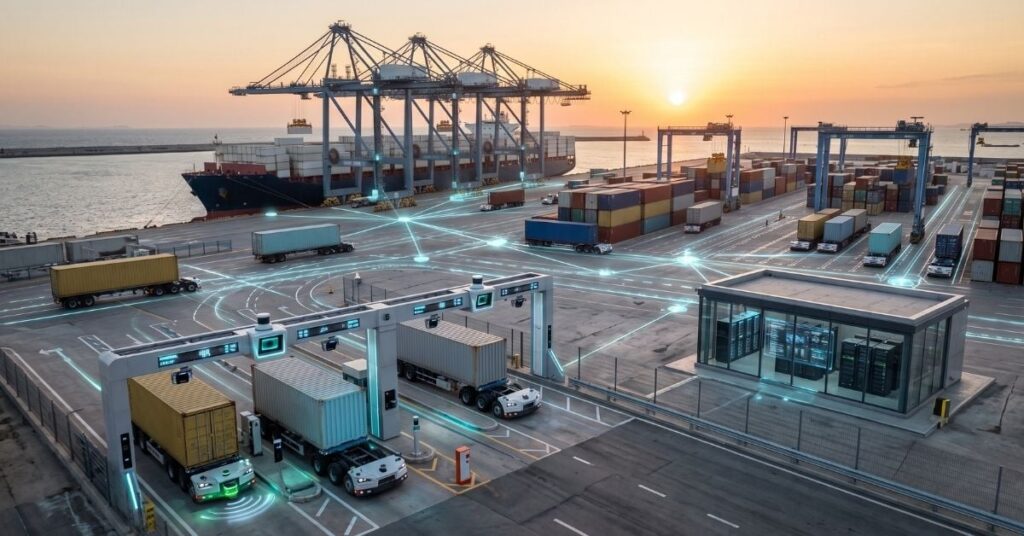
A single software crash in an automated port terminal can plunge operations into chaos, leaving operators blind to cargo locations, crane movements, and vessel schedules.
Modern ports rely on automation to streamline operations, but the interconnected nature of these systems creates a critical vulnerability. A failure in one component, whether a crane, automated guided vehicle (AGV), or gate system, can trigger a data blackout, crippling the entire terminal. Unlike conventional ports, where manual overrides and radio coordination can mitigate disruptions, automated terminals lack this flexibility. The result?
How a TOS Failure Paralyses a Terminal
A Terminal Operating System is the digital backbone of an automated port, integrating real-time data from cranes, AGVs, and gate operations. When functioning, it ensures seamless coordination between vessels, trucks, and storage yards. But when the system goes dark, operators lose visibility over cargo locations, movement schedules, and equipment status. Cranes may stop mid-lift, AGVs idle without instructions, and trucks pile up at gates, all while ships wait offshore, racking up costly delays.
Silver
However, the terminal’s experience highlights the challenges of transitioning from conventional operations to fully automated systems without robust contingency planning.
Unlike traditional ports, where human operators can step in with radio instructions or paper logs, automated terminals lack this fallback. Mechanical equipment like cranes and AGVs can still be operated manually, but without real-time data, cargo movement becomes inefficient and error-prone. The consequences extend beyond the terminal: shipping schedules unravel, trucking companies face detention fees, and importers incur demurrage charges for delayed containers.
The shift toward automation is driven by the need to handle larger vessels and higher cargo volumes, but the risks of system failures cannot be ignored.
Designing Resilient Automation: Lessons from Auckland’s Failure
The collapse of Auckland’s automation project underscores the need for fail-safe TOS design. Modular design allows individual components to fail without crashing the entire system, while zoning ensures that disruptions remain contained. Offline functionality, meanwhile, enables critical operations to continue even during a network outage.
For port authorities, the return on investment (ROI) in automation must now account for fail-safety. Recovery time, manual fallback options, and cybersecurity protocols are no longer optional, they are prerequisites for sustainable automation. The alternative? A digital blackout that costs millions in lost productivity and supply chain disruptions. Ports must also consider the human element: training staff to manage both automated and manual operations ensures that terminals can adapt quickly to system failures, minimising downtime and maintaining service levels.
As ports worldwide accelerate their automation efforts, the Auckland case serves as a cautionary tale. The promise of efficiency and cost savings must be balanced against the risks of over-reliance on interconnected systems. Without robust contingency plans, a single software crash can bring an entire terminal to a standstill, with consequences that reverberate far beyond the docks.
For stakeholders, from shipping lines to importers, the message is clear: automation is not a silver bullet. It requires careful planning, rigorous testing, and a commitment to resilience to deliver on its potential.
While the benefits of digitalisation are undeniable, the risks demand a more measured approach. Ports must prioritise fail-safe design, invest in cybersecurity, and ensure that staff are equipped to handle both automated and manual operations. For terminal operators, the question is no longer whether to automate, but how to do so without compromising reliability or resilience.
For readers involved in global trade, logistics, or port management, the implications are direct. Automation failures can lead to delays, increased costs, and supply chain bottlenecks that affect businesses and consumers alike. To mitigate these risks, stakeholders should engage with software providers that offer modular, offline-capable systems and prioritise cybersecurity. Additionally, maintaining open lines of communication with port authorities and logistics partners can help anticipate and address potential disruptions before they escalate.
Looking ahead, the next frontier in port automation lies in integrating artificial intelligence and machine learning to predict and prevent system failures. However, these advancements must be underpinned by robust infrastructure and contingency planning. For now, the lessons from Auckland’s Fergusson Container Terminal remain a critical reference point for the industry, reminding operators that efficiency must never come at the expense of resilience.


Sign up free to ask CAMAL AI for a summary, the key points or anything else about this story.
Related stories
CAMAL AI
 Financial Ports Newsletter
The maritime economy, every morning
Ports, shipping and freight markets in one short email. Free.
Financial Ports Newsletter
The maritime economy, every morning
Ports, shipping and freight markets in one short email. Free.



