

Oman’s Asyad bets $411m on eight MR tankers—all chartered
Oman’s Asyad Shipping has ordered two more 49,999 dwt MR product tankers from HD Hyundai Heavy Industries.
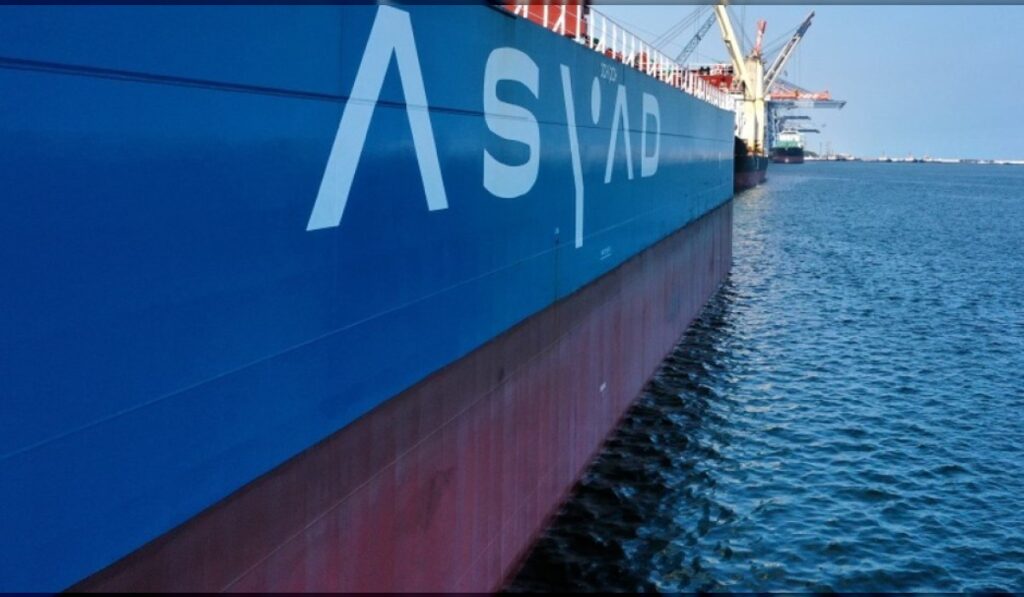
Oman’s Asyad Shipping has doubled down on its charter-backed MR product tanker programme, ordering two more 48,888 dwt vessels from HD Hyundai Heavy Industries, just two months after booking the first six. The latest pair, priced at OMR38.88m ($103.6m), will deliver in 2028 and are already locked into five-year time charters with a global energy major, mirroring the terms of the earlier order.
The follow-on order lifts Asyad’s investment in the eight-ship series to OMR158.8m ($411.6m), a sum that underscores the state-backed owner’s confidence in the product tanker market. All eight vessels will be sister ships, built to the same 48,888 dwt design, and will join a diversified fleet that already numbers more than 80 ships across crude tankers, dry bulk, gas, and liner sectors. Total fleet capacity stands at 11.4m dwt, with 35 product tankers currently in service.
Why Asyad is chartering before steel is cut
The decision to secure five-year charters before construction begins is a calculated move to de-risk the newbuild programme. Asyad’s latest fleet overview reveals that contracted revenue already extends beyond 2030, with $2.2bn in commitments on the books at the end of 2025. The eight MR tankers will add to that backlog, providing visibility in a market where spot rates can swing sharply.
Safe Bulkers
The unnamed charterer, a leading global energy company, according to Asyad, has effectively underwritten the entire series, giving the Omani owner cover against potential downturns. This strategy aligns with Asyad’s broader growth plan, which has seen the company aggressively expand since its March 2025 listing on the Muscat Stock Exchange. In the past year alone, Asyad has added 11 vessels to its fleet, including two 2023-built kamsarmax bulkers acquired for $72.7m in April and two 100,309,308 dwt baby capes purchased for $75.8m in May, both backed by multi-year charters.
What the eight MR tankers mean for Asyad’s fleet
The eight MR tankers will bolster Asyad’s product tanker segment, which currently accounts for 35 of the company’s 80+ vessels. The newbuilds will replace older tonnage and support the owner’s push into cleaner fuel logistics, a sector that is gaining traction as the maritime industry decarbonises. The 48,888 dwt design is optimised for regional trades in the Middle East and Asia, where demand for refined products is growing.
Financing for the latest pair is split between existing cash reserves and debt, a structure that reflects Asyad’s disciplined approach to capital allocation. The company’s ability to secure charters before construction begins has likely eased negotiations with lenders, reducing the risk premium on the financing package.
With deliveries set for 2028, Asyad will have a window to assess market conditions before the vessels enter service. However, the five-year charters provide a buffer, ensuring that the ships will generate revenue from day one. The move also signals Asyad’s long-term commitment to the product tanker sector, which remains a key pillar of its diversified fleet strategy.
“A leading global energy company has committed to five-year time charters for all eight MR tankers, securing revenue before the first steel is cut.”
Asyad spokesperson·Company representative
The order comes at a time when other Middle Eastern owners are also ramping up newbuilding activity, but Asyad’s charter-backed approach sets it apart. By locking in employment early, the company is insulating itself from the volatility that has roiled the tanker market in recent years. The strategy also aligns with Oman’s broader economic diversification efforts, which have seen the government-backed owner play an increasingly prominent role in global shipping.


Sign up free to ask CAMAL AI for a summary, the key points or anything else about this story.
Related stories
CAMAL AI
 Financial Ports Newsletter
The maritime economy, every morning
Ports, shipping and freight markets in one short email. Free.
Financial Ports Newsletter
The maritime economy, every morning
Ports, shipping and freight markets in one short email. Free.