

4,000 Athletes to Live on Cruise Ship at 2026 Asian Games—Here’s Why
Japan scraps costly athletes' village plan, opting for Italy-flagged Costa Serena at Nagoya Port instead.
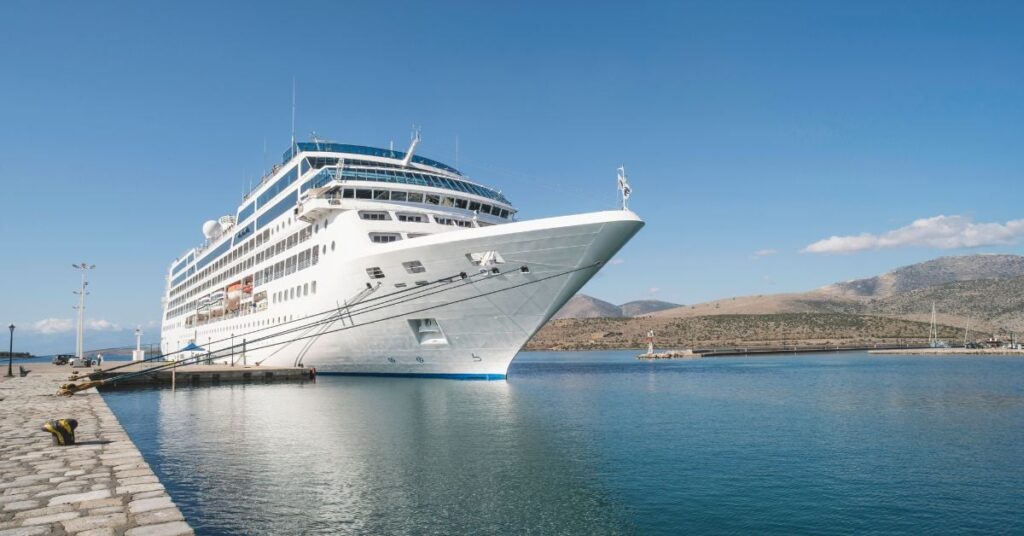
Japan has ditched plans for a traditional athletes’ village at the 2026 Asian Games, opting instead to house 4,000 athletes and officials aboard the 290-metre cruise ship Costa Serena. Italy-flagged vessel, which will be anchored at Nagoya Port, marks the first time a ship has been used for an international sporting event of this scale in Japan.
“The government initially planned to build an athletes’ village, but the costs proved prohibitive,” he told media. The Costa Serena offers a ready-made solution, complete with amenities that mirror those of a high-end hotel, without the need for long-term infrastructure investment.
The ship’s 1,500 rooms will be allocated to ensure parity among delegations. “We will designate multiple types of cabins to every country’s athletes so there is no difference in treatment,” Hayakawa said. However, with only six cabin types available, organisers have acknowledged that customisation will be limited. “The decor cannot be changed in such a short time,” he added.
Safety and logistics have been prioritised. In the event of a typhoon or rough weather, the Costa Serena will be moved offshore to avoid high waves. Customs, quarantine rules, and other regulations applicable to foreign-flagged vessels in Japan will also apply, with authorities confirming that all checks will be completed well in advance to prevent last-minute complications.
No Traditional Village: A First for the Asian Games
The 2026 Asian Games will be the first in the event’s history without a traditional athletes’ village. Instead, participants will be spread across a patchwork of accommodation, including the Costa Serena, wooden modular homes, and hotels, some located hundreds of kilometres from competition venues.
The decision to forgo a centralised village has drawn both praise and criticism. Proponents argue that it reduces costs and environmental impact, while critics warn of logistical challenges, including transport delays and reduced interaction among athletes.
Organisers have assured that all registered participants will have Games-appropriate lodging, though the dispersed model has raised concerns about transport and cohesion. “We are making one decision at a time, given there are no precedents,” Hayakawa admitted. “There is a lot of pressure on us to get this right.”
The modular homes, a key part of the accommodation plan, are being constructed in designated zones near competition venues. These structures, made from sustainable materials, are designed to be dismantled and reused after the Games, aligning with Japan’s commitment to reducing waste. Hotels, meanwhile, are being secured through partnerships with local chains, with rooms allocated based on proximity to event sites.
For athletes and officials, the accommodation arrangements will require careful planning. Delegations will receive detailed itineraries outlining transport schedules, meal times, and access to training facilities. The OCA has also confirmed that all sites will meet international standards for accessibility, security, and comfort, with medical and support staff stationed at key locations.
Preparations at Nagoya Port are in their final stages. General stores, shops, and temporary booths are being set up near the quay, while traffic lanes leading to the port are being secured to streamline boarding and disembarkation. With the Games less than a year away, the Costa Serena is set to become a symbol of innovation, and compromise, in large-scale sporting events.
What This Means for Participants and Spectators
The use of a cruise ship and dispersed accommodation will have tangible implications for those attending the 2026 Asian Games. Athletes staying on the Costa Serena will benefit from on-board amenities such as gyms, pools, and dining facilities, which could enhance their pre-competition routines. However, the ship’s location at Nagoya Port, while central, may require additional travel time to venues, particularly those outside the city centre.
Spectators, too, will need to adapt to the new model. With no centralised athletes’ village, opportunities for fan interactions may be limited, though organisers have promised to create designated zones where supporters can gather. The OCA has also confirmed that shuttle services will be available for ticket holders, ensuring smooth access to competition sites.
For the host city, the decision to use a cruise ship reflects broader challenges in balancing cost, capacity, and sustainability. Nagoya, a major industrial and cultural hub in central Japan, has long been a key player in the country’s maritime and logistics sectors. The city’s port, one of the largest in the region, handles millions of tonnes of cargo annually and is a critical gateway for trade with Asia and beyond. Its selection as the host for the 2026 Asian Games underscores its infrastructure capabilities, though the accommodation experiment will be closely watched by future host cities.
The 2026 Asian Games are expected to draw tens of thousands of visitors to Aichi-Nagoya, providing a boost to the local economy. Hotels, restaurants, and transport providers are preparing for an influx of tourists, with many businesses already offering Games-themed packages. The event will also serve as a test for Japan’s ability to host large-scale international gatherings, following the 2020 Tokyo Olympics and the 2019 Rugby World Cup.
As the Games approach, organisers are urging participants and spectators to stay informed through official channels.
For those planning to attend, the official ticketing platform (tickets.ainagoc2026.jp) will provide details on event schedules, venue access, and shuttle services. The OCA has also confirmed that a mobile app will be released in early 2026, offering real-time updates on transport, weather, and emergency protocols.
With the Games set to open on September 19, 2026, the focus remains on ensuring a seamless experience for all involved. The Costa Serena and the broader accommodation strategy will be a defining feature of the event, offering a glimpse into the future of large-scale sporting logistics.


Sign up free to ask CAMAL AI for a summary, the key points or anything else about this story.
Related stories
CAMAL AI
 Financial Ports Newsletter
The maritime economy, every morning
Ports, shipping and freight markets in one short email. Free.



