

Antarctica’s $620m Data Lifeline: The Cable That Could End Suitcase Science
Chile’s feasibility study maps a 4,100 km fibre-optic link to revolutionise polar research.
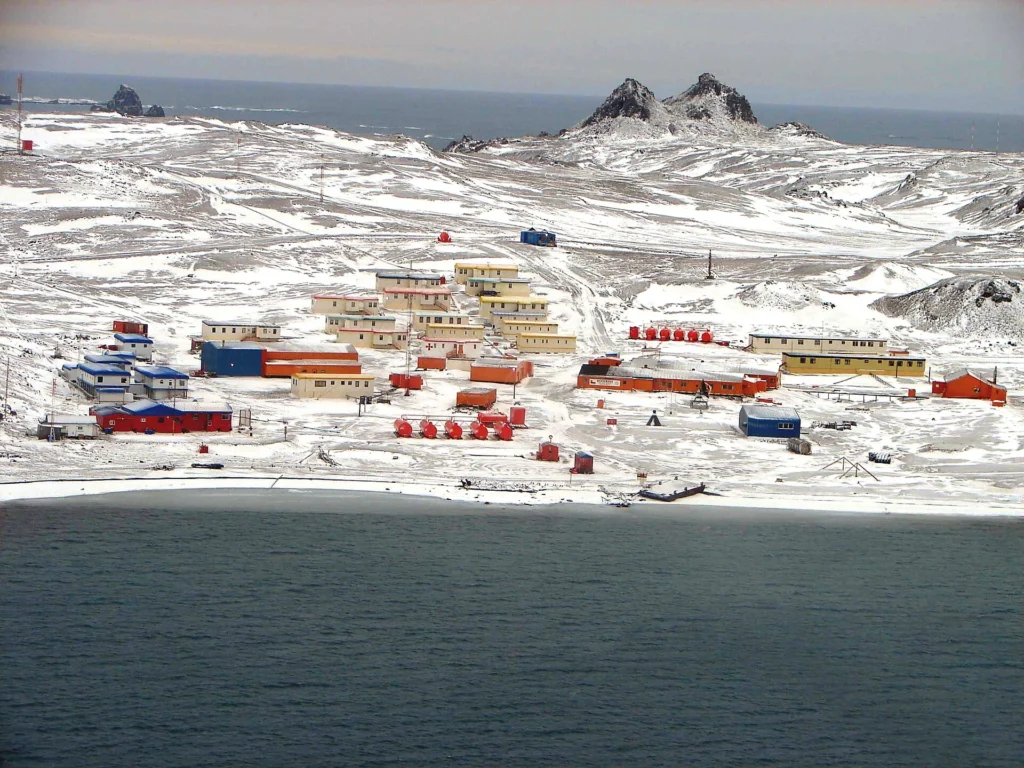
Chile has taken a decisive step toward connecting Antarctica to the world’s fiber-optic network, completing a year-long feasibility study that confirms the project’s technical viability. The report, finalized last week, was conducted by Salience Consulting and Pioneer Consulting under the supervision of Chile’s telecommunications regulator, Subtel. The study, which spans nearly 2,000 pages, evaluated 55 Antarctic facilities and was funded by the Development Bank of Latin America and the Caribbean (CAF) and China’s state-backed Multilateral Cooperation Center for Development Finance (MCDF).
The study outlines two potential routes for the subsea cable. The first, a base configuration, would link Punta Arenas and Punta Williams in Chile’s Magallanes region to three Chilean Antarctic bases. This route would cover approximately 1,600 kilometers and cost an estimated $370 million. The second, a more ambitious full configuration, would extend 4,100 kilometers to connect nine landing points across Antarctica, including bases operated by Chile, Argentina, Brazil, the United States, and the United Kingdom. This expanded route is projected to cost $620 million.
The cable promises to revolutionize scientific research on the continent. Currently, data collected in Antarctica is transported physically, stored on hard drives and carried off the continent by ship or plane. Juan Pablo, a team leader in the pre-feasibility study, highlighted the transformative potential of real-time data transmission.
Royal Caribbean
“With the cable, the data will travel instantly. Smart sensors embedded in the fiber will also allow the cable itself to function as a scientific tool, measuring temperature, pressure, and seismic activity in real time from the depths of the Drake Passage,” he explained.
Two Routes, One Goal: Bridging Antarctica’s Digital Divide
While the technology to implement the project exists, the study identifies two critical hurdles: securing financing and gaining political support from Antarctic Treaty nations. The feasibility report has been submitted to Chile’s Ministry of Foreign Affairs, which will present the findings to the country’s Antarctic Policy Council for final deliberations. If approved, the Council will lead efforts to coordinate with other nations, a process expected to take around eight years.
The success of the project hinges on aligning the interests of the five countries with Antarctic bases. Should it move forward, the cable would not only accelerate scientific research but also integrate Antarctica into the global digital infrastructure, ending its isolation from real-time data networks.


Sign up free to ask CAMAL AI for a summary, the key points or anything else about this story.
Related stories
CAMAL AI
 Financial Ports Newsletter
The maritime economy, every morning
Ports, shipping and freight markets in one short email. Free.
Financial Ports Newsletter
The maritime economy, every morning
Ports, shipping and freight markets in one short email. Free.



