Antarctica’s data bottleneck: $620m cable to end ‘suitcases of hard drives’
A 4,100 km subsea fibre link across the Drake Passage could slash Antarctica’s reliance on physical data transport by.
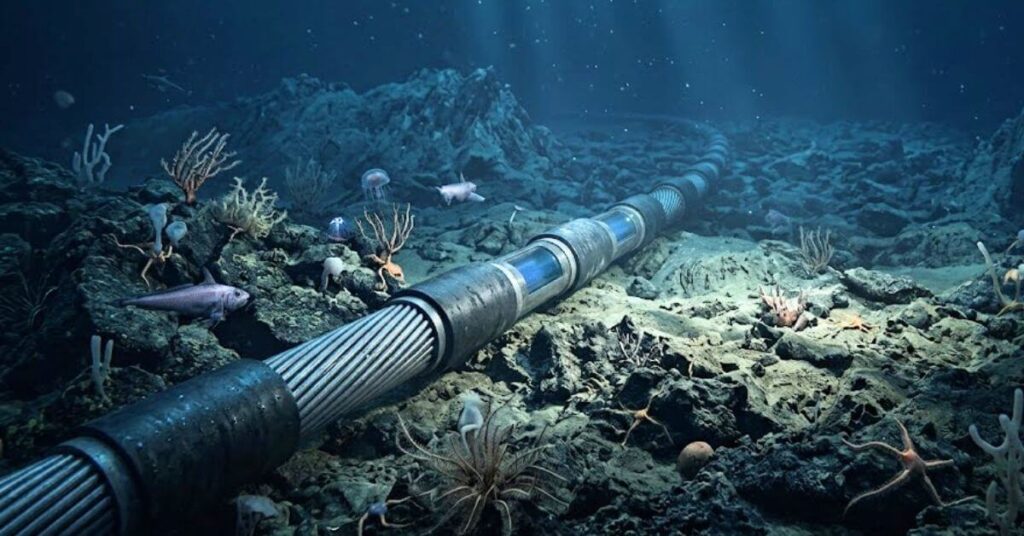
Antarctica could soon ditch its reliance on hard drives and satellites for scientific data transfer, thanks to a proposed 4,100-kilometre undersea fibre-optic cable across the Drake Passage. A feasibility study by Chile’s telecommunications regulator, Subtel, has confirmed the project is technically viable, though funding and international approvals remain hurdles.
The ambitious plan would connect nine Antarctic landing points to southern Chile, serving research bases operated by Chile, Argentina, Brazil, the United States, and the United Kingdom.
The proposed cable would change that. The larger cable option, costing an estimated $620 million, would span 4,100 km from Punta Arenas and Puerto Williams in southern Chile to key research hubs on the Antarctic Peninsula. A smaller, 1,600-km alternative, costing $370 million, would serve facilities around King George Island and the northern Antarctic Peninsula.
The study, conducted by Salience Consulting and Pioneer Consulting, assessed 55 Antarctic facilities and considered two cable configurations.
The Cable That Could Do More Than Just Connect: Antarctica
Beyond internet connectivity, the proposed cable could serve as a scientific tool in its own right. The study recommends equipping the cable with SMART sensors to monitor ocean floor conditions, including temperature, pressure, and seismic activity.
However, the project faces significant technical and geopolitical hurdles. Ice scour near Antarctic landing sites and the risk of iceberg damage require specialised cable protection.
The project’s financing also introduces geopolitical complexities. The study was partially supported by the Multilateral Cooperation Center for Development Finance (MCDF), a Beijing-based institution linked to China’s Belt and Belt and Road Initiative.
Six companies, including France’s Alcatel Submarine Networks, Japan’s NEC, and China’s HMN Technologies (formerly Huawei Marine Networks), were consulted during the feasibility phase. HMN Technologies, now owned by Hengtong after U.S. sanctions in 2020, remains a key player in global subsea cable projects, raising questions about supply chain dynamics.
Chile has already submitted the study’s findings to its Ministry of Foreign Affairs for review by the Antarctic Policy Council. However, securing agreements with other Antarctic Treaty signatories and raising the necessary funding could take up to eight years. If approved, the cable would mark a historic shift in Antarctic research, enabling real-time collaboration and reducing the continent’s digital isolation.
For scientists working in Antarctica, the benefits would be immediate. Instead of waiting weeks for hard drives to reach laboratories abroad, researchers could upload terabytes of data in seconds. This would accelerate discoveries in fields like glaciology, astrophysics, and marine biology, where timely data analysis is critical. The cable could also support remote monitoring of experiments, reducing the need for year-round human presence in some of the planet’s most extreme environments.
The project’s success hinges on international cooperation. The Antarctic Treaty System, which governs the continent, requires consensus among its 54 signatory nations. Any objections, whether technical, environmental, or political, could delay or derail the initiative. Environmental impact assessments will also be crucial, given the delicate ecosystems of the Southern Ocean and the potential risks of cable installation in pristine waters.
If the project proceeds, it would join a growing network of undersea cables that form the backbone of global internet infrastructure. However, Antarctica’s unique challenges, from sub-zero temperatures to shifting sea ice, mean this cable would be unlike any other. The lessons learned could pave the way for future subsea projects in polar regions, including potential links to the Arctic.
For now, the world’s southernmost continent remains offline. But with Chile’s feasibility study complete, the dream of a fibre-connected Antarctica is one step closer to reality.
Sign up free to ask CAMAL AI for a summary, the key points or anything else about this story.
Related stories
Financial Ports Newsletter
The maritime economy, every morning
Ports, shipping and freight markets in one short email. Free.