

World’s First Ammonia Bunker Vessel Hits the Water
A 5,500 m³ gas carrier has been converted into the first operational ammonia bunker vessel.
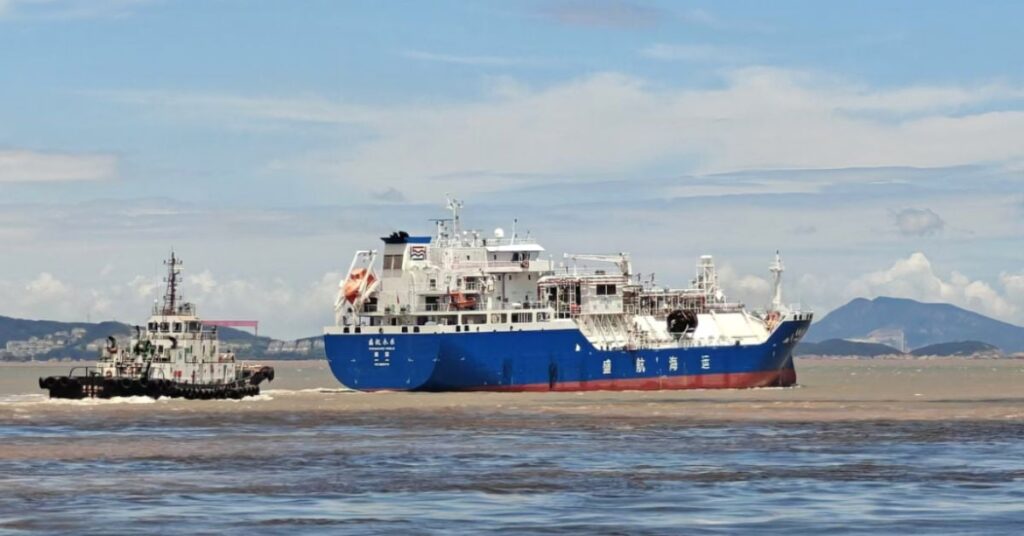
The maritime industry’s first operational ammonia transport and bunkering vessel has entered service, marking a critical step toward zero-carbon shipping. The Shenghang Yongle, a converted 5,500 m³ gas carrier, is now capable of delivering liquid ammonia as fuel through ship-to-ship bunkering, a milestone that closes a major gap in the ammonia supply chain.
The vessel, originally designed by FKAB Marine Design and built by China Merchants Shipbuilding Industry Dingheng shipyard, was upgraded from a conventional ammonia carrier into a dual-purpose asset. The conversion was led by Jiangsu Andefu Energy Development, with technical documentation provided by FKAB and cargo handling supplier Gloryholder.
How the Shenghang Yongle was transformed into a bunkering vessel: ammonia bunkering vessel
The Shenghang Yongle was not built from scratch for this role. Instead, it was retrofitted from an existing semi-refrigerated and semi-pressurised liquefied gas carrier, designed to carry multiple cargoes, including ammonia, LPG, and vinyl chloride monomer.
Natural Gas
The conversion process involved extensive modifications to the vessel’s bunkering system, including the development of new operating procedures, comprehensive risk assessments, and enhanced safety and emergency-response protocols. Particular attention was given to the unique challenges posed by ammonia, such as its toxicity, material compatibility issues, and the need for precise leak detection during bunkering operations.
The vessel’s design flexibility played a key role in its successful conversion. Originally developed by FKAB Marine Design, the Shenghang Yongle was built with operational versatility in mind, allowing it to adapt to evolving industry demands. This project underscores the importance of designing vessels with long-term adaptability, as well as the value of maintaining detailed technical knowledge throughout a vessel’s lifecycle. FKAB’s involvement in both the original design and the conversion process ensured seamless integration of the new bunkering capabilities.
Why ammonia bunkering is a game-changer for zero-carbon shipping
Ammonia is increasingly regarded as one of the most promising zero-carbon marine fuels, particularly when produced using renewable energy. However, its widespread adoption has been hindered by a lack of infrastructure, including production, storage, transport, and bunkering capabilities. The entry into service of the Shenghang Yongle addresses one of the most critical gaps in this supply chain: the absence of operational ammonia bunkering vessels.
The vessel’s ability to deliver ammonia as fuel through ship-to-ship bunkering is a significant step forward for the maritime industry. It demonstrates that existing ammonia-capable gas carriers can be effectively repurposed to support the transition to cleaner fuels, reducing the need for entirely newbuild vessels.
The Shenghang Yongle is managed by Shenghang Shipping Co., Ltd. and is designed for unrestricted navigation, allowing it to operate in a wide range of maritime environments.
The conversion of the Shenghang Yongle also highlights the collaborative efforts required to advance zero-carbon shipping. The project brought together key industry players, including Jiangsu Andefu Energy Development, FKAB Marine Design, Gloryholder, and China Classification Society, to address the technical, operational, and regulatory challenges associated with ammonia bunkering. Their combined expertise has paved the way for future developments in this space, setting a precedent for similar projects worldwide.
For shipowners and operators, the availability of ammonia bunkering infrastructure is a critical factor in the decision to invest in ammonia-fuelled vessels. The Shenghang Yongle’s entry into service provides a tangible example of how the industry can overcome one of the most significant barriers to ammonia adoption. As more vessels like this come online, the maritime sector will be better positioned to meet its decarbonisation targets and reduce its reliance on fossil fuels.
The implications of this development extend beyond the maritime industry. Ammonia’s potential as a zero-carbon fuel also makes it a key player in the broader energy transition, particularly in sectors where electrification is not feasible.
Looking ahead, the success of the Shenghang Yongle is likely to inspire further investments in ammonia bunkering infrastructure. The maritime industry’s journey toward zero-carbon shipping is far from over, but the entry into service of the world’s first operational ammonia bunkering vessel marks a decisive step forward.


Sign up free to ask CAMAL AI for a summary, the key points or anything else about this story.
Related stories
CAMAL AI
 Financial Ports Newsletter
The maritime economy, every morning
Ports, shipping and freight markets in one short email. Free.
Financial Ports Newsletter
The maritime economy, every morning
Ports, shipping and freight markets in one short email. Free.



