

84.6% of Urgent Maritime Alerts Linked to Weather
Inmarsat’s new Maritime Safety Data Hub analyses 106,975 safety broadcasts to forecast storms and geopolitical threats.
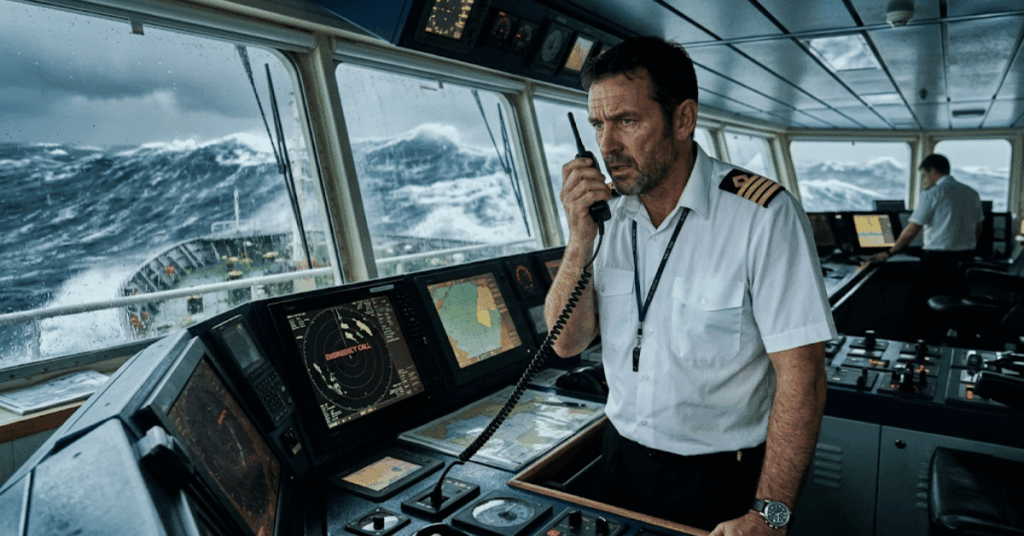
A new digital platform launched by Inmarsat Maritime is set to revolutionize maritime safety by analyzing over 100,000 emergency broadcasts to identify risks before they escalate. The Maritime Safety Data Hub combines three years of distress data with an unprecedented review of 106,975 safety alerts transmitted in 2025, revealing critical patterns in global shipping hazards.
The system, developed by Inmarsat Maritime—a Viasat company—offers the industry its first comprehensive look at how environmental, operational, and geopolitical factors influence safety at sea. Rather than focusing solely on individual incidents, the platform maps broader trends, allowing operators to anticipate threats rather than merely respond to them.
Weather dominates maritime safety alerts: maritime safety data
The analysis uncovered that 84.6% of urgent maritime warnings in 2025 were weather-related, with storms accounting for three-quarters of these hazards. More significantly, the data showed a direct link between safety broadcasts and subsequent distress calls: many emergencies occurred in areas where weather warnings had already been issued. This correlation suggests that timely alerts could help vessels avoid dangerous conditions altogether.
John Dodd, Inmarsat Maritime’s Director of Maritime Safety, highlighted the platform’s potential to transform industry practices. “By integrating weather data with distress records, the hub provides a new level of intelligence,” he explained. “It allows the maritime sector to move beyond reacting to incidents and instead examine the underlying conditions that lead to emergencies.”
“Safety information is only valuable if it gives crews time to act. Whether facing extreme weather or geopolitical instability, early warnings enable better decisions—protecting lives, ships, and cargo.”
John Dodd·Director of Maritime Safety, Inmarsat Maritime
Emerging threats beyond weather
While weather remains the primary concern, the 2025 data also exposed growing risks from geopolitical instability. Disruptions in the Red Sea, sanctions affecting tanker operations, and tensions in the Persian Gulf and Black Sea forced ships to deviate from established routes, increasing operational complexity. Additionally, electronic interference—including GPS spoofing and signal jamming—emerged as a serious threat, particularly in key trade corridors across the Middle East.
The platform’s findings also revealed that tankers made the most distress calls in 2025 (203), nearly double the number from bulk carriers, the second-highest category. Despite these challenges, the overall volume of distress calls remained stable compared to previous years, with 741 recorded in 2025—similar to 788 in 2023 and 801 in 2024.
The Maritime Safety Data Hub aims to equip the industry with the tools to predict and prevent emergencies, rather than just respond to them. As more data is incorporated, its ability to forecast risks is expected to improve, offering greater protection for vessels navigating increasingly unpredictable waters.


Sign up free to ask CAMAL AI for a summary, the key points or anything else about this story.
Related stories
CAMAL AI
 Financial Ports Newsletter
The maritime economy, every morning
Ports, shipping and freight markets in one short email. Free.
Financial Ports Newsletter
The maritime economy, every morning
Ports, shipping and freight markets in one short email. Free.