

Women seafarers: why 1.2% still face a workplace designed for men
Just 24,000 women work at sea globally—yet they report higher harassment, fewer promotions.
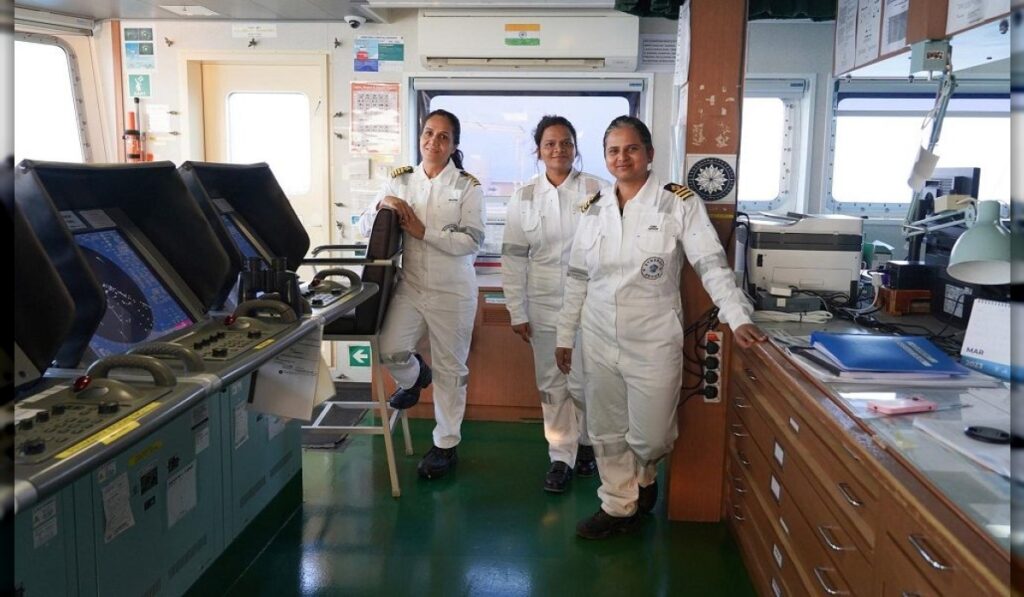
According to the International Maritime Organization (IMO), women now account for roughly 24,000 seafarers worldwide, a 45.8% increase since 2015. While the numbers are rising, the reality onboard remains starkly unequal. A 2024 survey by the IMO and Women’s International Shipping & Trading Association (WISTA) found that most women in maritime work in cruise and passenger sectors, with few breaking into technical or leadership roles.
Gender bias remains one of the most pervasive issues for women at sea. A Global Maritime Forum survey revealed that 29% of women identified discrimination as a major obstacle to employment, compared to just 0.4% of men.
Sexual harassment and bullying are even more severe. Despite amendments to the STCW Code, effective since January 2026, that mandate training on preventing violence and harassment, underreporting remains rampant. Dr Katherine Sinclaire, Senior Medical Advisor at MedSea (International SOS), notes that isolation compounds the problem: “Women often sail as the only female onboard, which can lead to social exclusion and heightened vulnerability.".
Silver
“Women often sail as the only female onboard, which can lead to social exclusion and heightened vulnerability.”
Dr Katherine Sinclaire·Senior Medical Advisor, Aviation and Maritime at MedSea
The challenges extend beyond culture. Medical data from MedSea shows that nearly 3% of maritime telemedicine cases in 2025 involved women, a more than one-third increase from previous years. Yet the nature of these cases highlights how ill-prepared many vessels are to support female crew members. Women report a higher proportion of urological and gynaecological issues, while musculoskeletal conditions, common among male seafarers, account for just 6% of female cases, compared to 15% for men.
Discrimination at sea: why women must outperform to be treated equally: women seafarers
Basic facilities are another major concern. Many ships still lack dedicated accommodation, bathrooms, or changing areas for women. Access to sanitary products is inconsistent, and poorly fitting personal protective equipment (PPE) increases the risk of injury.
Reproductive health adds another layer of complexity. Limited privacy and medical support make managing menstrual health and contraception difficult, while emergencies, such as pregnancy complications or sexual assault, require sensitive handling that many ships are not equipped to provide. Telemedical providers like MedSea have stepped in to fill the gap, but follow-up care remains a challenge, particularly in remote regions.
The data also reveals a surprising silver lining: women seafarers appear to fare better in some operational outcomes. Cases involving women required less frequent referral ashore, and their repatriation rate was half that of men, suggesting that many conditions can be managed effectively onboard or through remote support.
Despite these challenges, there are signs of progress. The IMO and WISTA have partnered to drive cultural change, while initiatives like the All Aboard Alliance’s pilot programmes aim to improve retention and career development. International Chamber of Shipping (ICS) of Shipping (ICS) and International Transport Workers’ Federation (ITF) have also issued guidance on gender-sensitive policies, including flexible sea-shore rotation programmes to accommodate family responsibilities, a critical factor in retaining female talent.
Yet the pace of change remains slow. For an industry that relies on global mobility and adaptability, the failure to fully integrate women is not just a moral issue but a commercial one. With shipping facing a chronic labour shortage, the sector can ill afford to exclude half the workforce. The question is no longer whether women belong at sea, but whether the industry will finally build a workplace that reflects their needs, or continue treating them as guests in a world designed for men.


Sign up free to ask CAMAL AI for a summary, the key points or anything else about this story.
Related stories
CAMAL AI
 Financial Ports Newsletter
The maritime economy, every morning
Ports, shipping and freight markets in one short email. Free.
Financial Ports Newsletter
The maritime economy, every morning
Ports, shipping and freight markets in one short email. Free.



