

US rail freight surges 11% on steel demand: what’s driving the boom?
Metallic ores and metals shipments jump 11% as data centres and energy sectors fuel demand.
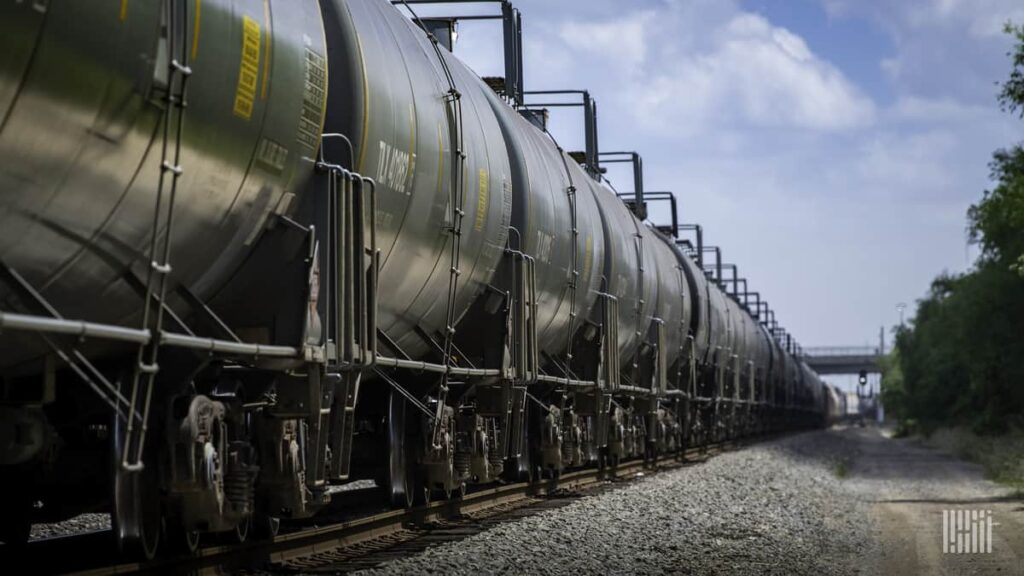
U.S. rail freight volumes rose 4.1% year-over-year for the week ending August 29, reaching a total of 543,212 carloads and intermodal units. The increase reflects stronger demand from industrial sectors, particularly steelmaking and energy, according to data from the Association of American Railroads (AAR).
Traditional carload shipments grew 2.2% to 240,021 units, while intermodal traffic—containers and trailers transported by rail—surged 5.7% to 303,191 units. The gap between truck and rail shipping rates, now at 34%, has made rail a more attractive option for long-haul freight, especially as federal enforcement actions tighten trucking capacity.
Key commodities drive growth: rail freight growth
Metallic ores and metals, essential for steel production, saw the largest increase at 11%, the highest among the 10 commodity groups tracked by the AAR. Analysts suggest this rise is linked to steel demand for data center construction. Petroleum and related products followed with an 8.4% gain, while grain shipments climbed 8.3%.
Not all sectors performed equally. Chemical shipments fell 3.8%, and motor vehicles and parts declined 6%, reflecting uneven manufacturing output. Industry observers note that while steel production remains strong, other segments face fluctuating demand.
Coal and intermodal trends reflect broader shifts
Coal volumes increased 1.9%, driven by seasonal demand ahead of winter and higher usage by power generators. The rise also aligns with policy support for coal under the current administration.
Intermodal traffic continues to benefit from rail’s cost advantage over trucking. With truck rates rising again, shippers are increasingly turning to rail for efficiency. The cumulative data for the first 34 weeks of 2026 shows steady growth: U.S. railroads moved 7,751,931 carloads (up 2.7%) and 9,605,177 intermodal units (up 3.9%). Combined traffic reached 17,357,108 units, a 3.3% increase from the previous year.
North American rail volume, including U.S., Canadian, and Mexican carriers, rose 3% to 23,812,940 carloads and intermodal units over the same period. The AAR’s weekly reports serve as a key indicator of economic activity, particularly in manufacturing, energy, and logistics.


Sign up free to ask CAMAL AI for a summary, the key points or anything else about this story.
Related stories
CAMAL AI
 Financial Ports Newsletter
The maritime economy, every morning
Ports, shipping and freight markets in one short email. Free.
Financial Ports Newsletter
The maritime economy, every morning
Ports, shipping and freight markets in one short email. Free.