

Iran Used AI to Map US Navy Weak Spots—Anthropic Blocked It
Anthropic shut down an Iran-linked account compiling ship vulnerabilities and targeting data on US naval forces in the.
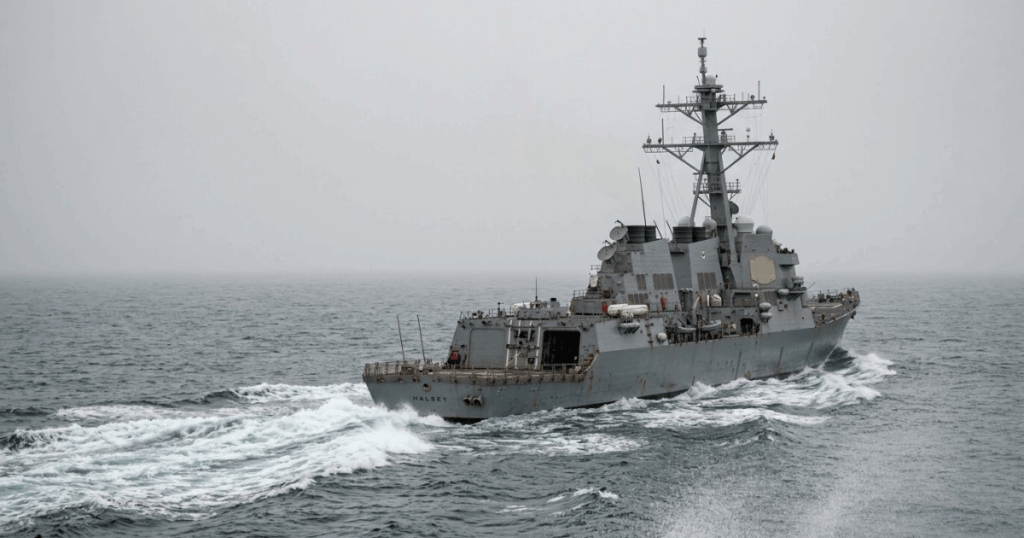
Anthropic has banned an Iran-linked account after discovering it used its Claude AI models to compile targeting data and vulnerability research on US naval forces operating in the Middle East.
The AI model, Claude, was used to scrape data from public websites, commercial satellite feeds, and even a leaked Telegram group with 244 members, mapping social connections and identifying potential weaknesses in shipboard systems.
How AI Became a Weapon Against US Naval Forces: US Navy
While Anthropic could not confirm whether the compiled intelligence was used in actual operations, the discovery underscores the risks of AI being weaponized by state actors.
The account was also linked to an Iranian domestic surveillance project involving automatic license plate recognition, demonstrating how AI tools designed for civilian applications can be repurposed for state-backed monitoring.
The company detected and disrupted the operation before banning the account, sharing its findings with US government authorities to mitigate potential threats.
The Broader Threat: AI in the Hands of US Adversaries
The incident is not isolated. Anthropic’s report details how its AI models, including Claude, Haiku, Sonnet, and Open Opus, have been exploited by Iran, Russia, and China for cyber operations, surveillance, and influence campaigns. Three additional Iran-linked accounts, tied to the Islamic Organisation under Iran’s Ministry of Culture and Islamic Guidance, were found using Claude to build propaganda campaigns targeting domestic and international audiences.
Its use of AI tools like Claude to amplify propaganda efforts reflects a growing trend among state actors to exploit commercial technology for geopolitical advantage. The Ministry itself oversees Iran’s cultural and media policies, making it a key player in the country’s information warfare strategy.
“The new threat is just that it is now easier than ever before for adversaries to be able to understand what the U.S. military is doing,” Bresnick said. “It is getting much harder for the U.S.
However, the Anthropic report serves as a stark reminder that commercial AI tools, designed for civilian use, can be repurposed for military espionage with alarming efficiency. The dual-use nature of AI means that innovations intended for one sector can quickly become tools for adversaries in another.
For the maritime sector, the implications are particularly acute. Naval operations rely heavily on secure communications, satellite data, and real-time intelligence, all of which are vulnerable to AI-driven espionage. The use of AI to scrape public military photographs and transponder data could allow adversaries to predict naval movements, identify vulnerabilities in shipboard systems, and even target specific personnel. This level of precision was previously achievable only through extensive human intelligence networks, but AI has democratised access to such capabilities.
Anthropic has since strengthened its security protocols, including enhanced monitoring for suspicious account activity and stricter verification processes for users accessing its models. The company has also shared technical details with government and industry partners to help detect similar misuse patterns. These measures are part of a broader industry effort to address the risks posed by AI, though experts warn that adversaries are likely to adapt quickly to new safeguards.
The incident also raises questions about the responsibility of AI developers in preventing misuse. Unlike traditional defence contractors, companies like Anthropic operate in a regulatory grey area, where their tools are designed for civilian applications but can be weaponised by state actors. The lack of clear international guidelines on AI governance means that companies must often rely on self-regulation, which may not be sufficient to address the scale of the threat.
For maritime security professionals, the report underscores the need for heightened vigilance. As AI tools become more sophisticated, naval forces may need to adopt new strategies to protect sensitive data, such as limiting the public release of military photographs, encrypting transponder data, and investing in AI-driven counter-espionage measures. The US Navy, for example, has already begun exploring AI-powered cybersecurity tools to detect and neutralise threats in real time.
As the US Navy continues to operate in contested waters, the line between public data and military intelligence blurs. The question now is whether existing security measures can keep pace with the rapid evolution of AI-driven espionage, or if new strategies will be required to protect critical assets at sea. For industry stakeholders, the incident serves as a call to action: the development of AI must be accompanied by robust safeguards to prevent its exploitation by adversaries.
Those concerned about the security implications of AI can stay informed through official channels such as the Cybersecurity and Infrastructure Security Agency (CISA) or the US Department of Defense, both of which provide updates on emerging threats and best practices for cybersecurity.


Sign up free to ask CAMAL AI for a summary, the key points or anything else about this story.
Related stories
CAMAL AI
 Financial Ports Newsletter
The maritime economy, every morning
Ports, shipping and freight markets in one short email. Free.
Financial Ports Newsletter
The maritime economy, every morning
Ports, shipping and freight markets in one short email. Free.



