

China Coast Guard Vessel Rams Philippine Ship: 10-Metre Standoff Ends
Philippine Coast Guard releases footage of the deliberate ramming incident 54 nautical miles off Palawan.
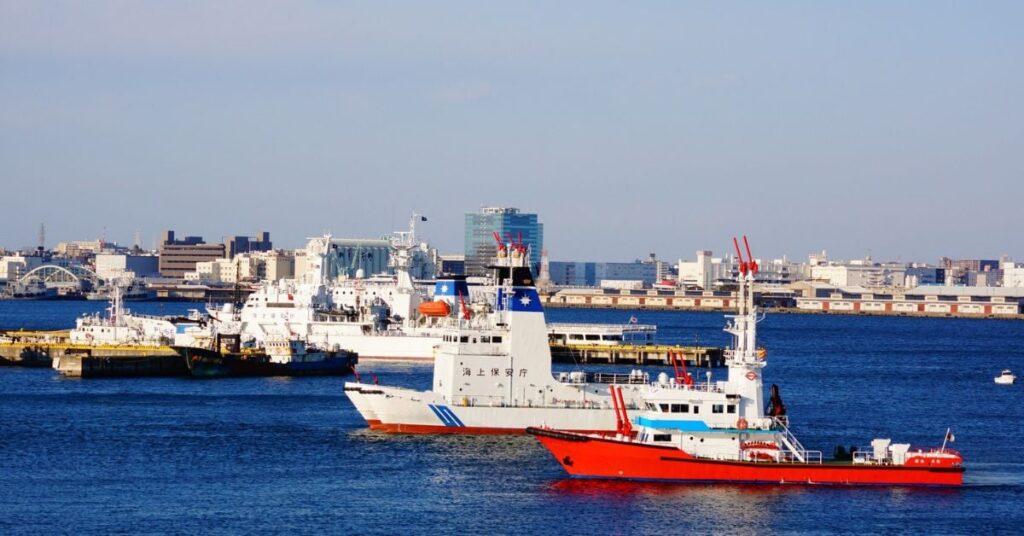
A Chinese Coast Guard vessel deliberately rammed a Philippine government ship in the South China Sea on Friday, escalating tensions in the disputed waters. The incident, which occurred 54 nautical miles off the coast of Palawan, left the Philippine vessel BRP Datu Magat Salamat with significant damage to its starboard side, including railings, metal supports, and deck equipment.
The Philippine Coast Guard (PCG) accused the Chinese vessel CCG-21585 of performing risky manoeuvres before the collision. According to PCG spokesperson Jay Tarriela, the Chinese ship came within 10 metres of the Philippine vessel, which was en route to deliver fuel and food to Filipino fishermen. Moments before impact, crew members shouted, “brace for impact!”
Philippines Condemns Deliberate Ramming as China Blames Manila
The PCG released video footage of the incident, which it described as a deliberate act by the Chinese Coast Guard. In a statement, the PCG said,
“The China Coast Guard deliberately rammed a civilian government vessel on a humanitarian and livelihood mission.”
Philippine Coast Guard·Maritime authority
The Chinese government rejected the Philippine account, accusing the BRP Datu Magat Salamat of ignoring warnings and abruptly changing course. A spokesperson for China’s Ministry of Foreign Affairs cited the Chinese Coast Guard, stating:
“The Philippine vessel disregarded repeated solemn warnings, deliberately altered its course and suddenly accelerated to cut across the bow of our vessel.”
Chinese Coast Guard·Maritime authority
The collision, which occurred at 11:13 a.m. local time (0313 GMT), did not result in any casualties or injuries. However, debris from the Philippine vessel fell overboard, highlighting the severity of the impact. The Bureau of Fisheries & Aquatic Resources, an agency under the Philippine Department of Agriculture, confirmed that the ship was on a resupply mission for Filipino fishermen operating in the area. Such missions are part of Manila’s routine efforts to support its fishing communities, which rely on access to traditional fishing grounds in the South China Sea.
The Philippine Coast Guard, established in 1967, operates under the Department of Transportation and serves as the country’s primary maritime law enforcement agency. It is tasked with ensuring maritime safety, protecting marine resources, and conducting search-and-rescue operations. The PCG has been at the forefront of Manila’s efforts to counter China’s assertive actions in the South China Sea, often documenting and publicising incidents involving Chinese vessels.
International Condemnation and Rising Tensions in the South China Sea
The incident has drawn sharp criticism from the international community. The United States, Canada, and the European Union have all expressed concern over China’s actions in the region. US Ambassador to the Philippines Lee Lipton condemned the ramming, stating:
“We strongly condemn the China Coast Guard’s deliberate ramming.”
Lee Lipton·US Ambassador to the Philippines
The Chinese Embassy in the Philippines retaliated by condemning the US Embassy’s statement, further escalating diplomatic tensions. This latest incident follows a pattern of confrontations in the South China Sea, where China claims nearly the entire waterbody, including disputed islands and shoals such as the Scarborough Shoal, Second Thomas Shoal, and Sabina Shoal. These areas are also claimed by the Philippines, Vietnam, Malaysia, Brunei, and Taiwan, making the region a hotspot for territorial disputes.
The United Nations Convention on the Law of the Sea (UNCLOS), which both China and the Philippines have ratified, establishes guidelines for maritime boundaries and resource rights. However, China’s expansive “Nine-Dash Line” claim, which encompasses approximately 90% of the South China Sea, has been repeatedly rejected by international tribunals. In 2016, a United Nations Tribunal ruled that China’s claims had no legal basis, a decision Beijing has dismissed as “null and void.”
In July, Manila accused Beijing of using a water cannon against Philippine vessels near the Scarborough Shoal, an action that injured a Philippine naval personnel. Two months ago, the Philippines also blamed China for using a water cannon to disrupt another resupply mission. These incidents have heightened concerns about the safety of Filipino fishermen and government vessels operating in the area, as well as the broader implications for regional stability.
The Chinese Coast Guard, established in 2013, operates under the State Oceanic Administration and is responsible for maritime law enforcement in China’s claimed waters. It has increasingly been deployed to assert Beijing’s territorial claims, often engaging in confrontations with vessels from neighbouring countries. The CCG-21585, the vessel involved in Friday’s collision, is part of a fleet that has been accused of aggressive tactics, including shadowing, blocking, and ramming foreign ships.
The Philippines’ National Defence Minister Gilberto Teodoro has been vocal in his opposition to China’s actions, referring to them as “wickedness” and vowing to continue resistance. Teodoro, who has served as defence minister since 2023, has been a key figure in Manila’s efforts to strengthen its maritime defences and deepen security ties with allies such as the United States and Japan. China responded to his criticisms by banning Teodoro from entering Beijing, a move that underscores the deteriorating diplomatic relations between the two nations.
The South China Sea remains a flashpoint for regional security, with multiple nations contesting China’s expansive territorial claims. The latest collision underscores the risks posed by China’s assertive maritime strategy, which has included the militarisation of disputed islands, the deployment of coast guard and militia vessels, and the enforcement of fishing bans in contested waters. For the Philippines, the incident highlights the challenges of protecting its maritime interests while avoiding outright conflict.
For businesses and shipping companies operating in the region, the escalating tensions pose significant risks. The South China Sea is one of the world’s busiest maritime trade routes, with an estimated $3.4 trillion worth of global trade passing through its waters annually. Disruptions in the area could have far-reaching economic consequences, affecting supply chains and energy markets. The recent collision serves as a stark reminder of the potential for miscalculation and the need for diplomatic solutions to prevent further escalation.
As tensions simmer, the international community continues to call for restraint and adherence to international law. The Philippine Coast Guard has vowed to continue its missions in the disputed waters, while China shows no signs of backing down from its aggressive posture.
The next steps remain uncertain, but the incident has reignited debates about the effectiveness of existing mechanisms for managing maritime disputes in the South China Sea. For now, the Philippines and its allies are likely to increase their presence in the region, while China is expected to maintain its assertive stance, setting the stage for further confrontations.
The collision near Palawan is more than a maritime incident, it is a test of the Philippines’ ability to assert its rights in the face of China’s growing assertiveness. For Manila, the challenge lies in balancing diplomatic engagement with Beijing while safeguarding its territorial claims.
The Philippine government has repeatedly stated that it will not be intimidated by China’s actions, but the risks of further escalation are real. The BRP Datu Magat Salamat, a 44-metre vessel commissioned in 2017, is one of several ships deployed by the Philippines to support its maritime missions, but its recent damage underscores the vulnerabilities of smaller nations in the face of China’s superior naval capabilities.
The incident also raises questions about the role of international law in resolving disputes in the South China Sea. While the 2016 United Nations Tribunal ruling favoured the Philippines, China has refused to recognise the decision, instead relying on bilateral negotiations and coercive tactics to advance its claims. The lack of enforcement mechanisms for international rulings has left smaller nations with limited options, forcing them to seek support from allies such as the United States, which has conducted “freedom of navigation operations” in the region to challenge China’s claims.
For the Philippines, the next steps will likely involve strengthening its maritime defences and deepening cooperation with regional partners. The country has already taken steps to modernise its coast guard fleet, including the acquisition of new vessels and surveillance equipment. It has also expanded its security agreements with the United States, allowing for increased rotational access to Philippine military bases. These measures are aimed at deterring further Chinese aggression and ensuring the safety of Filipino fishermen and government personnel operating in the South China Sea.
As the situation develops, stakeholders are advised to monitor official statements from the Philippine Coast Guard, the Department of Foreign Affairs, and the Chinese Embassy in Manila. The Association of Southeast Asian Nations (ASEAN), which includes the Philippines, has also been urged to take a more active role in addressing the South China Sea disputes. However, divisions within the bloc have hindered collective action, leaving individual nations to navigate the challenges posed by China’s assertive policies.
The latest collision serves as a stark reminder of the fragility of peace in the South China Sea. With tensions showing no signs of abating, the risk of further incidents remains high, underscoring the need for diplomatic solutions and adherence to international norms. For now, the world watches as the Philippines and China navigate a precarious standoff, one that could have profound implications for regional security and global trade.


Sign up free to ask CAMAL AI for a summary, the key points or anything else about this story.
Related stories
CAMAL AI
 Financial Ports Newsletter
The maritime economy, every morning
Ports, shipping and freight markets in one short email. Free.
Financial Ports Newsletter
The maritime economy, every morning
Ports, shipping and freight markets in one short email. Free.