

30 Injured as Ukrainian Sea Drones Strike Russia’s Sochi Port
A Ukrainian unmanned surface vessel attack on Sochi’s waterfront left 30 injured and sparked fires near a tourist.
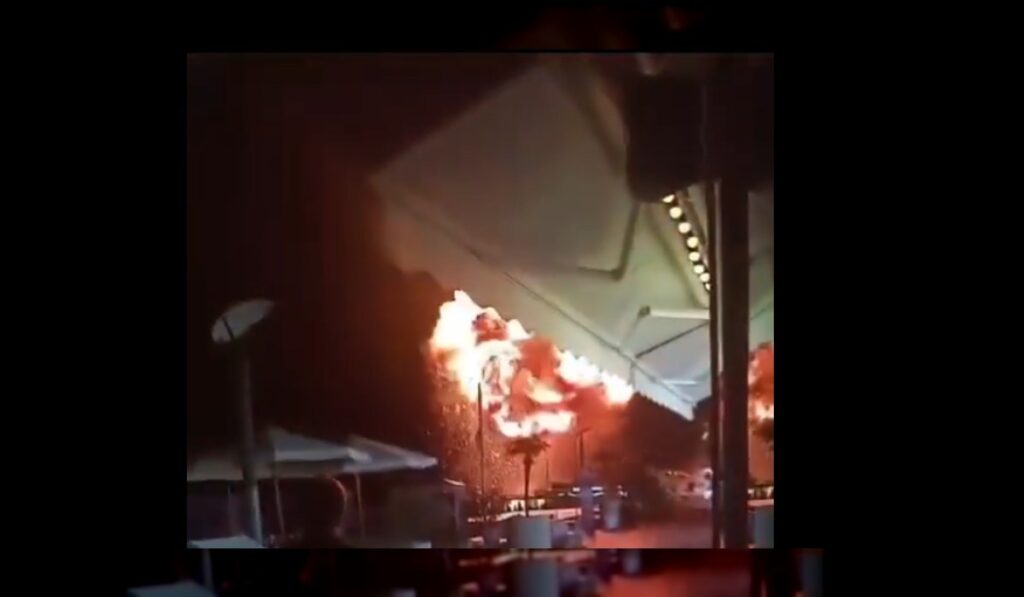
While Kyiv has not claimed responsibility for the incident, it remains the most active operator of USVs in the Black Sea, having previously targeted Russian military assets and energy infrastructure. Russian officials, however, were quick to frame the strike as an act of terrorism, with state propagandist Vladimir Solovyov alleging Western involvement and calling for retaliatory measures.
The strike hit a beachfront area approximately 1,000 yards southeast of Sochi’s commercial port, near the Portofino Hotel, a popular tourist spot. Bystander footage shared on social media shows a large explosion and subsequent fires along the waterfront, with air defence systems active during the attack, suggesting a simultaneous drone assault. The blast occurred just 1,000 yards from the Festival House of Culture, where Bulanova was performing before the concert was abruptly cancelled and attendees evacuated.
Krasnodar Krai regional authorities reported a fire on a port embankment, while Sochi Mayor Andrey Proshunin urged residents to seek shelter. Videos from local monitoring channels, including Supernova+, captured residents taking cover amid explosions from drone defence systems. The attack injured as many as 30 people, according to initial reports, though the full extent of the damage remains unclear.
How the Attack Unfolded: Blast Sites and Civilian Impact: Sochi
Ukraine has increasingly relied on USVs to counter Russia’s naval dominance in the Black Sea, targeting warships, support vessels, and energy infrastructure. Last week, Ukrainian forces launched a similar attack on the Russian offshore support vessel Nefrit in Sochi’s port. One USV penetrated the perimeter and damaged the vessel’s port side, while a second detonated prematurely, likely struck by defensive fire.
Russian state media wasted no time in framing the incident as a terrorist act. Vladimir Solovyov, a prominent state propagandist, accused Ukrainian President Zelensky of orchestrating “acts of absolute terror” and alleged British involvement. “We understand that Britain is behind it,” Solovyov claimed, adding, “Europe should burn.
“Zelensky is carrying out acts of absolute terror. And there’s no other way to read last night’s strikes on the Sochi waterfront. The strike was carried out by unmanned surface craft. And we understand that Britain is behind it. And it’s an absolute disgrace. We said yesterday: Europe should burn. Ukraine should burn. Do we not understand that the threats are growing?”
Vladimir Solovyov·Russian state propagandist
Ukraine’s USV Strategy: From Military Targets to Civilian Hubs
In recent months, Kyiv has intensified attacks on Russian ports, including Novorossiysk and Sevastopol, using a combination of USVs, missiles, and sabotage operations. These efforts have forced Russia to relocate some of its naval assets and reinforce its port defences, but the attacks on civilian-adjacent areas like Sochi suggest a willingness to escalate pressure beyond purely military targets.
For maritime stakeholders, the incident serves as a stark reminder of the risks posed by unmanned systems in modern warfare. USVs, once considered a niche capability, have become a critical tool for Ukraine, allowing it to project power far beyond its shores without risking manned assets. The Black Sea, once a relatively stable maritime corridor, is now a contested battleground where commercial shipping, energy infrastructure, and civilian hubs are increasingly at risk.
As the conflict drags on, the international community faces mounting pressure to address the growing threat of unmanned attacks on civilian areas. The Sochi strike, with its high casualty count and symbolic targeting, may force a reckoning over the rules of engagement in maritime warfare. For now, however, the focus remains on the immediate fallout: the injured, the damaged infrastructure, and the looming question of how far Ukraine, and Russia, are willing to go in this escalating conflict.


Sign up free to ask CAMAL AI for a summary, the key points or anything else about this story.
Related stories
CAMAL AI
 Financial Ports Newsletter
The maritime economy, every morning
Ports, shipping and freight markets in one short email. Free.
Financial Ports Newsletter
The maritime economy, every morning
Ports, shipping and freight markets in one short email. Free.