


River Cruising Boom: Europe’s Waterways Set
Europe’s river cruise fleet expands to 386 ships, with 12% annual growth forecast.
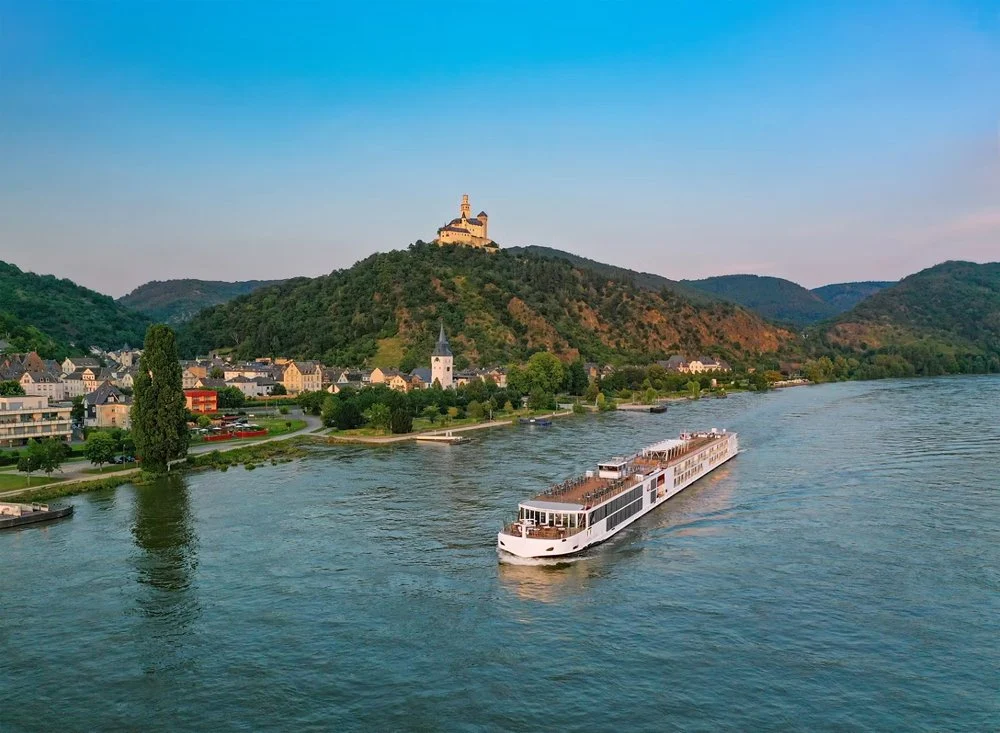
Europe’s river cruise industry is surging, with 386 ships now navigating its waterways and a record 1.49 million passengers carried in 2025. Growth is accelerating, driven by new operators and innovative itineraries targeting families, solo travellers, and younger generations, challenging the long-held perception of river cruising as a preserve for older travellers.
Germany and the United States remain the largest source markets, but the sector’s expansion is being fuelled by diversification. Meanwhile, National Geographic-Lindblad Expeditions debuted its first river cruises in August 2026, with a second ship planned for 2027.
Why Europe’s Rivers Are Attracting New Travellers: river cruising
The Rhine, Danube, Seine, and Douro remain the most popular routes, but operators are shifting focus from the rivers themselves to the experiences they offer. “The differentiation in the experience is based on the experience, not necessarily the river,” says Joe Freeman, owner of luxury travel agency FlyOver Travel. “Whether you want a wellness program, e-bikes, active, or relaxed, the lines are making experiences that are catered to the current and future customers.”
This strategy is paying off. Travel advisors report growing demand for family-friendly and multi-generational cruises. “We hear it all the time from our clients, they want to introduce their adult children and grandchildren to the history, culture, and food of Europe without the hassle,” says Michael Consoli, a travel advisor at Cruise Planners with nearly 25 years of experience. Adventures by Disney, operated by AmaWaterways, exemplifies this trend, offering itineraries that contrast sharply with Viking’s “thinking person’s cruise,” which restricts passengers to those aged 18 and above.
While river cruising has historically been associated with older travellers, operators are now designing itineraries that appeal to millennials and Gen Z.
Solo travellers are also being courted. Riviera Travel has eliminated fare supplements for solo cabins, a move that removes a long-standing financial barrier for single travellers. Other operators, such as Uniworld, have experimented with sub-brands like U by Uniworld, which targeted 20- and 30-somethings with a more social, party-like atmosphere. Though the initiative was discontinued in 2017, it signalled the industry’s willingness to innovate, even if not all experiments succeed.
Operators Bet Big on Fleet Expansion
The race to expand fleets is intensifying. Even China is making inroads, with Century Cruises launching its Century Star in Europe this fall.
These additions reflect a broader industry trend: river cruising is no longer just about sightseeing but about immersive, health-focused experiences.
However, challenges loom. Such constraints could hinder the industry’s ability to accommodate the projected growth in ship numbers and passenger volumes.
These disruptions not only inconvenience passengers but also increase operational costs. Frank Pacella, VP of Maritime Cruise and Ferry at MTN Satellite, notes that operators are increasingly adopting hybrid river-overland programmes to mitigate such risks. These allow passengers to continue their journey by coach if water levels drop, ensuring minimal disruption to itineraries.
The industry’s resilience was tested further by the COVID-19 pandemic, which brought global travel to a standstill. Yet, river cruising rebounded faster than ocean cruising, thanks to its smaller vessels and more controlled environments. This adaptability has reinforced its reputation as one of the most resilient segments of the leisure travel industry.
For travellers, the expansion of Europe’s river cruise industry means more choices, greater flexibility, and increasingly tailored experiences. Families can now book multi-generational trips with activities for all ages, while solo travellers benefit from reduced or eliminated single supplements. Wellness-focused cruises, active excursions, and themed itineraries, such as culinary or cultural tours, are becoming standard offerings.
However, the rapid growth also raises questions about sustainability. Some operators are already taking steps in this direction. Viking, for instance, has committed to making its fleet carbon-neutral by 2050, while AmaWaterways has introduced hybrid-powered ships.
Looking ahead, the industry’s trajectory will depend on its ability to balance expansion with sustainability. Meanwhile, National Geographic-Lindblad Expeditions’ focus on educational, expedition-style cruises suggests that river cruising is evolving beyond traditional sightseeing.
For those considering a river cruise, now is an opportune time to explore the options. Operators are offering competitive pricing, particularly for off-peak seasons, and itineraries are more diverse than ever. Travellers can choose from short city escapes on the Seine, immersive cultural journeys along the Danube, or active adventures on the Douro. Booking through a travel advisor, such as those at Cruise Planners or Travelmation, can help navigate the growing number of choices and secure the best deals.
As Joe Freeman observes, demand for river cruising continues to rise. “We see that increasing each year, with strong demand for wanting to experience this kind of travel.” With new ships, innovative itineraries, and a broadening demographic, Europe’s rivers are set to remain a vital artery of the global travel industry for years to come.
Sign up free to ask CAMAL AI for a summary, the key points or anything else about this story.
Related stories
Financial Ports Newsletter
The maritime economy, every morning
Ports, shipping and freight markets in one short email. Free.