

Pemex Spills Hit 100 a Year as Mexico’s Oil Nightmare Deepens
Mexico’s state oil giant reported nearly 100 offshore spills annually over the past four years.
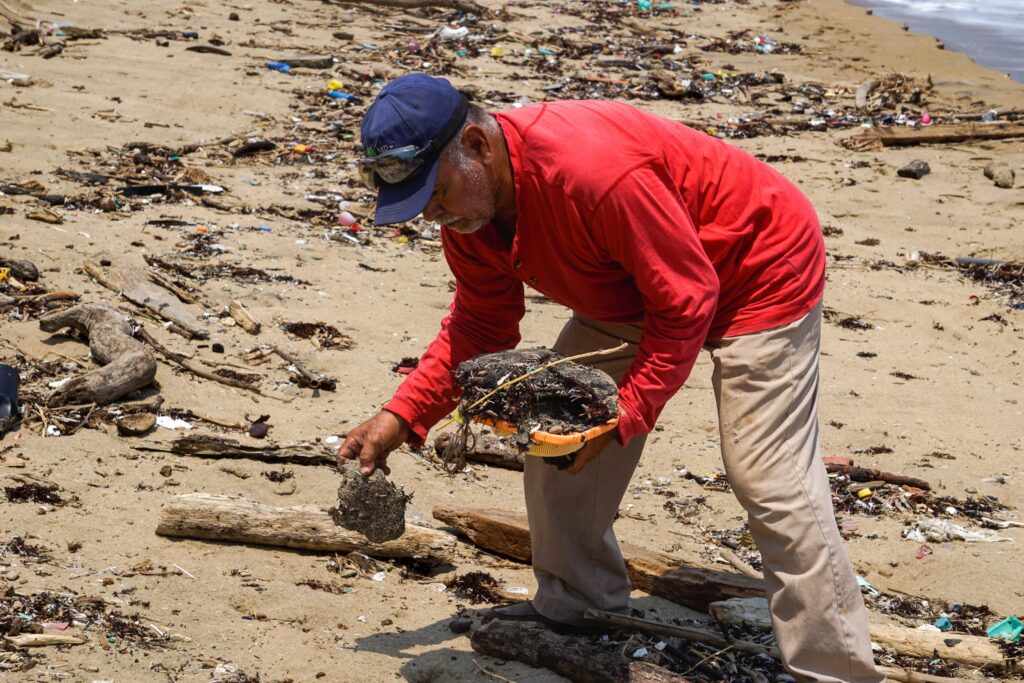
Mexico’s state-owned oil company Pemex has reported nearly 100 spills a year over the past four years, leaving coastal communities along the Gulf of Mexico grappling with contaminated fishing grounds, dead wildlife, and collapsing livelihoods. The latest disaster, a February 2026 spill from a leaking pipeline in the offshore Abkatun oil field, has triggered a 30-day fishing ban, devastated local markets, and exposed glaring discrepancies in the company’s spill reporting.
The scale of Pemex’s spill problem is staggering, and shrouded in inconsistency. Between 2020 and 2024, the company documented 5,517 spill and leak events in its annual sustainability reports. Yet, over the same period, it reported only 274 events between March 2020 and May 2026 (excluyendo el derrame de febrero en el Golfo). The discrepancy widens further when compared to financial disclosures: from 2014 to 2025, Pemex acknowledged just 798 pipeline spills and leaks to regulators like the US Securities and Exchange Commission and Mexico’s National Banking and Securities Commission.
“This data makes us question the viability of continuing with this fossil fuel model that endangers people and the environment,” said Viridiana Lázaro, senior climate change and oceans campaigner for Greenpeace Mexico. The gaps in reporting raise critical questions about oversight.
Diana Shipping
While there is no suggestion Pemex has failed to comply with legal requirements, experts argue the company’s monitoring falls short. “Pemex is not doing its job [of adequately collecting data on spills],” claimed Diana Papoulias, a retired researcher for the US Geological Survey, in her April 2026 report, The Environmental Debt of Pemex.
The February spill in the Abkatun field, initially denied by the government, was later confirmed as the source of contamination that fouled beaches in El Bosque, a community in south-east Mexico. Andrés Palma, a 31-year-old fisher from the area, described the aftermath: “The pollution is massive.
The fishing nets come back stained, and dirt gets on your clothes.” His family, like at least 60 others, had already been displaced in November 2023 due to coastal erosion, only to face a new crisis when the spill crashed the local fish market. “Here, if you don’t go out fishing, you don’t eat,” Palma said.
Spills by the Numbers: A Crisis of Transparency: Pemex
The economic fallout has been brutal. Fishers who once sold sierra fish for MXN 60 per kg now receive just MXN 10, a collapse in earnings that has left many unable to sustain their families. In March 2026, Pemex announced a MXN 35 million (USD 1.9 million) fund to support affected fishers, distributing MXN 15,000 each to 3,379 individuals. Yet, the relief has been uneven. “No fisher receives any resources from the government,” Palma insisted, echoing frustrations that aid has bypassed independent workers in favour of fishing cooperatives.
The environmental toll is equally dire. The Gulf of Mexico Reef Corridor Network (RCAGM), a coalition of 25 community organisations and turtle conservation camps, has pinpointed over 100 contamination sites along a 1,200 km stretch of coastline since March. The network, which monitors a 650 km reef system from northern Veracruz to Tabasco, recorded the deaths of 22 sea turtles, 4 dolphins, 2 pelicans, and 1 manatee between the spill’s onset and late April. Meanwhile, the Mexican government collected 915 tonnes of hydrocarbon residue from the sea and 48 beaches in April alone.
The crisis extends beyond the Gulf. In June and July 2026, eight oil spills were registered along Oaxaca’s Pacific coast, further straining communities already reeling from Pemex’s operations. Luis Alberto Romero Reyes, a 33-year-old fisherman from Veracruz, described the paralysing effect: “For most local fishermen, there has been no fishing since the spill.” His mother, Guadalupe Reyes, a volunteer at a turtle sanctuary in Agua Dulce, has witnessed firsthand the ecological damage. “Only the cooperatives get help,” Romero Reyes added, underscoring the disparity in aid distribution.
Coastal Communities Pay the Price
Indigenous Nahua communities in Veracruz have taken a stand. In July, over 500 fishers announced plans to pursue legal action, demanding fair compensation, healthcare, and ecosystem restoration. Oved Hernández, a fisher from the community, framed the fight as existential: “We cannot allow Pemex to destroy our way of life.”
The pattern of spills is not new. The Gulf of Mexico Observatory, formed in April 2026 to monitor the Abkatun spill, reported another leak on 10 September. Papoulias, the USGS researcher, warned of a systemic failure: “There are leaks every day; there are spills every day of varying sizes. Pemex has failed to invest money in environmental protection or system improvements.”
For communities like El Bosque, the future is uncertain. Palma’s family now lives 10 km inland, far from the coast they once relied on. With fishing grounds contaminated and markets in freefall, the spill’s legacy is one of displacement, economic hardship, and environmental degradation, a crisis that shows no signs of abating.
The discrepancies in Pemex’s spill reporting highlight a broader issue: the lack of a unified monitoring system. While the company adheres to separate reporting requirements for financial regulators and sustainability disclosures, the gaps create a fragmented picture of the crisis. Environmental groups, including Greenpeace Mexico and the Gulf of Mexico Observatory, have called for independent audits and stricter enforcement of environmental regulations.
Omar Arellano, an environmental researcher at the National Autonomous University of Mexico (UNAM), emphasised the need for transparency: “Without accurate data, it’s impossible to assess the true scale of the damage or hold Pemex accountable.” The company, however, has remained silent. Dialogue Earth’s requests for comment on the reporting discrepancies and the February spill’s status went unanswered.
For fishers and coastal residents, the path forward is fraught with challenges. The MXN 35 million fund is a temporary salve, not a solution. Long-term recovery will require ecosystem restoration, fair compensation, and a commitment to preventing future spills, none of which can happen without robust oversight. As Viridiana Lázaro put it, “The question is no longer whether Pemex can continue its operations, but how much more damage will be done before meaningful change occurs.”
The next steps remain unclear. The Mexican government has yet to outline a comprehensive plan to address the spill’s aftermath or reform Pemex’s environmental practices. For now, communities like El Bosque are left to navigate the fallout on their own, with little more than resilience and fading hope for a return to normalcy.


Sign up free to ask CAMAL AI for a summary, the key points or anything else about this story.
Related stories
CAMAL AI
 Financial Ports Newsletter
The maritime economy, every morning
Ports, shipping and freight markets in one short email. Free.



