


Skip to content
Ports
Monday, 24 August 2026 · 11:31 · Morocco ·
World Trade Pulse▼ -6.7%seaborne trade this week · 4,458 port calls a dayIMF PortWatch
Offshore

China Deploys 17,600-Ton Offshore Giant Built in Record 15 Months

Haiyang Shiyou 292, a 126m deep-water engineering vessel, enters service with AI-powered lifting and 400-ton crane

Offshore
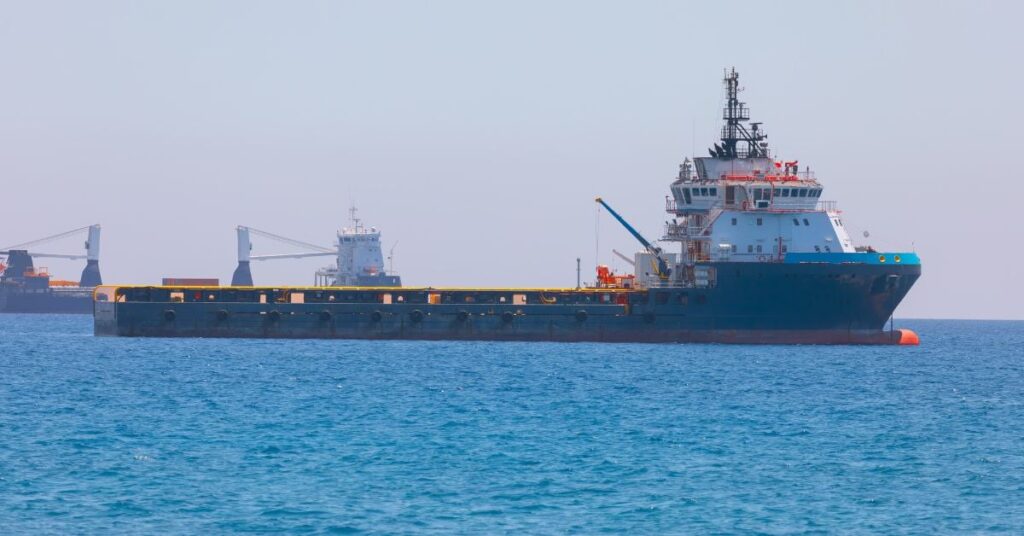
Haiyang Shiyou 292, China’s new deep-water offshore engineering vessel, at delivery in Qidong

The Haiyang Shiyou 292, also known as Ocean Oil 292, features underwater robots and AI-powered systems to enhance offshore operations, including pipeline laying, platform installation, and emergency salvage.

At 126 metres long and 28 metres wide, it boasts a displacement of 17,600 tons and a deck area equivalent to five basketball courts. Its design includes an all-electric azimuth thruster propulsion system and a dynamic positioning system, ensuring stability in open ocean conditions.

The Haiyang Shiyou 292 is equipped with a 400-ton crane and can carry 3,000 tons of subsea trenchers, equipment, and underwater robots. These robots are pivotal for tasks such as installing deepwater oil and gas platforms, laying subsea pipelines and cables, and conducting seabed surveys. The vessel’s advanced systems, including intelligent power distribution and bidirectional heat-exchange heating, reduce fuel consumption by nearly 15% compared to traditional engineering vessels, while offering an endurance of 15,000 nautical miles.

Construction of the vessel began in 2024, leveraging digital twin 3D modelling, simulated installation, and precision calculation software. Dual-crane coordination and AI-powered intelligent lifting systems further streamlined the build process, enabling the record 15-month completion time.

What This Means for China’s Offshore Energy Ambitions

The Haiyang Shiyou 292 is set to operate in the Bohai Sea, where it will support offshore oil and gas engineering projects. Its capabilities align with China’s broader strategy to bolster deep-sea energy resource development, particularly in subsea engineering and maintenance.

The integration of AI and digital twin technology in the vessel’s construction underscores China’s push toward smart manufacturing in the maritime sector.

CNOOC (China National Offshore Oil Corporation) is the state-owned enterprise responsible for China’s offshore oil and gas exploration and production. The delivery of the Haiyang Shiyou 292 reflects CNOOC’s commitment to enhancing its deep-water capabilities, particularly in regions like the Bohai Sea, where offshore energy projects are expanding rapidly.

The vessel’s construction timeline is particularly impressive given the complexity of offshore engineering projects. Traditional builds for similar vessels can take up to three years, but the use of digital twin technology and AI-powered systems allowed ZPMC to cut this time by more than half. This efficiency gain is critical for CNOOC, which is under pressure to accelerate offshore energy development to meet China’s growing demand for oil and gas.

Implications for the Maritime Industry and Global Offshore Operations

The delivery of the Haiyang Shiyou 292 has broader implications for the maritime and offshore energy sectors. The vessel’s advanced capabilities, particularly its underwater robots and AI-driven systems, set a new standard for deep-water engineering. Competitors in Europe, the Americas, and other regions may need to accelerate their own technological advancements to keep pace with China’s rapid progress in this field.

The 15% reduction in fuel consumption is another critical takeaway. As the maritime industry faces increasing pressure to reduce emissions and operational costs, innovations like those incorporated into the Haiyang Shiyou 292 could become industry norms. The vessel’s endurance of 15,000 nautical miles also makes it suitable for long-duration projects, further enhancing its versatility.

For stakeholders in offshore energy, the vessel’s capabilities offer a glimpse into the future of subsea engineering. The integration of underwater robots and AI not only improves operational efficiency but also reduces risks associated with deep-water projects. As China continues to expand its offshore energy infrastructure, vessels like the Haiyang Shiyou 292 will play a pivotal role in shaping the next generation of maritime technology.

The vessel is scheduled to begin operations in the Bohai Sea, where it will support CNOOC’s offshore oil and gas projects. Its initial tasks will likely include pipeline laying, platform installation, and subsea maintenance, with a focus on enhancing the efficiency and safety of these operations. The vessel’s advanced systems will also enable CNOOC to respond more effectively to emergencies, such as equipment failures or environmental incidents.

Looking ahead, the success of the Haiyang Shiyou 292 could pave the way for similar vessels in China’s offshore fleet. The use of digital twin technology and AI in its construction sets a precedent for future builds, potentially reducing timelines and costs across the industry.

As the maritime industry continues to evolve, innovations like those embodied by the Haiyang Shiyou 292 will be essential for meeting the growing demand for offshore energy. The vessel’s combination of speed, efficiency, and advanced technology positions it as a game-changer in the field of deep-water engineering.

CAMAL AI
Maritime artificial intelligence Go deeper with:

Sign up free to ask CAMAL AI for a summary, the key points or anything else about this story.

Related stories

CAMAL AI CAMAL AI

Financial Ports Newsletter Financial Ports Newsletter The maritime economy, every morning Ports, shipping and freight markets in one short email. Free.

Financial Ports newsletters

Pick the ones you want. Free, and you can unsubscribe in one click.