

New Pacific Industrial: Why a WWII Shipyard Just Became the Hottest Spot
A new shipbuilder has taken over 180,000 square feet of historic Kaiser Shipbuilding infrastructure in Vancouver.
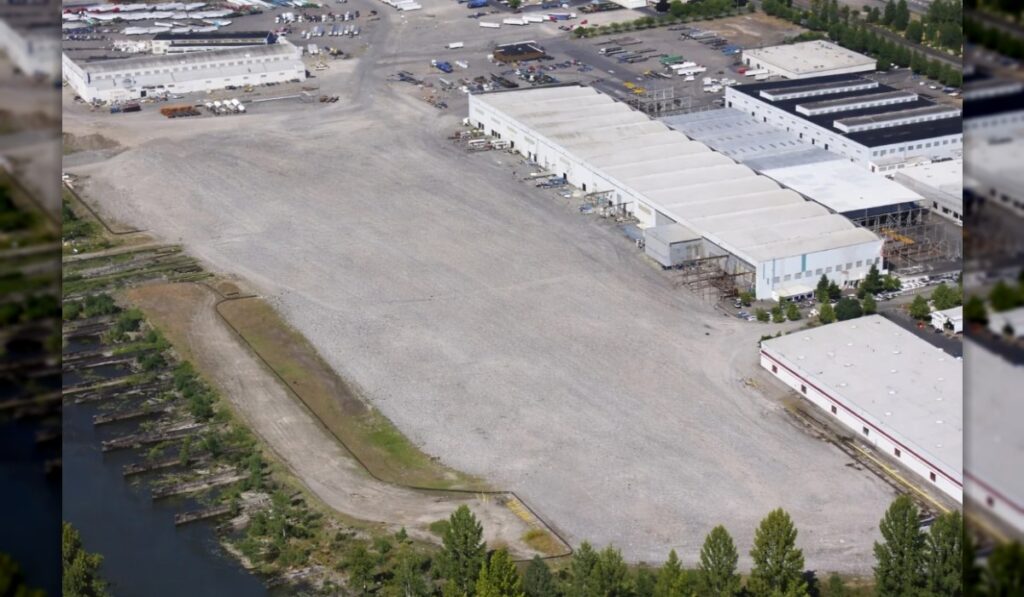
A new shipbuilding venture has taken root in Vancouver, Washington, marking a rare expansion in the U.S. civilian shipbuilding sector. New Pacific Industrial (NP) officially launched this month, occupying part of the historic Kaiser Shipbuilding yard—now known as the Columbia Business Center.
The company has secured approximately 180,000 square feet of the site, which includes high-bay fabrication spaces, laydown areas, and heavy lift cranes. The location also offers direct access to barge and rail transport, providing logistical advantages for large-scale projects.
First Contract Signals Confidence in New Venture: new pacific industrial
NP’s inaugural project is a 122-foot, 6,000-HP line haul tugboat for American Marine Corporation (AMC), a company with five decades in the maritime industry. This marks the first time AMC has commissioned a newbuild tug, underscoring its trust in the new shipyard’s capabilities.
The vessel, designed by engineering firm Glosten, is tailored for ocean towing. Peter Soles, Glosten’s Business Development Principal, described the design as a balance of durability and functionality: “a true ocean roamer—capable, practical, and built to withstand decades of demanding work while ensuring crew comfort.”
Reviving Historic Infrastructure for Modern Shipbuilding
NP’s leadership brings decades of industry experience. CEO Joe Corvelli, previously with Gunderson, Vigor, and Gibdock, emphasized the company’s customer-focused approach: “Complex projects require experienced teams, capable infrastructure, and a model that prioritizes the client’s needs.” The partnership with AMC and Glosten demonstrates this philosophy in action from the outset.
The Columbia Business Center’s existing assets—including its wartime-era assembly bays—provide NP with a scalable foundation. As the company prepares to deliver its first vessel, its ability to modernize historic infrastructure while meeting contemporary demands could influence the future of U.S. shipbuilding.


Sign up free to ask CAMAL AI for a summary, the key points or anything else about this story.
Related stories
CAMAL AI
 Financial Ports Newsletter
The maritime economy, every morning
Ports, shipping and freight markets in one short email. Free.
Financial Ports Newsletter
The maritime economy, every morning
Ports, shipping and freight markets in one short email. Free.