

Eight Suicide Attempts Expose Navy’s Mental Health Crisis at Sea
Acting Navy Secretary confirms eight attempts among USS Abraham Lincoln’s 7,000-strong strike group during record.
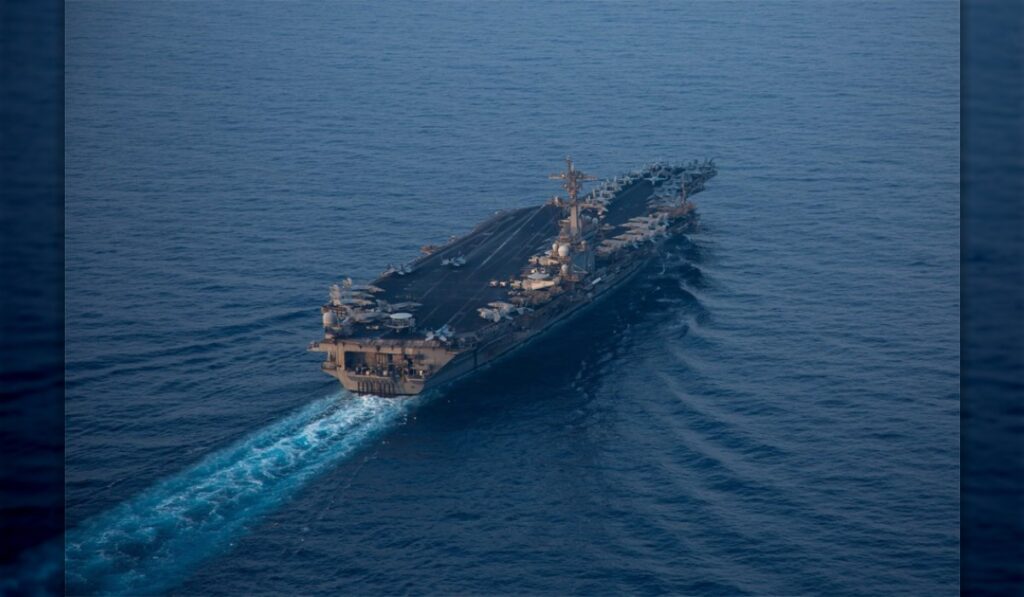
Eight sailors attached to the USS Abraham Lincoln Carrier Strike Group attempted suicide during its record-breaking deployment in the Mideast, Acting Navy Secretary Hung Cao confirmed in a letter to Senator Kirsten Gillibrand this week.
The USS Abraham Lincoln, one of the U.S. Its strike group, comprising approximately 7,000 personnel across multiple vessels, has faced unprecedented challenges: prolonged conflict, disrupted supply chains, and no clear timeline for return. Cao’s letter, obtained by The Maritime Executive, revealed that all eight suicide attempts occurred without fatalities, though one crewmember jumped overboard in August before being rescued by helicopter.
mantener (no es error de dato cuantitativo o nombre propio): Mental Health
The confirmation of eight suicide attempts has intensified scrutiny of the Navy’s mental health support systems. Cao’s letter directly contradicts statements made by CENTCOM Adm. Brad Cooper. Brad Cooper, who visited the Lincoln in mid-August and praised its leadership for having “among the lowest number of cases related to mental health.” Defense Secretary Pete Hegseth similarly dismissed reports of issues aboard the carrier as “completely misrepresented,” while President Donald Trump remarked that the deployment was “not nearly long enough.”
These logistical failures compound the psychological strain on sailors, who rely on consistent communication with loved ones and access to basic necessities. The USS Abraham Lincoln, like all U.S. Navy carriers, operates under the oversight of U.S. Central Command (CENTCOM), which coordinates military operations across the Middle East, North Africa, and Central Asia. CENTCOM’s role in managing deployments like the Lincoln’s underscores the broader challenges of balancing operational demands with crew welfare.
In early August, accounts of suicide attempts, some narrowly averted, began circulating in the media, prompting Senator Gillibrand to seek clarification from the Navy. Cao’s response acknowledged the attempts but noted that the rate of physical illnesses and injuries remained within normal limits for a carrier deployment. This distinction highlights the Navy’s struggle to address mental health as a standalone crisis, rather than a subset of broader operational metrics.
“Since the beginning of Lincoln’s deployment, there have been a total of eight suicide attempts across the strike group. This includes the Lincoln crew and sailors from other vessels in the group.”
Hung Cao·Acting Navy Secretary
In a separate address on September 20, Cao urged military leaders to “defeat this enemy within called suicide,” emphasizing the need for commanders to know their personnel on a personal level. The Navy has deployed chaplains, counselors, and behavioral health technicians aboard the Lincoln, but critics argue these measures have been insufficient given the deployment’s duration and intensity.
Record Deployment Strains Crew Resilience
The carrier’s return to the U.S.
The CSG’s role in Operation Epic Fury, a mission aimed at countering Iranian aggression in the Mideast, has placed additional strain on its personnel. “The lack of a clear end date exacerbates stress,” said a former Navy psychologist, speaking on condition of anonymity. “Sailors need tangible milestones, not just vague assurances.”
The Navy’s struggles extend beyond the Lincoln. Two destroyers, the USS Spruance and USS McFaul, have been deployed in the Mideast for over 10 months, while 15 ships remain in the region’s weapons engagement zone. These vessels operate in a high-stakes environment where the risk of conflict is ever-present, further amplifying the mental health burden on crews.
For sailors and their families, the psychological impact of such deployments is profound. The Navy’s mental health resources, including chaplains, counselors, and behavioral health technicians, are designed to provide support, but their effectiveness is often limited by the sheer scale of the problem. The carrier’s next stop in Guam will provide another opportunity for rest, though the long-term solution lies in systemic reforms to how the Navy manages mental health.
Cao’s letter underscores the need for systemic changes, though it remains unclear whether the Navy will implement new policies to address mental health crises at sea. The Acting Navy Secretary’s call for commanders to “know their personnel on a personal level” is a step in the right direction, but critics argue that more concrete measures, such as shorter deployment cycles, improved access to mental health care, and better logistical support, are needed to prevent future crises.
The USS Abraham Lincoln is now en route to the United States, but its crew’s ordeal has reignited debates about the human cost of prolonged military engagements. For now, the focus shifts to the next steps: will the Navy take meaningful action, or will the lessons of the Lincoln’s deployment be forgotten once the carrier docks?
Navy personnel, particularly those serving in high-pressure environments like the Mideast. Families, meanwhile, are left grappling with the emotional strain of separation, often without adequate support from the Navy.
The Navy’s mental health resources, while present, are often stretched thin. Chaplains, counselors, and behavioral health technicians are deployed aboard carriers like the Lincoln, but their ability to provide individualized care is limited by the sheer size of the crew. This underscores the need for a more proactive approach, one that prioritizes prevention and early intervention rather than reactive measures.
For families, the psychological impact of a loved one’s deployment is equally significant. The lack of consistent communication, exacerbated by mail system disruptions, can heighten anxiety, while logistical failures like food shortages and water contamination raise concerns about the safety and well-being of sailors. The Navy’s acknowledgment of these issues in Cao’s letter is a step toward transparency, but it remains to be seen whether this will translate into tangible improvements for families.
With 15 ships currently operating in the Mideast’s weapons engagement zone, the strain on personnel is unlikely to ease in the near future. The Navy’s 2024 suicide data, which recorded 356 attempts among its 337,000 active-duty personnel, suggests that the problem is systemic. Addressing it will require not only better mental health resources but also a reevaluation of deployment lengths and operational demands.
As the USS Abraham Lincoln makes its way back to the United States, its crew’s experiences serve as a stark reminder of the human cost of military service. The carrier’s deployment, one of the longest in post-Vietnam history, has tested the resilience of its sailors in ways that few could have anticipated.
For the Navy, the challenge now is to ensure that the lessons learned from this deployment are not forgotten. This means implementing systemic changes to support mental health, improving logistical conditions aboard ships, and providing better resources for families. Only then can the Navy hope to prevent future crises and fulfill its duty to those who serve.
For sailors and their families seeking support, the Navy offers several official channels. The Navy Behavioral Health Program provides mental health resources, while the Navy Family Line offers support for families of deployed personnel. Additionally, the Military OneSource platform provides confidential counseling and resources for service members and their families. These resources, while valuable, must be complemented by systemic reforms to address the root causes of the mental health crisis in the Navy.


Sign up free to ask CAMAL AI for a summary, the key points or anything else about this story.
Related stories
CAMAL AI
 Financial Ports Newsletter
The maritime economy, every morning
Ports, shipping and freight markets in one short email. Free.
Financial Ports Newsletter
The maritime economy, every morning
Ports, shipping and freight markets in one short email. Free.