

Seahawk launches $1bn fund to fill shipping’s credit gap left by banks
New Luxembourg-based fund targets mid-sized owners with seven-year loans as traditional lenders tighten terms.
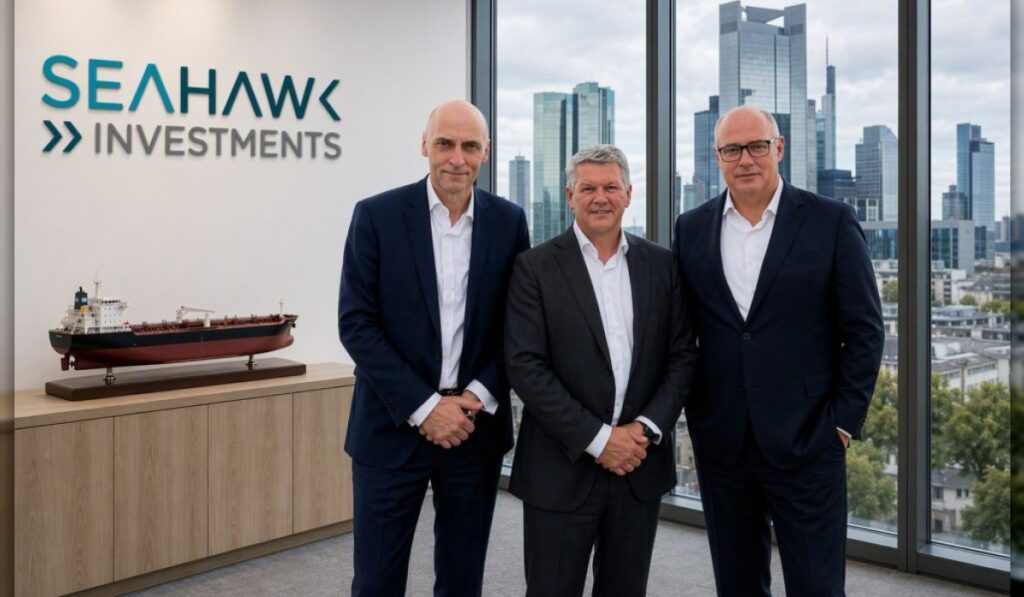
Frankfurt-based investment manager Seahawk Investments has launched a dedicated maritime credit fund to fill the financing gap left by traditional shipping banks, which are tightening loan-to-value ratios and focusing on larger, financially stronger borrowers.
The launch of SMCF comes at a time when traditional shipping banks are becoming increasingly selective. According to data from Petrofin, total bank lending to shipping stands at around $425bn, while the wider finance market, including leasing, export finance, and alternative capital, is estimated at approximately $680bn. However, the rebound in lending has not been evenly distributed.
Société Générale described 2026 as a well-supplied ship finance market overall but noted that smaller owners are increasingly tapping private credit funds to meet their financing needs. This trend is not isolated. Pelagic Partners’ MareVia MareVia Credit Fund completed its first transaction last year, financing three multipurpose vessels under five-year bareboat arrangements.
Global Ship Lease
Earlier this year, Eurazeo secured a €175m ($204m) first closing for its second sustainable maritime infrastructure fund, which also provides senior secured asset-backed financing to small and mid-sized European shipowners.
Seahawk’s approach is designed to capitalise on this structural financing imbalance. The fund employs an anti-cyclical strategy, focusing on generic and liquid assets with transparent secondhand values rather than concentrating on a single vessel segment. Transactions can be structured under English, Norwegian, Danish, and Dutch law, offering flexibility to borrowers across different jurisdictions.
Who is behind the new maritime credit fund?
Seahawk Investments, the Frankfurt-based manager behind SMCF, is majority-owned by Transport Capital, a Singapore-based maritime investment and corporate finance firm founded in 2013 by Philip Clausius and other former executives of First Ship Lease.
Seahawk has bolstered its team with the appointment of Michael de Visser as Managing Director and Head of Credit Investments. Michael de Visser joined the firm in August after more than 30 years in credit, including a decade heading shipping at Dutch lender NIBC Bank and a spell as senior adviser to Transport Capital since 2024. His appointment reunites him with Transport Capital, where he had been advising prior to joining Seahawk.
Universal Investment Luxembourg serves as the alternative investment fund manager and administrator, with DZ Privatbank acting as depositary, Arendt & Medernach as legal counsel, and Deloitte as auditor.
The fund’s focus on senior secured loans and financial leases, backed by tangible maritime assets, offers a level of security that is particularly appealing in a market where credit availability is becoming scarcer.
The broader implications of this shift are significant. As private credit funds gain traction in maritime finance, they are likely to play an increasingly prominent role in shaping the industry’s future. For shipowners, this means greater access to capital but also a need to adapt to the terms and conditions set by alternative lenders. For investors, it presents an opportunity to gain exposure to a sector that has historically been dominated by traditional banking institutions.
Looking ahead, the success of SMCF and similar funds will depend on their ability to deliver consistent returns while managing the risks inherent in maritime lending. With ship prices remaining elevated and market conditions evolving rapidly, the ability to execute reliably in complex situations will be paramount. For now, Seahawk’s entry into direct ship lending signals a growing confidence in the resilience of the maritime sector and the potential for private credit to fill the void left by traditional banks.


Sign up free to ask CAMAL AI for a summary, the key points or anything else about this story.
Related stories
CAMAL AI
 Financial Ports Newsletter
The maritime economy, every morning
Ports, shipping and freight markets in one short email. Free.
Financial Ports Newsletter
The maritime economy, every morning
Ports, shipping and freight markets in one short email. Free.