

2.6 Tonne Meth Bust: How a False-ID Ship Fooled Indonesia’s Customs
Indonesian authorities seize 2.6 tonnes of liquid methamphetamine from a Tanzanian-flagged cargo vessel operating under.
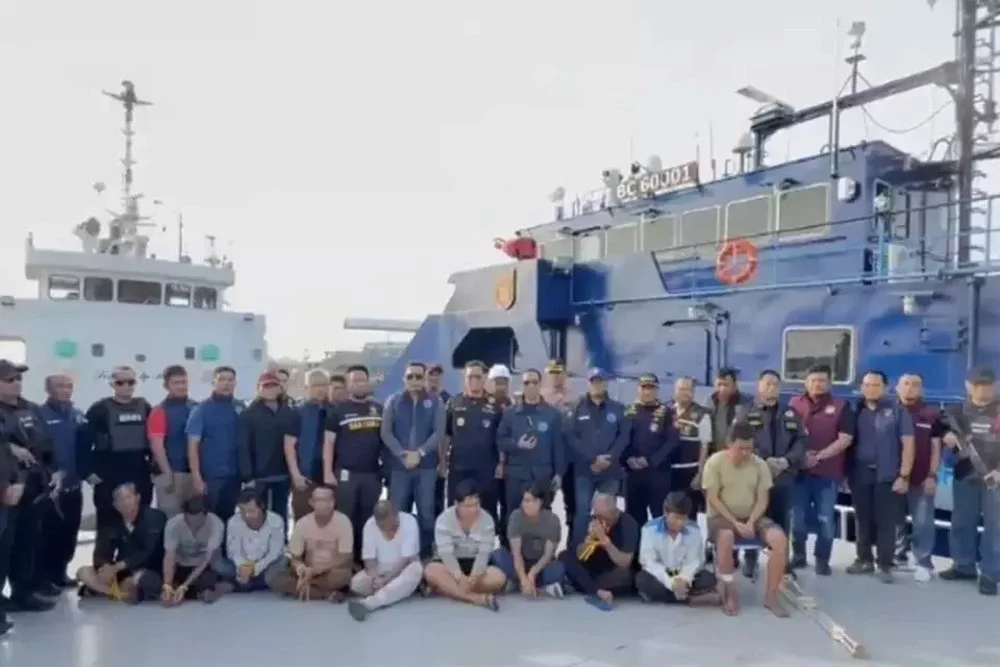
Indonesian authorities have intercepted one of the country’s largest drug busts, seizing 2.6 tons of liquid methamphetamine from a Tanzanian-flagged cargo ship operating under a false identity. The vessel, named Ocean Porter, was carrying the illicit drugs in barrels and its water tank when it was boarded off the coast of Bengkalis, Riau, on Monday night.
The joint operation, involving Indonesia’s police and customs officials, targeted the 1,480 DWT general cargo ship after intelligence suggested it was involved in smuggling. During the search, officers discovered the drugs concealed in eight 200-litre drums and the ship’s 1,000-litre water tank. Sniffer dogs also detected 1.5 million Chinese cigarettes in a 40-foot container, packaged without the required tax stamps.
How the How the Ship Evaded Detection with a False ID: liquid methamphetamine
The vessel, built in 2003, has been identified under multiple names, including Rain Wind and Rain Maker, raising suspicions of a deliberate attempt to obscure its true ownership. Records indicate the ship was sold in 2025 and is registered in Tanzania, though its listed owner is based in Taiwan. This discrepancy highlights the challenges authorities face in tracking vessels involved in illicit activities.
The interception follows a similar operation ten days earlier, when Indonesian and Thai authorities seized 1.3 tonnes of ketamine from another Tanzanian-flagged ship, King Sun. That vessel, a 650 DWT cargo ship, was carrying seven Myanmar nationals and one Taiwanese national, further underscoring the region’s role as a transit hub for drug trafficking.
Indonesia’s Harsh Anti-Drug Laws and Regional Impact
Indonesia enforces some of the world’s strictest anti-drug laws, with the death penalty applicable to traffickers. According to the Associated Press, approximately 530 individuals, including 90 foreigners, are currently on death row in the country, primarily for drug-related offences. However, the last executions were carried out in 2016, and a moratorium remains in effect. The country’s legal framework, under Law No. 35 of 2009, imposes mandatory death sentences for large-scale drug trafficking, though judges retain discretion in sentencing.
The country’s geographic position, large youth population, and diverse land areas make it an attractive target for drug cartels. Police reports indicate that the largest previous methamphetamine bust involved two tonnes of crystal meth seized from a fishing boat en route to Batam Island last year.
The detained crew, all Myanmar nationals, are likely to face severe legal consequences under Indonesia’s judicial system. The Indonesian authorities have indicated that they will seek cooperation from Myanmar’s government to trace the origins of the smuggling operation, though diplomatic challenges may complicate such efforts.
The case also raises questions about the effectiveness of international maritime regulations in preventing vessels from operating under false identities. The IMO has long advocated for stricter enforcement of ship identification protocols, but gaps remain, particularly in regions with high levels of corruption or weak regulatory oversight.
For example, Tanzania’s shipping registry has faced criticism for its lax verification processes, which allow vessels to change names and flags with minimal scrutiny. This incident may prompt calls for the IMO to strengthen its oversight mechanisms, particularly for vessels registered in jurisdictions known for facilitating illicit activities.
For stakeholders in the shipping industry, this incident serves as a stark reminder of the risks associated with lax vessel registration practices. The Baltic and International Maritime Council (BIMCO), a leading shipping association, has warned that the misuse of flags of convenience undermines the integrity of global maritime trade.
Industry experts argue that enhanced due diligence, including background checks on vessel ownership and crew members, could help mitigate these risks. However, such measures require international cooperation, as smugglers often exploit discrepancies between national regulations.
The interception of the Ocean Porter highlights the broader security challenges facing Southeast Asia, a region that has become a key transit route for drug trafficking. The Association of Southeast Asian Nations (ASEAN) has identified drug smuggling as a major threat to regional stability, with methamphetamine production in the Golden Triangle, an area encompassing parts of Myanmar, Laos, and Thailand, fueling the illicit trade.
The recent busts in Indonesia suggest that traffickers are increasingly using maritime routes to transport drugs, bypassing traditional land-based smuggling corridors.
For the shipping industry, the incident underscores the need for greater vigilance in monitoring vessel movements and verifying the legitimacy of cargo. The International Chamber of Shipping (ICS) has urged its members to adopt stricter compliance measures, including the use of tracking technologies and enhanced reporting protocols. However, the cost of implementing such measures remains a barrier for many smaller operators, particularly in developing countries where regulatory enforcement is already weak.
Indonesia’s response to this bust may also have implications for its neighbours. Malaysia and the Philippines, which share maritime borders with Indonesia, have already increased patrols in their waters to prevent spillover effects. The ASEAN Senior Officials on Drug Matters (ASOD) has called for a coordinated regional strategy to combat drug trafficking, including the sharing of intelligence and joint operations. However, differing legal frameworks and political priorities among member states have hindered progress on this front.
For businesses and investors in the maritime sector, the incident serves as a cautionary tale about the risks of operating in high-risk jurisdictions. Companies involved in vessel chartering or cargo transportation are advised to conduct thorough due diligence on their partners, including verifying the legitimacy of vessel registrations and the backgrounds of crew members. Failure to do so could result in legal liabilities, reputational damage, or financial losses.
As Indonesia ramps up its efforts to combat drug trafficking, neighbouring countries are likely to increase surveillance of vessels entering their waters. The recent busts involving Tanzanian-flagged ships suggest a pattern that authorities in Southeast Asia will be keen to disrupt.
For now, the focus remains on dismantling the networks behind these operations and preventing further smuggling attempts. Stakeholders are encouraged to monitor updates from Indonesia’s National Narcotics Agency (BNN) and the Directorate General of Customs and Excise for official statements on the investigation and its outcomes.
For those seeking further information, the IMO provides guidelines on vessel registration and compliance on its official website. Additionally, the United Nations Office on Drugs and Crime (UNODC) publishes annual reports on global drug trafficking trends, which can be accessed here.


Sign up free to ask CAMAL AI for a summary, the key points or anything else about this story.
Related stories
CAMAL AI
 Financial Ports Newsletter
The maritime economy, every morning
Ports, shipping and freight markets in one short email. Free.
Financial Ports Newsletter
The maritime economy, every morning
Ports, shipping and freight markets in one short email. Free.