

$4.2bn Zim deal in limbo: Israel demands stricter shipping safeguards
Hapag-Lloyd and FIMI submit revised terms to address Israeli government concerns over maritime security and foreign.
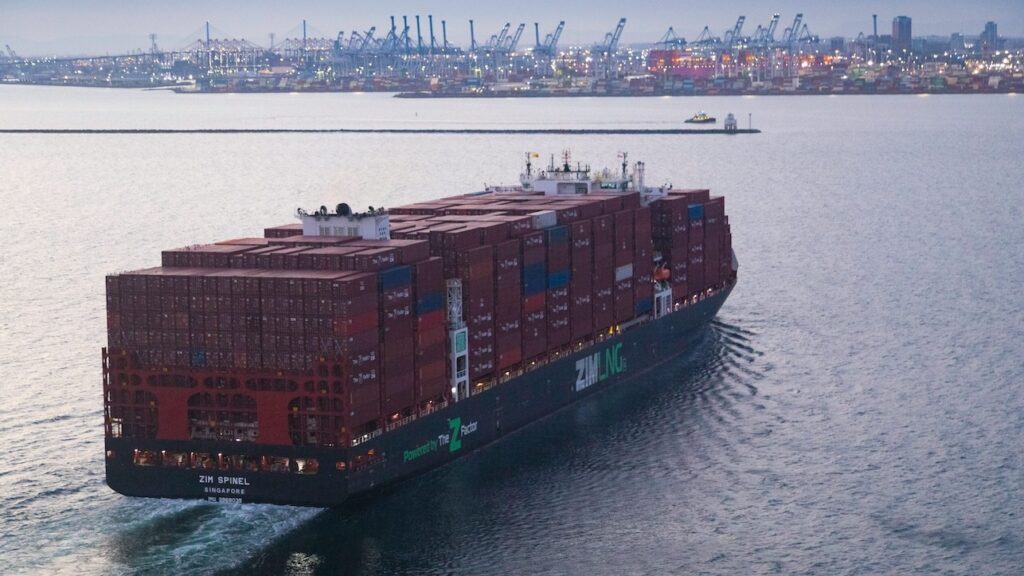
Hapag-Lloyd has submitted revised terms for its $4.2 billion acquisition of Israeli shipping giant Zim Integrated Shipping Services, aiming to overcome Israeli government concerns over maritime security and strategic asset control. The German carrier, partnering with Israeli private-equity firm FIMI, seeks to finalise the deal by late 2026, but regulatory hurdles threaten to delay the transaction.
The original agreement, announced in February, offered Zim shareholders $35 per share in cash, a 58% premium over the company’s Feb. 13 share price. Hapag-Lloyd CEO Rolf Habben Jansen visited Israel this week to present the revised proposal, which includes tighter controls on foreign ownership and a reinforced role for the Israeli entity.
Why Israel’s approval is critical for the deal
However, Israel’s “golden share” protections, designed to ensure maritime service during emergencies, have complicated the transaction. Under the original terms, FIMI would establish a separate Israeli company, Zim Israel or New Zim, to hold strategic assets, but regulators demanded stronger safeguards.
Hapag-Lloyd
The revised proposal addresses these concerns by lowering the foreign ownership threshold that triggers government scrutiny from 24% to 10%. Additionally, FIMI has committed to listing shares of the Israeli entity exclusively on Israel’s domestic exchange, ensuring local oversight. The Israeli company would also receive 16 vessels, five more than the 11 required under existing golden-share rules, available to the government during disruptions while maintaining Israel’s maritime links.
“The revised structure will further strengthen Israel’s maritime security and independence.”
Hapag-Lloyd·German carrier
Hapag-Lloyd stated earlier this month that the new terms would secure Israeli access to key shipping routes, including connections from Asia. The carrier also emphasised that the proposal reflects “significant improvements” over the original structure, though Israeli authorities have yet to signal approval.
What the deal means for global shipping
For the U.S. market, the acquisition would bolster Hapag-Lloyd’s presence in the trans-Pacific and U.S. import supply chains, particularly on the U.S. West Coast, U.S. East Coast, and Pacific Northwest routes. Zim’s services via Canadian ports like Vancouver and Prince Rupert provide critical access to the U.S. Midwest, a region where Hapag-Lloyd currently has limited reach. However, until the deal closes, both carriers must operate independently, and no immediate changes to service or pricing are expected.
The transaction’s potential impact extends beyond operational synergies. import market, where Zim has established itself as a reliable carrier for retailers and manufacturers.
The deal also highlights the growing importance of Canadian gateways like Vancouver and Prince Rupert. These ports serve as alternative entry points to the U.S. Midwest, bypassing congested West Coast terminals. For Hapag-Lloyd, acquiring Zim’s existing services through these ports would provide a strategic foothold in a region where demand for containerised goods continues to grow. However, the benefits of this expansion hinge on regulatory approval, which remains the primary obstacle.
The transaction’s success hinges on Israeli regulatory approval, which remains uncertain. The GCA, which oversees state-owned companies, has previously indicated that the original proposal did not adequately address security concerns. Hapag-Lloyd’s latest revisions aim to bridge this gap, but the agency’s response in the coming weeks will determine whether the deal can proceed as planned. If approved, the combined entity would rank among the top five global carriers, reshaping competition in container shipping.
For stakeholders, including shippers, freight forwarders, and port operators, the deal’s outcome carries significant implications. A successful acquisition would likely lead to enhanced service offerings, particularly on routes connecting Asia to North America. However, the delays underscore the complexities of cross-border mergers in a sector where national security and economic sovereignty often collide with commercial interests.
Industry analysts note that the deal’s structure, separating Zim’s international and Israeli operations, could set a precedent for future acquisitions involving state-protected assets. The revised terms, which include stricter foreign ownership limits and a reinforced role for the Israeli entity, may serve as a template for similar transactions in other strategically sensitive sectors. However, the delays also highlight the challenges of navigating regulatory frameworks that prioritise national interests over global consolidation.
The next critical milestone arrives in the coming weeks, when Hapag-Lloyd and FIMI present the finalised proposal to Israeli authorities. The GCA’s response will be pivotal, as its approval is required for the deal to move forward. Stakeholders should monitor official communications from the GCA and Israel’s Ministry of Finance, which are expected to issue statements following their review of the revised terms.
For those tracking the deal’s progress, the GCA’s website (www.gca.gov.il) and Hapag-Lloyd’s investor relations portal (www.hapag-lloyd.com) will provide updates on regulatory developments. Zim’s filings with the U.S. Securities and SEC (SEC), available on its investor relations page (www.zim.com), may also include disclosures related to the transaction.
If the revised proposal gains approval, the acquisition could close by late 2026, aligning with the original timeline. However, further revisions may be necessary if Israeli authorities identify additional concerns. For now, the deal remains in a state of flux, with its outcome dependent on regulatory decisions that balance commercial ambitions with national security imperatives.
The implications for global shipping are clear: a successful merger would create a carrier with unparalleled scale and reach, while also setting a new standard for cross-border transactions in strategically sensitive industries. Until then, the industry will watch closely as Hapag-Lloyd and FIMI navigate the final stages of this high-stakes negotiation.


Sign up free to ask CAMAL AI for a summary, the key points or anything else about this story.
Related stories
CAMAL AI
 Financial Ports Newsletter
The maritime economy, every morning
Ports, shipping and freight markets in one short email. Free.
Financial Ports Newsletter
The maritime economy, every morning
Ports, shipping and freight markets in one short email. Free.



