

Iran Seizes US Mine-Hunting Drone in Hormuz—What Was It Doing?
The 3-ton Anduril Dive-LD, captured by Iran’s IRGC, was mapping mines in the Strait of Hormuz for months.
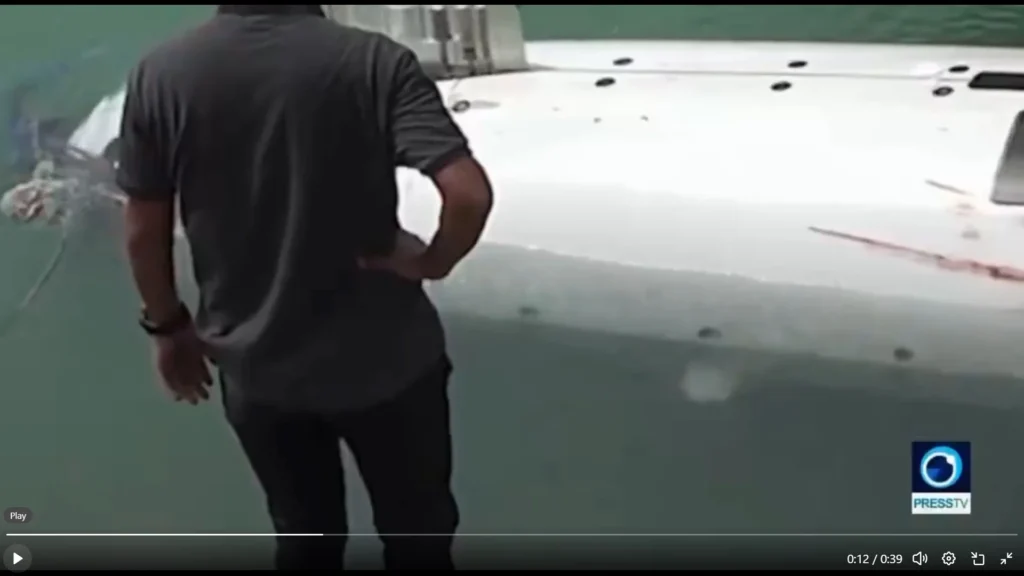
Iran’s Islamic Revolutionary Guard Corps has captured a U.S. The seized submersible, identified as an Anduril Dive-LD, was part of a covert U.S.
The incident, confirmed by U.S. Central Command (CENTCOM), occurred on September 8, 2026, when the drone malfunctioned more than 24 hours before being intercepted. A CENTCOM spokesman told NewsNation that the vessel was “surveying regional waters in support of ongoing operations” but stressed it was an older model that did not carry classified sonar or radar equipment. Despite these assurances, the capture raises concerns about the vulnerability of Western military technology in contested waters.
How the Anduril Dive-LD became a pawn in Hormuz’s high-stakes game: Iran
Capable of operating underwater for up to 10 days, the drone had already logged “no especificado” in CENTCOM’s operations, according to Anduril Industries, the U.S. defence firm behind the system. The company described the Dive-LD as an “attritable system”, military jargon for equipment that is cheap enough to lose without significant strategic cost.
However, the loss is far from trivial. Iran has repeatedly threatened to close the strait in response to Western sanctions, and the U.S. Navy has maintained a permanent presence to ensure freedom of navigation.
Footage released by Iran’s state-run PressTV shows the drone’s hull, sensors, and appendages in sharp detail, enabling open-source analysts to confirm its identity. The IRGC’s official statement boasted of trapping “one of the most modern, intelligent and unmanned submarines of the terrorist American army,” while Iranian newspapers splashed images of the captured drone on their front pages under the headline ‘Satan fish’. The rhetoric underscores the propaganda value Iran derives from such seizures, even as the U.S. downplays the strategic impact.
The secret war beneath the waves: Why mine clearance in Hormuz matters
The capture of the Dive-LD sheds light on a little-known aspect of the U.S.-Iran standoff: a covert demining operation in the Strait of Hormuz. According to a Financial Times report, U.S. Navy SEALs have been using robot boats and specialised underwater drones to locate and neutralise Iranian mines for several months. The drones, including the Dive-LD, map the seabed for explosives, which divers then disable in high-risk night-time missions. The loss of even one drone disrupts this delicate balance, forcing the U.S. to adapt its tactics or risk leaving critical shipping lanes vulnerable.
This is not the first time Iran has seized U.S. unmanned vessels. In 2022, the IRGC towed a Saildrone Explorer in the Arabian Gulf before releasing it under pressure from U.S. Navy forces. Days later, the Iranian Navy frigate Jamaran captured two more Saildrones in the Red Sea, returning them only after U.S. intervention. These incidents highlight the growing role of unmanned systems in modern naval warfare, and the risks of operating them in hostile waters.
“The Strait of Hormuz has become a testing ground for new technologies,” Rowlands said.
The U.S. has not disclosed whether it will attempt to recover the drone or destroy it to prevent further exploitation. The Strait of Hormuz remains a tinderbox, where even a single malfunctioning drone can spark a crisis with global repercussions. For the world’s oil markets, the stakes could not be higher: any disruption to traffic through the strait would send energy prices soaring, with ripple effects across economies already grappling with inflation and supply chain instability.
As tensions simmer, the U.S. Navy is likely to accelerate its deployment of more advanced, and more expendable, unmanned systems. Anduril Industries, for its part, has downplayed the loss, stating that the Dive-LD had “already delivered significant value” during its months-long operations. Yet for Iran, the capture is a propaganda coup and a potential intelligence windfall. The question now is whether this incident will remain an isolated skirmish or escalate into a broader confrontation beneath the waves.


Sign up free to ask CAMAL AI for a summary, the key points or anything else about this story.
Related stories
CAMAL AI
 Financial Ports Newsletter
The maritime economy, every morning
Ports, shipping and freight markets in one short email. Free.
Financial Ports Newsletter
The maritime economy, every morning
Ports, shipping and freight markets in one short email. Free.