

India Warns UN: $8.4bn in Cargo at Risk as Ships Become Pawns
Indian Navy has escorted 449 merchant vessels carrying 20.3m tonnes of cargo through high-risk waters since March.
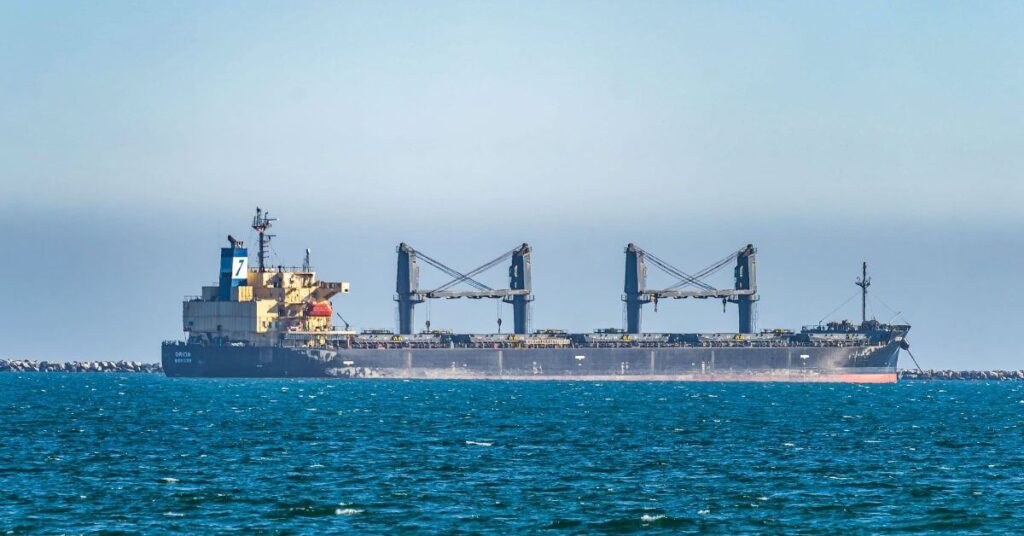
The statement, delivered by India’s Permanent Representative to the UN, P Harish, comes as the Indian Navy reveals it has escorted 449 merchant ships carrying nearly 20.3 million metric tonnes of cargo, worth more than $8.4 billion, through high-risk waters as of September 14.
“Commercial vessels must not become targets of geopolitical tensions,” he said, adding that navigational rights must be protected from “coercion, threats, unlawful restrictions, or arbitrary interference.” The meeting, held under the Arria-formula format, was titled “Safe Seas, Shared Security: Protecting Freedom of Navigation in an Evolving Security Environment.".
Shipping Costs Surge as Vessels Reroute to Avoid Conflict Zones: India
The economic fallout of the crisis is already being felt. Ships forced to take longer routes to avoid conflict zones add further strain, particularly on developing countries, which bear the brunt of these disruptions. The blocking of the Strait of Hormuz earlier this year, for instance, sent global petroleum prices soaring, underscoring the fragility of energy supply chains.
Frontline
India’s own maritime interests have been directly impacted. In April, Iranian Revolutionary Guard Corps gunboats fired warning shots at two Indian-flagged tankers, while in July, an Indian sailor was killed and another injured in Iranian attacks on two UAE-registered ships. New Delhi has lodged formal protests with both Tehran and Washington, including over the June killing of three Indian sailors when the US struck their Palau-registered vessel. These incidents highlight the growing risks faced by seafarers caught in the crossfire of regional conflicts.
To counter the threats, the Indian Navy launched Operation Urja Suraksha, deploying 11 naval units in the western Arabian Sea by mid-March. As of September 14, these operations had escorted 449 merchant vessels, safeguarding nearly 20.3 million metric tonnes of cargo and oil.
Harish emphasised that such measures are critical to keeping commercial and humanitarian cargo moving, but warned that action must not wait until after an incident occurs. Designated as a reporting centre in the IMO’s Best Management Practices on maritime security, the IFC-IOR facilitates real-time information sharing among regional navies, coast guards, and shipping companies. New Delhi is now lobbying for the IFC-IOR to be formally recognised under IMO Maritime Safety Committee Resolution 324(89), which would grant it greater authority in coordinating responses to maritime threats.
Despite these efforts, the scale of the challenge remains daunting. The Houthi movement, which controls much of Yemen’s north-west and key coastal areas, has intensified attacks on shipping in the Red Sea. With nearly 70-80% of Yemen’s population, about 30 million people, under Houthi control, the group’s ability to disrupt global trade routes shows no signs of abating.
The Houthis’ origins trace back to the 1990s, when the movement emerged as a Zaidi Shia revivalist group in opposition to Yemen’s then-president, Ali Abdullah Saleh. After seizing the capital, Sanaa, in 2011, the group has since entrenched itself in Yemen’s political and military landscape, receiving backing from Iran’s Islamic Revolutionary Guard Corps.
For shipping companies and seafarers, the implications are stark. The 6th SAFETY4SEA London Forum, held on September 24, brought together industry leaders to discuss the evolving risks. Apo Belokas, Managing Editor of SAFETY4SEA, noted in his presentation, “Beyond PSC Compliance: The Road to Performance Excellence,” that the current crisis demands a shift from reactive compliance to proactive risk management.
Capt. Konstantinos G. Karavasilis, Regional Director of Loss Prevention at UK P&I Club, echoed this sentiment, stressing the need for dynamic risk assessment tools that can adapt to rapidly changing threat environments.
India’s call for better support for seafarers during maritime crises has gained traction, with the IMO and other bodies exploring measures to enhance crew welfare in conflict zones. These include mandatory safety briefings, enhanced communication protocols, and contingency plans for vessels transiting high-risk areas. For now, however, the burden falls on individual shipping companies to navigate the risks, often at significant financial and human cost.
“Navigation and overflight rights must be respected under international law, including the UN Convention on the Law of Sea.”
P Harish·India’s Permanent Representative to the UN
The stakes are clear. With more than $8.4 billion in cargo at risk, the message from India is unequivocal: the world’s shipping lanes must not become the next frontline in geopolitical conflicts. For the global economy, the cost of failure is too high to ignore. As Harish put it, “The freedom of navigation is not a privilege, it is a right that must be upheld by all.”
For stakeholders, the path forward requires vigilance. Shipping companies are advised to monitor updates from the IMO, IFC-IOR, and regional naval forces, while seafarers should adhere to the latest security protocols. The Indian Navy’s Operation Urja Suraksha remains a critical safeguard, but as tensions persist, the need for a coordinated international response has never been more urgent.


Sign up free to ask CAMAL AI for a summary, the key points or anything else about this story.
Related stories
CAMAL AI
 Financial Ports Newsletter
The maritime economy, every morning
Ports, shipping and freight markets in one short email. Free.
Financial Ports Newsletter
The maritime economy, every morning
Ports, shipping and freight markets in one short email. Free.