

Heartland Express turns profitable in Q3 without asset sales boost
US truckload carrier posts $1m net income as freight volumes and pricing improve amid industry capacity cuts
Heartland Express has posted its first quarterly net profit since 2023 without relying on outsized gains from selling equipment or terminals, marking a turnaround for the North Liberty, Iowa-based truckload carrier.
Heartland Express’s Q3 revenue reached $179.5m, a 9% decline year-over-year and below the $191.4m consensus estimate from analysts. Excluding fuel surcharges, revenue was 15% lower than the previous year. Despite the revenue shortfall, the company achieved a net income of $1m, or 1 cent per share, compared to an 11-cent per share loss in Q3 2025. Analysts had expected earnings of 3 cents per share, but higher gains on asset sales provided a 1-cent tailwind.
The company’s adjusted operating ratio, a key metric in the trucking industry, representing operating expenses as a percentage of revenue, stood at 97.6%, an improvement of 590 basis points from the year-ago quarter. This indicates better cost management, though the company highlighted ongoing pressures from fuel, maintenance, repairs, and employee-related expenses.
Operating cash flows for the first nine months of 2026 totalled $55m, supporting the company’s ongoing investments in fleet renewal, dividend payments, and share repurchases. The average age of Heartland Express’s tractor fleet has decreased to 2.3 years, down from 2.6 years in the previous year, reflecting its commitment to modernising equipment.
Financial performance: revenue misses but profitability returns: Heartland Express
In a statement accompanying the results, CEO Mike Gerdin attributed the improved financial performance to stronger freight volumes and better customer pricing, driven by ongoing industry capacity reductions. However, he cautioned that the full benefits of current contract negotiations are not expected to materialise until 2027.
“The improved financial results reflect stronger freight volumes and improved customer pricing resulting from ongoing industry capacity reductions, even though we do not expect the positive impacts of ongoing contract negotiations to be fully reflected in our operating results until 2027,” Gerdin said.
“The improved financial results reflect stronger freight volumes and improved customer pricing resulting from ongoing industry capacity reductions, even though we do not expect the positive impacts of ongoing contract negotiations to be fully reflected in our operating results until 2027.”
Mike Gerdin·CEO of Heartland Express
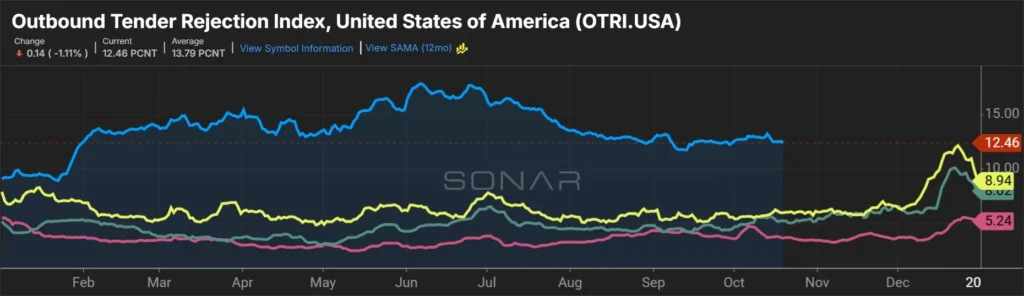
Heartland Express’s return to profitability aligns with broader trends in the US trucking sector. “The ’26 bid season was a tale of two halves, and we built momentum on pricing as we moved through, especially in the last few months. For the overall network, we realised low single-digit increases in pricing during the last bid season and are seeing positive contribution from these pricing actions in our results,” Field said.
The reduction in debt and modernisation of the fleet suggest a focus on long-term stability, even as the industry continues to navigate challenges such as rising operational costs and fluctuating demand.
Despite the positive financial results, Heartland Express’s share price dipped by 0.6% at 12:08 p.m. EDT on Tuesday, underperforming the broader market, where the S&P 500 rose by 0.4%. The stock’s decline may reflect investor caution about the sustainability of the turnaround, particularly given the revenue miss and the company’s reliance on industry-wide capacity reductions rather than internal growth initiatives.
Industry dynamics and strategic outlook
Heartland Express does not host quarterly earnings calls or provide detailed operating metrics, such as utilisation rates or pricing trends. This lack of transparency has been a point of criticism for some investors, who argue that greater visibility into the company’s operations could help assess the durability of its financial recovery. However, the company’s focus on cost control and debt reduction has been well-received by those prioritising financial stability over short-term growth.
Looking ahead, the trucking industry’s ability to sustain higher rates will be a critical factor in Heartland Express’s performance. The company’s reliance on industry-wide capacity reductions means its fortunes are closely tied to broader market conditions. If demand weakens or new capacity enters the market, pricing power could erode, putting pressure on margins. Conversely, if capacity remains tight, the company could benefit from further rate increases and improved profitability.
For stakeholders, the key question is whether Heartland Express can build on its Q3 performance and deliver consistent profitability without relying on one-off gains from asset sales. The company’s focus on fleet modernisation and debt reduction suggests a commitment to operational efficiency, but its ability to navigate external challenges, such as fuel price volatility and labour cost pressures, will determine its long-term success. With contract negotiations expected to fully reflect in results by 2027, the coming quarters will be closely watched for signs of sustained improvement.
Heartland Express’s return to profitability is a positive signal for the trucking sector, indicating that capacity reductions are beginning to restore balance to the market. However, the company’s modest revenue growth and reliance on external factors highlight the fragility of the recovery. Investors and industry observers will be monitoring the company’s performance in the fourth quarter and beyond, particularly as it approaches the critical bid season in early 2027.


Sign up free to ask CAMAL AI for a summary, the key points or anything else about this story.
Related stories
CAMAL AI
 Financial Ports Newsletter
The maritime economy, every morning
Ports, shipping and freight markets in one short email. Free.



