

Floating Wind Surges 38% in a Year—But Can It Outpace Costs?
Global operational capacity hits 382 MW as Europe and Asia lead the charge, but regulatory hurdles threaten momentum.
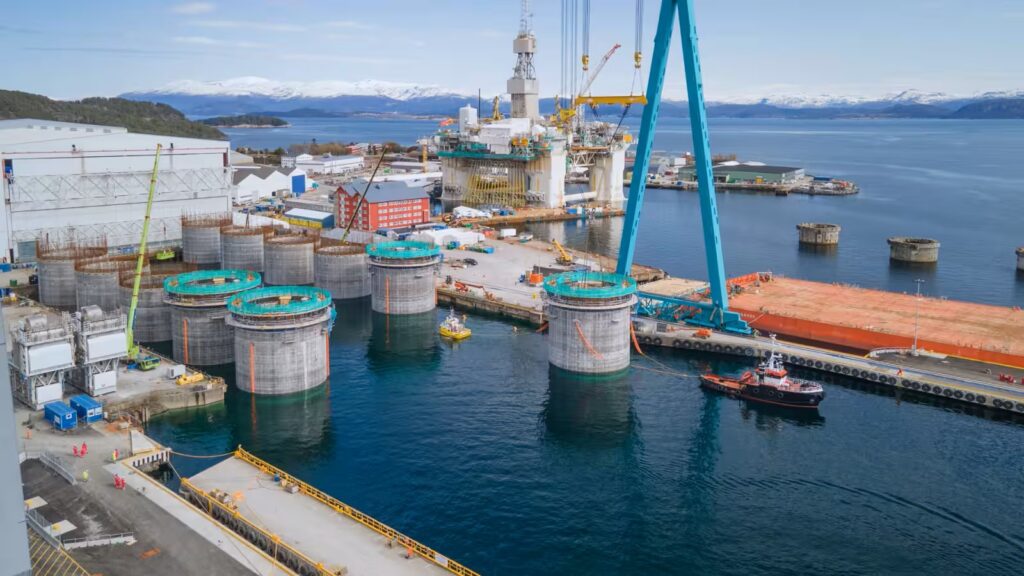
Floating offshore wind farms have defied industry headwinds to post a 38% surge in operational capacity over the past year, reaching 382 MW by October 2026. The growth, driven by Europe and Asia, comes despite soaring capital costs, supply chain bottlenecks, and regulatory hurdles that have stalled projects elsewhere, including a $4 billion U.S. federal lease buyback under the Trump administration.
RenewableUK’s latest EnergyPulse report reveals that the sector’s expansion is accelerating, with 109 MW added since January 2026 alone, surpassing the previous annual record of 108 MW set in 2023. Norway led the charge in Europe, injecting 97 MW into its grid, followed by France (87 MW) and the UK (78 MW). In Asia, China contributed 72 MW, while Japan added 22 MW, underscoring the region’s growing influence in the floating wind market.
The floating offshore wind sector’s resilience contrasts sharply with the broader offshore wind industry’s challenges. France and Japan, for instance, recently commissioned projects adding 30 MW and 17 MW respectively, demonstrating the technology’s viability in diverse geographies.
Global Ship Lease
The UK, a pioneer in offshore wind, has been at the forefront of floating wind innovation.
“The extraordinary surge we’ve seen over the last twelve months in new floating wind projects going live worldwide shows that the UK has a great opportunity to capitalise on our position as a global leader in this innovative technology,” said Tara Singh, CEO of RenewableUK. Singh highlighted the sector’s long-term potential, noting it could support 97,000 jobs and inject $62 billion into the UK economy by 2050. Yet, the path to commercialisation remains fraught with obstacles, from financing gaps to infrastructure limitations.
“The extraordinary surge we’ve seen over the last twelve months in new floating wind projects going live worldwide shows that the UK has a great opportunity to capitalise on our position as a global leader in this innovative technology.”
Tara Singh·CEO, RenewableUK
Global Pipeline Swells to 152 GW, But Will Projects Materialise?: floating offshore wind
The global project pipeline for floating offshore wind now stands at a staggering 152 GW, spread across 300 projects in 26 countries. However, the gap between announced capacity and operational assets remains vast. Precedence Research’s latest report highlights the industry’s critical phase, with developers racing to secure partnerships, streamline supply chains, and reduce technology costs.
China is poised to dominate the next wave of deployments, accounting for 66% of the 1.7 GW expected to come online by 2030. The UK trails with 16%, though it leads Europe with 85% of the continent’s projected floating wind capacity. Emerging markets are also making strides: Greece has earmarked 1.Eliminar referencia a 6 GW for future leasing, while Ireland and Chile boast pipelines of 3.8 GW and 2.3 GW respectively.
In Europe, the floating wind sector is gaining momentum beyond traditional leaders like the UK and France. Wales, for example, has identified floating wind as a key component of its decarbonisation strategy, with plans to develop up to 4 GW of capacity by 2035. Similarly, South Korea has set ambitious targets, aiming to install Eliminar referencia a 6 GW of floating wind by 2030 as part of its broader renewable energy transition. These developments reflect a growing recognition of floating wind’s potential to unlock vast offshore wind resources previously considered inaccessible.
The U.S., despite its early setbacks, is also exploring floating wind opportunities, particularly along its Pacific coast. The Bureau of Ocean Energy Management (BOEM) has identified potential lease areas off California and Oregon, where water depths exceed Eliminar referencia a 1,000 metros. However, the sector’s growth in the U.S. will depend on overcoming regulatory hurdles and securing long-term policy support to attract private investment.
Despite the optimism, the industry’s future hinges on overcoming persistent barriers. The Global Wind Energy Council (GWEC) has launched an action plan to address financing risks, while governments and developers scramble to align regulatory frameworks with the sector’s rapid evolution. For now, the floating wind revolution is underway, but its ability to outpace costs and regulatory inertia will determine whether the 152 GW pipeline becomes a reality or a mirage.
What This Means for the Maritime and Ports Sector
The rapid expansion of floating offshore wind presents both opportunities and challenges for the maritime and ports industry. Floating wind farms require specialised port infrastructure, including deep-water berths for assembly and maintenance, as well as dedicated supply chains for components like floating platforms, mooring systems, and dynamic cables. Ports in key markets, such as the UK, Norway, and France, are already investing in upgrades to accommodate the sector’s growing demands.
For instance, the Port of Nigg in Scotland has emerged as a hub for floating wind projects, offering fabrication and assembly facilities for floating foundations. Similarly, the Port of Le Havre in France is expanding its capacity to support the country’s ambitious floating wind targets. These developments are creating new revenue streams for ports while also driving demand for skilled labour in marine engineering and logistics.
However, the sector’s reliance on specialised vessels, such as heavy-lift cranes and cable-laying ships, has exposed supply chain bottlenecks. The limited availability of these vessels has led to delays and cost overruns in some projects, highlighting the need for further investment in maritime assets. Additionally, the industry’s growth is increasing competition for port space, particularly in regions with high offshore wind activity.
Looking ahead, the floating wind sector’s success will depend on its ability to integrate with existing maritime operations. Ports will need to balance the demands of floating wind projects with those of traditional industries, such as shipping and fishing, to ensure sustainable growth. Governments and industry stakeholders are also exploring collaborative models to share infrastructure costs and mitigate risks, ensuring that the floating wind revolution delivers tangible benefits for the maritime sector.
For industry stakeholders and investors, the next 12 months will be critical in determining the pace of floating wind deployment. The Global Wind Energy Council (GWEC) and RenewableUK are expected to release updated market forecasts in early 2027, providing further clarity on the sector’s trajectory. Meanwhile, governments in key markets, including the UK, France, and China, are finalising policy frameworks to accelerate project approvals and reduce financing risks.
Developers and port operators can stay informed through official channels such as the Global Wind Energy Council and RenewableUK, which provide regular updates on industry trends, policy developments, and investment opportunities. Additionally, the International Energy Agency (IEA) publishes annual reports on offshore wind, offering insights into global market dynamics and technological advancements.
For those directly involved in floating wind projects, engaging with local maritime authorities and port operators will be essential to securing the necessary infrastructure and logistical support. Early collaboration with supply chain partners, including vessel operators and component manufacturers, can also help mitigate risks and ensure timely project delivery. As the sector moves towards commercialisation, proactive stakeholder engagement will be key to unlocking its full potential.


Sign up free to ask CAMAL AI for a summary, the key points or anything else about this story.
Related stories
CAMAL AI
 Financial Ports Newsletter
The maritime economy, every morning
Ports, shipping and freight markets in one short email. Free.



