

Deep Sea Mining: $5bn Loss Risk in 83% of Scenarios
A new study reveals an 83% probability of financial losses for deep-sea mining projects.
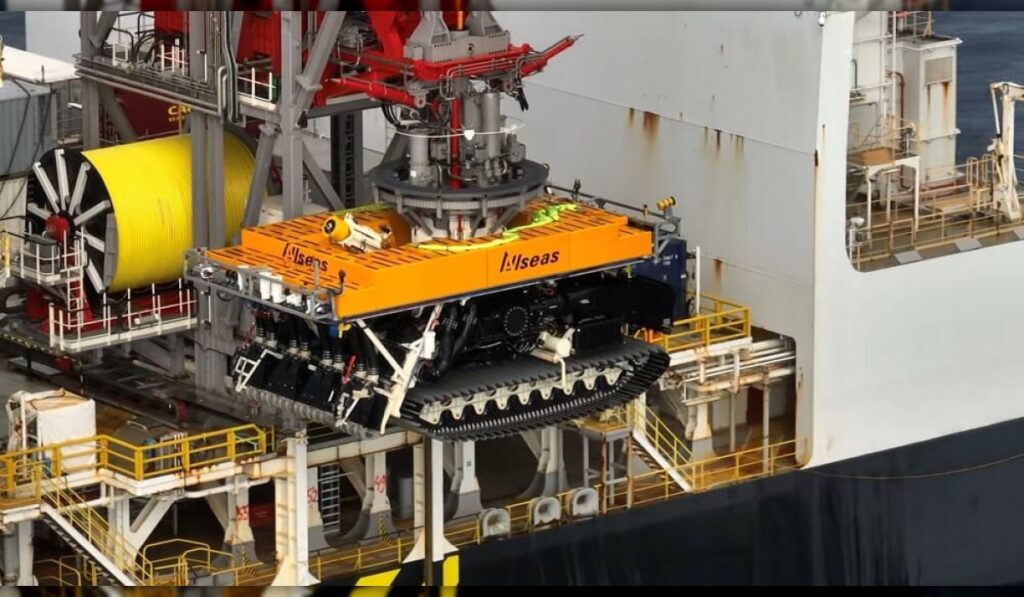
A new study has cast doubt on the financial viability of deep-sea mining, revealing an 83% probability that projects like those proposed by The Metals Company (TMC) will result in losses. The analysis, conducted by environmental consultancy Koinon, suggests a median net present value of –$5 billion for TMC’s two flagship projects, assuming an 8% discount rate.
The findings, based on 10,000 simulations of TMC’s investment prospectus, highlight the precarious economics of extracting manganese nodules from the ocean floor. 60% of the modelled scenarios showed negative cash flow every year, leaving no internal rate of return (IRR) for investors.
The primary driver of the financial uncertainty is capital expenditure (capex). Koinon’s analysis estimates that the cost of the collection system, critical for harvesting nodules from the seabed, could balloon to 1.9 times TMC’s projected budget. This aligns with historical overruns in offshore oil and gas, frontier technology, and large-scale mining projects, where costs frequently exceed initial estimates. The study found that capex variations alone could shift returns by more than $8 billion, making it the single most decisive factor in whether a project turns a profit or a loss.
The discount rate further complicates the equation. Regulatory and environmental risks have already led dozens of bankers, insurers, and industrial metals buyers to publicly distance themselves from deep-sea mining ventures. This financing gap forces projects onto equity priced for speculative risk, with required returns soaring to 25-30%, levels that outpace most institutional investment benchmarks. Koinon concluded
“The project’s own economics, when simulated rather than asserted, show no return in the majority of cases and a loss in the large majority, while the financing environment strips the cheapest layers from the capital stack.”
Koinon·Environmental consultancy
The study also raises red flags for governments eyeing deep-sea mining as a revenue stream. While the International Seabed Authority (ISA) stands to gain royalties from such projects, the net benefits for national governments, including those sponsoring TMC’s operations, are projected to be slim. The influx of metals from the seabed could depress prices for nickel, cobalt, copper, and manganese, reducing tax revenues from terrestrial mining. Torsten Thiele, founder of Global Ocean Trust, one of the study’s sponsors, warned:
“This study confirms that deep-sea mining remains economically unattractive from a commercial investment perspective. The findings also highlight that the risks extend beyond mining companies to sponsoring states and countries dependent on terrestrial mining.”
Torsten Thiele·Founder of Global Ocean Trust
The International Seabed Authority (ISA), the UN-affiliated body responsible for regulating deep-sea mining in international waters, has yet to finalize its mining code.
The next steps for TMC and its backers remain uncertain. The company has yet to respond to the study’s findings, but the pressure to demonstrate a viable path to profitability, and environmental sustainability, will only intensify. For now, the deep-sea mining dream remains just that: a dream, with a wake-up call that could cost billions.


Sign up free to ask CAMAL AI for a summary, the key points or anything else about this story.
Related stories
CAMAL AI
 Financial Ports Newsletter
The maritime economy, every morning
Ports, shipping and freight markets in one short email. Free.
Financial Ports Newsletter
The maritime economy, every morning
Ports, shipping and freight markets in one short email. Free.



