

US Drops $17M on Colombo Port as China’s $350M Hub Collapses
Washington invests in digital systems while Beijing’s state-owned CM Ports walks away from a $350m logistics project.
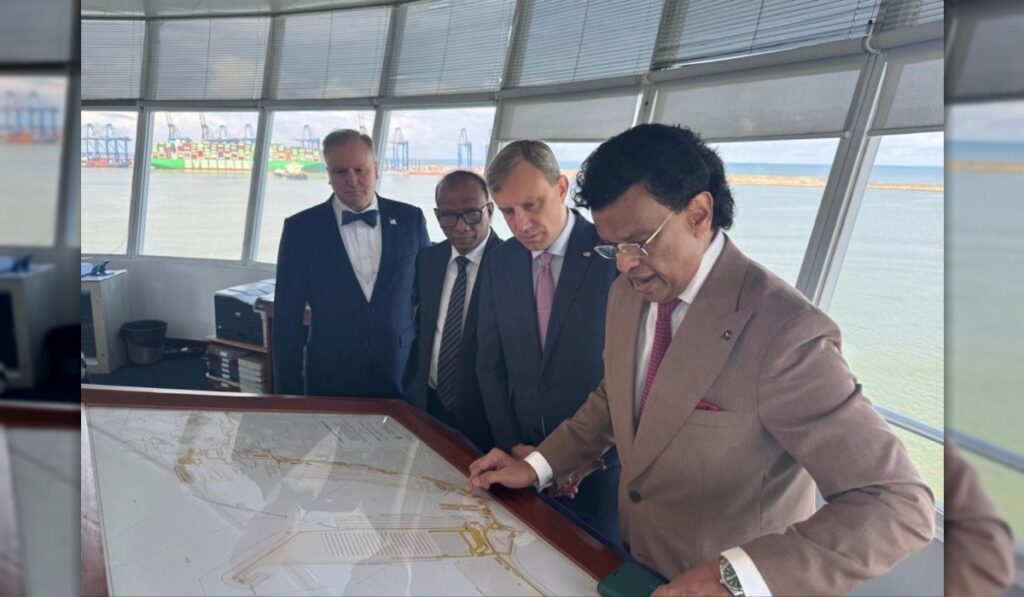
The U.S. government has announced a $17 million investment to modernize digital operations at Sri Lanka’s Colombo Port, a key transshipment hub in South Asia. The funding, revealed during a recent visit by U.S. Ambassador to Sri Lanka Eric Meyer, will support the development of two interconnected systems: the Maritime Single Window and the Port Community System. These upgrades aim to streamline port logistics, reduce shipping costs, and enhance efficiency for global trade.
The investment comes as Colombo Port undergoes significant growth, with two expansion phases recently completed at the Colombo West International Terminal (CWIT). The terminal’s annual capacity has now reached 3.2 million TEU, positioning it to handle roughly a quarter of the port’s target volume of 13 million TEU by 2028. The port’s strategic location on east-west trade routes has made it a critical node for cargo moving to and from India, propelling it into the world’s top 20 ports by container volume this year.
Digital Upgrades Amid Port Expansion: Colombo Port
Performance data for the first half of 2026 shows a 12% year-on-year increase in transshipment activity, reflecting the port’s rising importance in regional trade. The U.S. investment in digital infrastructure is expected to further boost efficiency, benefiting both American businesses and Sri Lanka’s broader maritime sector.
The U.S. announcement coincided with the exit of China Merchants Port Holdings (CM Ports) from a $350 million logistics hub project at Colombo Port. The planned facility, which would have spanned five million square feet with a storage capacity of 530,000 cubic meters, was intended to create 1,800 direct jobs and support an additional 10,000 across Sri Lanka. However, the project faced delays and legal challenges, leading to its cancellation. The Sri Lanka Ports Authority (SLPA) has agreed to pay $22 million to settle the termination.
China’s Withdrawal and U.S. Strategic Interests
For the U.S., Colombo Port holds significant economic and strategic value. The facility handles an estimated $30 billion in U.S.-related cargo annually, with over half a million containers moving between the two countries each year. Sri Lanka’s apparel and textile exports to the U.S. alone reached $1.95 billion last year, making Washington the island nation’s largest export market.
Beyond infrastructure, the U.S. has deepened its engagement with Sri Lanka through military cooperation. In July, the two nations conducted the sixth iteration of the Cooperation Afloat Readiness and Training (CARAT) exercise, involving the U.S. Navy, Coast Guard, and Sri Lanka’s Air Force and Navy. These efforts underscore the port’s role in securing regional supply chains and advancing American commercial interests in the Indian Ocean.


Sign up free to ask CAMAL AI for a summary, the key points or anything else about this story.
Related stories
CAMAL AI
 Financial Ports Newsletter
The maritime economy, every morning
Ports, shipping and freight markets in one short email. Free.



