

India-Pakistan Warship Collision: Who Violated the 3-Nautical-Mile Rule?
Pakistan accuses India of "belligerent action" after INS Kolkata and PNS Hunain collide in the North Arabian Sea.
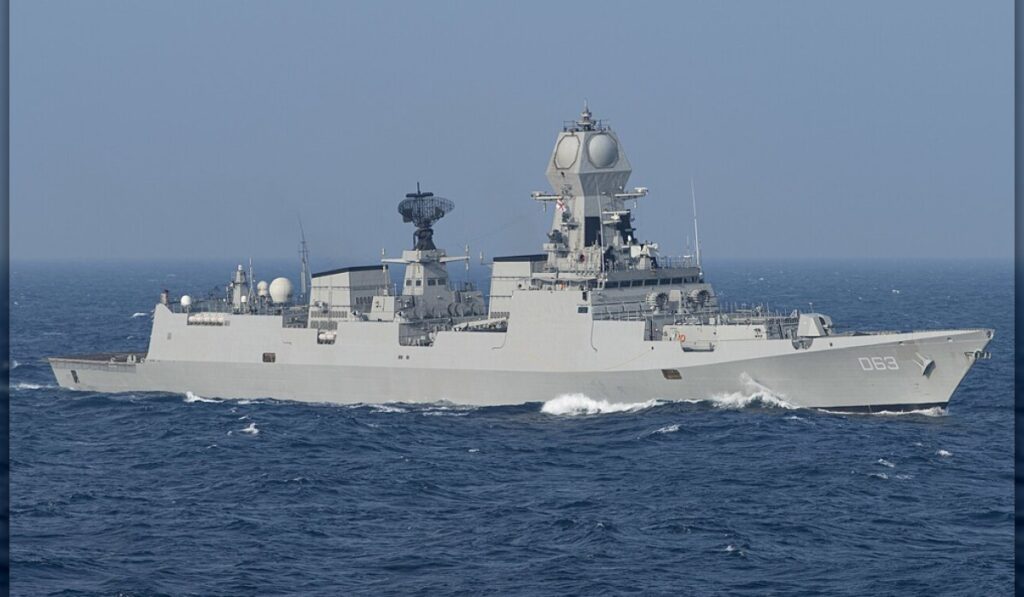
A collision between an Indian guided-missile destroyer and a Pakistani offshore patrol vessel in the North Arabian Sea has reignited tensions between the nuclear-armed neighbours, with Islamabad accusing New Delhi of “belligerent action” and demanding international intervention.
The incident occurred on no especificado, approximately 118 nautical miles (220 km) east of the Oman coast, during Pakistan’s biennial SEASPARK-26 naval exercise. Pakistan’s Ministry of Foreign Affairs lodged a formal protest, asserting the collision took place within its Exclusive Economic Zone (EEZ), while India maintains the area was international waters. Both sides agree the encounter violated a 1991 bilateral agreement mandating a minimum 3-nautical-mile separation between military vessels.
How the collision unfolded, and why it matters
Pakistani officials allege the Indian Navy’s INS Kolkata, a 7,400-ton guided-missile destroyer, had been attempting to enter the SEASPARK-26 exercise area since September 7. On the day of the collision, Islamabad claims the INS Kolkata performed “aggressive manoeuvres in dangerously close proximity” to the Pakistani offshore patrol vessel PNS Hunain, resulting in contact. The PNS Hunain, a 2,600-ton vessel, is significantly smaller, 96 metres (315 feet) compared to the INS Kolkata’s 163 metres (534 feet), and slower, with a top speed of 22 knots versus the Indian destroyer’s 30 knots.
India, however, presents a starkly different account. New Delhi asserts the PNS Hunain approached at high speed and attempted to manoeuvre, causing the collision. The Indian Navy reported that the INS Kolkata sustained no damage and continued its survey assignment, while unconfirmed media reports suggest the PNS Hunain suffered anything from a “big dent” to “severe damage.” Pakistan has not officially confirmed the extent of any damage to its vessel.
The collision marks the first direct military encounter between the two nations since their four-day air war in May 2026, which saw exchanges of missiles and drones. Diplomatic relations remain strained, with both countries summoning each other’s top diplomats in Islamabad and New Delhi to lodge protests. Analysts warn that with limited conflict de-escalation mechanisms in place, the incident could spiral into a broader crisis.
The legal and strategic stakes in the North Arabian Sea
The dispute over the collision’s location, Pakistan’s EEZ versus international waters, highlights the broader geopolitical tensions in the region. Under the United Nations Convention on the Law of the Sea (UNCLOS), a coastal state’s EEZ extends 200 nautical miles (370 km) from its baseline, granting it exclusive rights to explore and exploit marine resources. However, foreign military vessels retain the right to “innocent passage” through an EEZ, provided they do not engage in activities deemed prejudicial to the coastal state’s security.
Pakistan’s accusation that the INS Kolkata repeatedly attempted to enter the SEASPARK-26 exercise area raises questions about India’s strategic intent. Naval exercises are typically conducted in designated zones, and unauthorised entry by foreign vessels can be interpreted as a provocative act.
The 1991 Agreement on Advance Notice on Military Exercises, Manoeuvres and Troop Movements, which both nations signed, explicitly requires military vessels to maintain a 3-nautical-mile separation to avoid such incidents. The fact that both sides acknowledge the agreement was violated underscores the severity of the breach.
The North Arabian Sea, where the collision occurred, is a critical maritime corridor linking the Persian Gulf to the Indian Ocean. It is a heavily trafficked route for commercial shipping, including oil tankers, and a strategic chokepoint for naval powers. The presence of both Indian and Pakistani warships in the area reflects the broader competition for influence in the region, particularly as China expands its naval footprint through its String of Pearls strategy, which includes ports in Pakistan and Sri Lanka.
Analysts note that the collision could have wider implications for regional stability. The Gulf of Aden, where a similar incident occurred in 2021 between Indian and Pakistani frigates, remains a hotspot for naval confrontations. While that earlier incident was resolved without further escalation, the current collision comes at a time of heightened tensions, with both nations still grappling with the aftermath of their 2026 air war. The lack of direct communication channels between the two militaries further complicates efforts to de-escalate.
“Pakistan strongly rejects this belligerent Indian action and calls on the international community to urge India to abandon its belligerent posture and refrain from irresponsible actions that could further destabilize South Asia.”
Pakistan’s Ministry of Foreign Affairs·Government spokesperson
The INS Kolkata, commissioned in 2014, is one of the Indian Navy’s most advanced warships, equipped with guided missiles, anti-submarine warfare capabilities, and state-of-the-art radar systems. Its involvement in the incident suggests India’s willingness to deploy high-end assets in contested waters, a move that could be interpreted as a show of force. Meanwhile, Pakistan’s PNS Hunain, though smaller, plays a crucial role in its offshore patrol operations, particularly in safeguarding its maritime boundaries.
As both nations dig in their heels, the risk of miscalculation remains high. The 1991 agreement, designed to prevent such incidents, has clearly failed to deter provocative behaviour. With diplomatic relations at a low ebb and no immediate prospects for dialogue, the international community may need to step in to prevent further escalation. For now, the North Arabian Sea remains a tinderbox, with the potential to ignite a crisis that could draw in regional and global powers.
The next steps will be critical. Analysts will be watching closely to see whether either side takes further provocative actions, such as deploying additional warships to the area or conducting new exercises near disputed waters. For the shipping industry, the incident serves as a stark reminder of the risks posed by geopolitical tensions in one of the world’s busiest maritime corridors. Vessel operators may need to adjust routes or increase security measures to mitigate the risk of encountering naval standoffs.
In the absence of a clear resolution, the collision between the INS Kolkata and the PNS Hunain could set a dangerous precedent for future naval encounters in the region. The stakes are high, not just for India and Pakistan, but for the broader stability of South Asia.


Sign up free to ask CAMAL AI for a summary, the key points or anything else about this story.
Related stories
CAMAL AI
 Financial Ports Newsletter
The maritime economy, every morning
Ports, shipping and freight markets in one short email. Free.
Financial Ports Newsletter
The maritime economy, every morning
Ports, shipping and freight markets in one short email. Free.