

US Seizes 13 Tonnes of Cocaine in Six-Day Pacific Drug Blitz
US Coast Guard cutter Tampa intercepts four drug boats carrying over 25,000 pounds of cocaine in the Eastern Pacific.
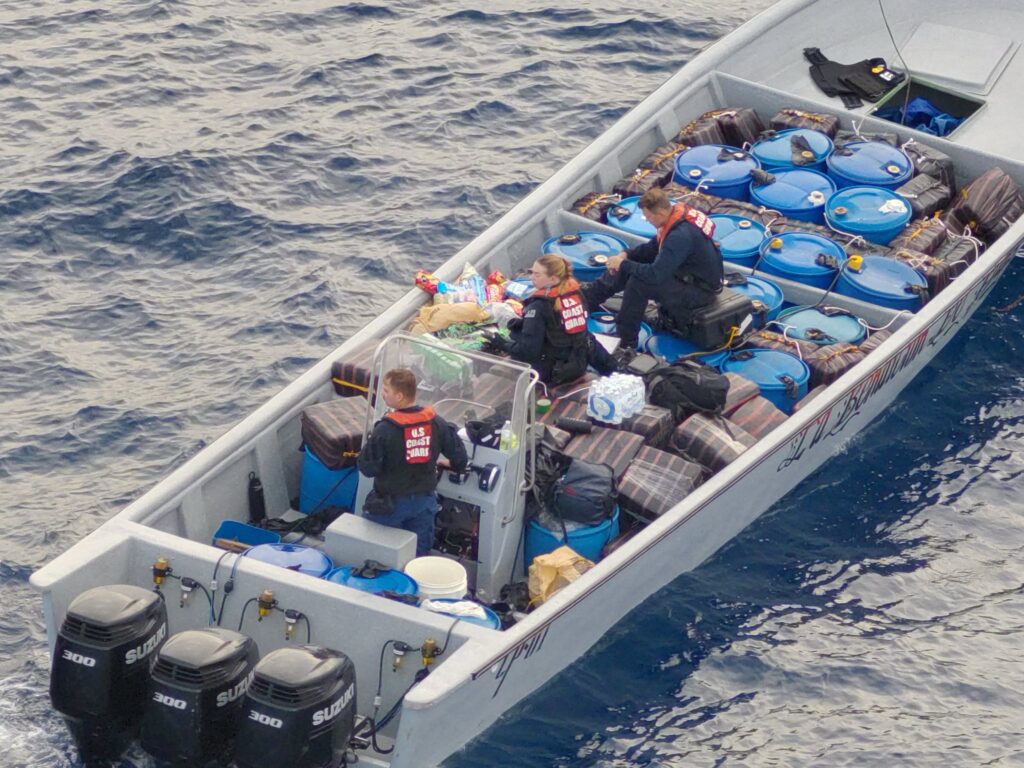
The U.S. Coast Guard has intensified its efforts to curb cocaine trafficking in the Eastern Pacific, with the cutter USCGC Tampa seizing over 25,000 pounds of cocaine in just six days. These recent interceptions bring the total for the year under the Pacific Viper interdiction program to 260,000 pounds, marking a significant achievement in the fight against drug smuggling.
The operations unfolded rapidly. The first vessel intercepted carried 6,800 pounds of cocaine. Four days later, two more boats were seized, holding a combined 15,000 pounds. The following day, a fourth vessel was stopped, adding another 3,400 pounds to the haul. Among the seized boats was a high-speed craft equipped with three outboard motors and makeshift fuel containers on deck, a common setup for smugglers attempting long-distance runs.
Military Tactics Target Smuggling Networks: Cocaine
While the Coast Guard focuses on interdiction, U.S. Southern Command has adopted a more aggressive approach to disrupt smuggling operations. The Navy and Marine Corps have targeted at-sea fueling stations—local fishing vessels modified to supply gasoline to traffickers’ high-speed boats. Operating off the coast of Ecuador, Marine boarding teams, supported by helicopter gunships and amphibious vessels, have intercepted these floating depots. After evacuating the crews, the vessels are destroyed, often using chaingun fire.
Royal Caribbean
Southern Command’s parallel lethal strike program has also made an impact, particularly in the Caribbean. The command recently reported its 70th publicly acknowledged attack on a suspected smuggling vessel, resulting in three fatalities. These operations aim to weaken trafficking networks by eliminating key logistical assets.
Efforts to Counter Drug Trafficking
The recent seizures highlight the U.S. military’s multi-pronged strategy to combat drug trafficking. By dismantling fueling stations and intercepting shipments, authorities are cutting off critical supply lines. The Pacific Viper program and Southern Command’s operations demonstrate a coordinated effort to disrupt smuggling routes in high-risk maritime zones.
While the focus remains on cocaine, the tactics employed could extend to other illicit activities, such as arms smuggling or human trafficking. As traffickers adapt, U.S. agencies continue to refine their approach, relying on intelligence and surveillance to stay ahead. For now, the message is clear: the Eastern Pacific is no longer a safe passage for drug smugglers.


Sign up free to ask CAMAL AI for a summary, the key points or anything else about this story.
Related stories
CAMAL AI
 Financial Ports Newsletter
The maritime economy, every morning
Ports, shipping and freight markets in one short email. Free.
Financial Ports Newsletter
The maritime economy, every morning
Ports, shipping and freight markets in one short email. Free.



