

Why 80% of Ship Control Upgrades Fail Before Launch
Five hidden pitfalls turn vessel modernisations into costly delays and safety risks, engineers warn.
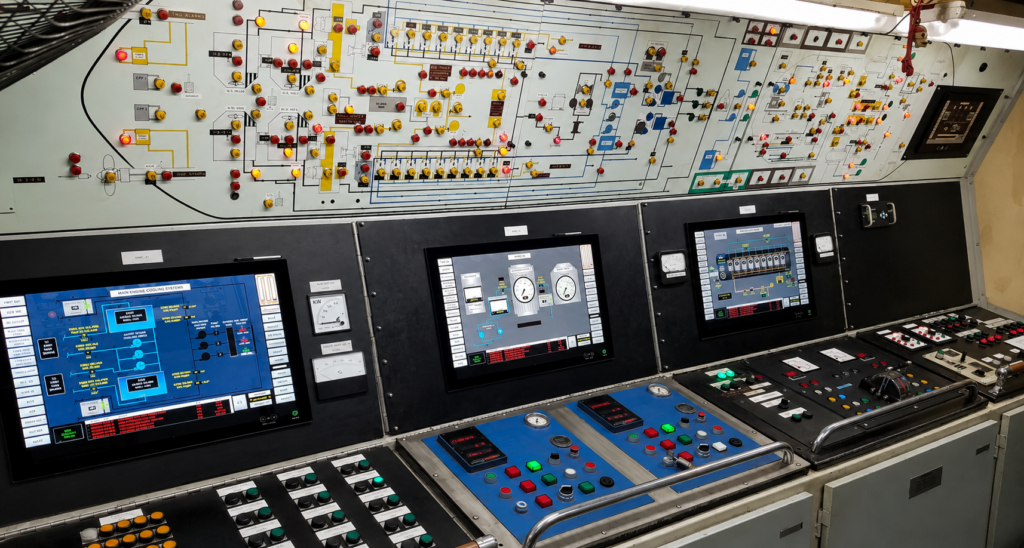
The culprits? Not faulty hardware or software, but overlooked interfaces between old and new systems, outdated documentation, and undefined responsibilities among stakeholders.
McCullough Engineering, a firm supporting shipyards and vessel owners, has identified five recurring issues that derail even the most straightforward upgrades. “The problems rarely stem from a single component,” the firm notes. “They develop at the seams, where legacy equipment meets new technology, where drawings diverge from reality, and where multiple organisations assume someone else is handling the details.”
Starting with incomplete information: Before
Many working vessels have undergone repeated modifications over decades, leaving drawings outdated and cable identifications incomplete. “The original control logic may no longer exist in a usable format,” McCullough warns. Relying solely on paper documentation exposes projects to costly surprises during installation, where field conditions often differ from plans.
Field verification is critical but frequently overlooked. Engineers must document the installed system, including available space, power sources, I/O, alarms, and interfaces with propulsion, generators, and auxiliary machinery. The goal isn’t just to confirm what exists, it’s to identify discrepancies before they spiral into change orders or schedule delays.
Simply swapping an obsolete PLC or operator display for a newer model does not modernise a system. The new equipment must communicate seamlessly with existing machinery, sensors, starters, drives, and protective devices while preserving the operating modes, interlocks, and fail-safe responses crews rely on. “A successful project evaluates the system as a whole,” McCullough emphasises.
Crew input is another overlooked factor. Operators know which alarms create confusion, which steps are unnecessarily complicated, and what information they need during emergencies. Involving them early can prevent costly redesigns later. “The new system should improve daily operation,” the firm advises, “not just replicate the limitations of the old one on a newer screen.”
Leaving interface responsibilities undefined
Control-system modernisations typically involve multiple parties: vessel owners, shipyards, electrical installers, equipment manufacturers, software developers, regulators, and commissioning teams. Problems arise when responsibilities for cables, signals, drawings, or tests are left ambiguous. “Each party assumes another is handling it,” McCullough explains, “until the gaps become impossible to ignore.”
A clear responsibility matrix should be established before work begins, defining ownership of control philosophy, drawings, procurement, panel fabrication, software, installation, terminations, network configuration, and final documentation. Assigning a single electrical integrator to manage these interfaces can streamline the process, providing a unified technical path from design to commissioning.
Commissioning should not begin only after installation is complete. Test requirements must influence design from the outset, with every alarm, permissive, interlock, and failure response requiring a practical verification method. Factory testing can confirm software and panel functionality before equipment reaches the vessel, while shipboard testing should progress in stages: point-to-point checks, equipment-level tests, integrated system tests, and operational trials.
Simulation is a powerful but underused tool. It allows integrators and crews to test operating scenarios, including loss of signals, failed communications, emergency stops, and power interruptions, before connecting to live machinery. “Normal starts and stops are only part of the test,” McCullough notes.
A modernisation isn’t complete after final testing. Crews and technicians need accurate documentation, software backups, parameter files, alarm lists, and operating guidance. Owners must clarify who controls source code, passwords, and software licenses to avoid future maintenance headaches. Lifecycle planning ensures the system remains maintainable for years, while training based on the finished system covers normal operation, alarm response, backup modes, and repair limits.
“The most successful projects treat modernisation as a continuous process, not a one-time event,” McCullough concludes. “They plan for the next upgrade before the current one is even finished.”


Sign up free to ask CAMAL AI for a summary, the key points or anything else about this story.
Related stories
CAMAL AI
 Financial Ports Newsletter
The maritime economy, every morning
Ports, shipping and freight markets in one short email. Free.
Financial Ports Newsletter
The maritime economy, every morning
Ports, shipping and freight markets in one short email. Free.



