US Tanker Firms Fight NLRB Ruling on Deck Officers’ Bargaining Rights
OSG and Alaska Tanker Company challenge NLRB’s order to recognise MM&P for 125 licensed deck officers
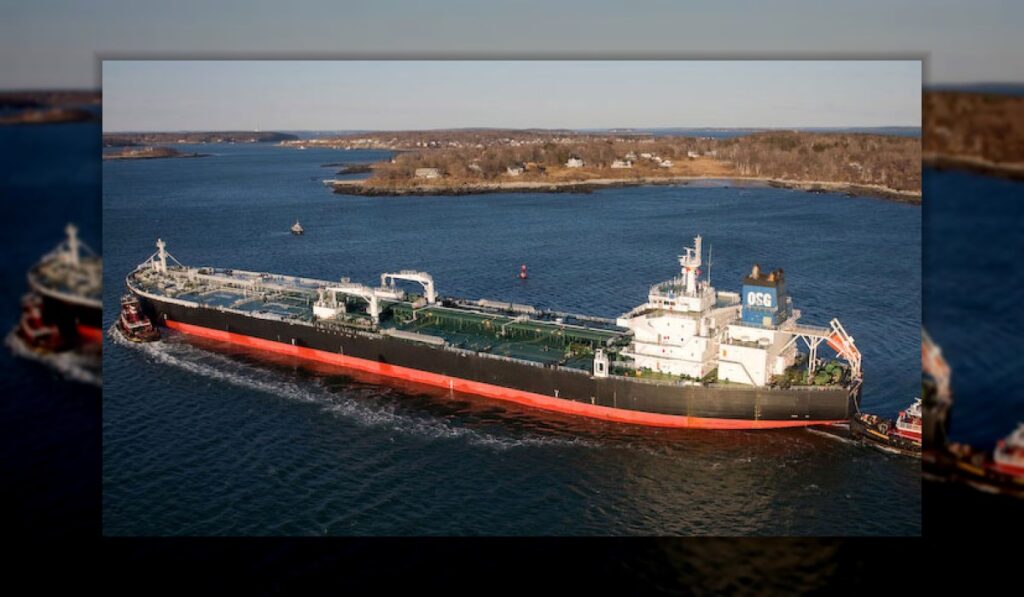
Overseas Shipholding Group (OSG) and its affiliate Alaska Tanker Company (ATC) have filed appeals against a National Labor Relations Board (NLRB) ruling that orders them to recognise the International Organization of Masters, Mates & Pilots (MM&P) as the bargaining representative for more than 125 licensed deck officers. The dispute hinges on a critical legal question: whether Chief Mates should be classified as supervisors under federal labour law, excluding them from collective bargaining units.
The appeal, lodged with the United States Court of Appeals for the Eleventh Circuit, challenges the NLRB’s interpretation of supervisory responsibilities. OSG argues that the board’s decision lacks substantial evidence and misapplies established labour law. The companies, which operate 17 U.S.-flag oil tankers under the U.S. Tanker Security Program, have yet to commence contract negotiations with MM&P despite the union securing overwhelming support in 2023 elections.
The NLRB’s May and August 2026 orders directed OSG and ATC to bargain in good faith with MM&P, recognising the union’s right to represent Chief, Second, and Third Mates. The board rejected the companies’ argument that Chief Mates, who oversee safety, navigation, and crew coordination, meet the legal definition of supervisors. Under the National Labor Relations Act, supervisors are excluded from collective bargaining units, a classification OSG insists applies to Chief Mates.
“The appeals are not to oppose union representation,” OSG stated. “We are appealing whether the bargaining units ordered by the NLRB are the legally appropriate units for the OSG and ATC fleet operations, including the interpretation of the supervisory responsibilities of chief mates under federal labor law.” The company’s legal team further contended that the NLRB’s ruling is “not supported by existing board law or substantial evidence, and that the board acted arbitrarily or otherwise erred in applying established law.”
The dispute traces back to 2023, when MM&P first demanded recognition as the exclusive bargaining representative for deck officers. However, OSG has questioned the composition of the bargaining units, particularly the inclusion of Chief Mates, and has refused to begin negotiations until the appeal is resolved.
What’s at Stake for Deck Officers and the U.S. Tanker Fleet: Bargaining
The 17 tankers at the centre of the dispute are part of the U.S. Tanker Security Program, a federal initiative that supports the operation of U.S.-flag vessels critical to national defence and energy security.
Meanwhile, the companies have emphasised their commitment to lawful labour relations and safe vessel operations, stating that they will continue to adhere to established practices while the appeal proceeds.
The Eleventh Circuit has been asked to consolidate the related cases involving OSG and ATC, allowing the overlapping legal issues to be reviewed together. For now, the 125+ licensed officers aboard the 17 tankers remain without a collective bargaining agreement, despite their clear preference for MM&P representation.
The broader implications of this case extend beyond OSG and ATC. The maritime industry has long grappled with the classification of deck officers, particularly Chief Mates, whose responsibilities blur the line between management and crew. A ruling in favour of OSG could embolden other shipping companies to challenge similar NLRB decisions, potentially weakening union influence in the sector.
Conversely, a decision upholding the NLRB’s interpretation could solidify the rights of deck officers to organise and bargain collectively, reinforcing the role of unions in protecting maritime workers’ interests.
As the legal process unfolds, stakeholders on all sides are closely monitoring developments. The case underscores the tension between operational control and labour rights in the maritime industry, a balance that will shape the future of collective bargaining for deck officers across the United States.
Sign up free to ask CAMAL AI for a summary, the key points or anything else about this story.
Related stories
Financial Ports Newsletter
The maritime economy, every morning
Ports, shipping and freight markets in one short email. Free.