

India-Pakistan Naval Clash: Who Violated the Rules in the Arabian Sea?
Pakistan accuses Indian warship INS Kolkata of 'dangerous manoeuvres' in its EEZ before collision.
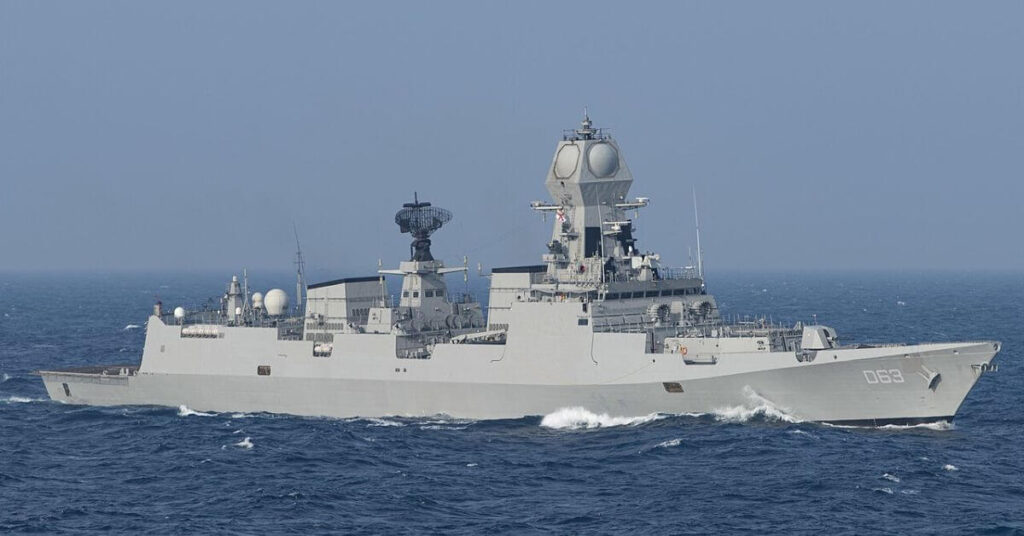
A naval collision between Indian and Pakistani warships in the Arabian Sea has reignited tensions between the two nuclear-armed rivals, with each side accusing the other of violating international law and bilateral agreements.
The incident occurred on September 15 when Pakistan’s naval vessel PNS Hunain and India’s INS Kolkata came into contact during Pakistan’s biennial SEASPARK-26 exercise. Pakistan’s Foreign Office claimed the Indian warship entered its Exclusive Economic Zone (EEZ) and performed “dangerous and provocative manoeuvres” despite repeated warnings, leading to the collision. India, however, asserted the incident took place in international waters and blamed Pakistani ship manoeuvring for the contact.
Both nations lodged formal diplomatic protests on September 16, summoning each other’s Charge d’Affaires to register their objections.
What Triggered the Collision in the Arabian Sea?
According to Pakistan’s Foreign Office, the INS Kolkata and an accompanying helicopter had been attempting to enter the exercise area since September 7, nearly a week before the collision. Pakistan described the Indian warship’s actions as “highly provocative and unacceptable“, stating that PNS Hunain had to alter its course to avoid a more severe impact. The Foreign Office further claimed that the incident could have escalated into a “serious crisis” given the already fragile relations between the two countries.
India’s Ministry of External Affairs countered by calling the conduct of Pakistani naval units “unacceptable and unprofessional". New Delhi maintained that the incident occurred in international waters and did not result in major damage.
Both sides referenced the 1991 agreement, which mandates advance notice for military exercises, manoeuvres, and troop movements near each other’s borders. The collision has raised concerns about the effectiveness of existing confidence-building measures in preventing maritime incidents.
How Does This Incident Fit Into the Broader India-Pakistan Conflict?
The collision comes just over a year after the May 2025 conflict, which erupted following a terrorist attack in Jammu and Kashmir.
Pakistan’s Foreign Office framed the latest incident as part of what it called India’s “reckless pursuit of conflict and instability“. In a statement, Islamabad urged the international community to “urge India to avoid actions that could further destabilise South Asia“, warning that the region could not afford to remain “perpetually hostage” to such behaviour.
“The incident is a serious violation of international law and the 1991 agreement. It could have led to a serious crisis, and we call on India to adhere to its bilateral commitments.”
Pakistan Foreign Office·Spokesperson
India, meanwhile, dismissed Pakistan’s accusations as baseless, emphasising that the collision was a minor incident with no significant consequences.
El incidente queda bajo evaluación de los equipos técnicos de ambos países, que deberán presentar informes detallados antes del 15 de septiembre, según el plazo acordado en la reunión de emergencia celebrada ayer en Ginebra. La próxima sesión del Consejo de Seguridad de la ONU, prevista para el 22 de septiembre, incluirá el tema en su agenda provisional, mientras Islamabad e Nueva Delhi mantienen contactos bilaterales para evitar una escalada.


Sign up free to ask CAMAL AI for a summary, the key points or anything else about this story.
Related stories
CAMAL AI
 Financial Ports Newsletter
The maritime economy, every morning
Ports, shipping and freight markets in one short email. Free.
Financial Ports Newsletter
The maritime economy, every morning
Ports, shipping and freight markets in one short email. Free.