

Amazon’s 200 mph bullet trains slash delivery times—now bikes take
E-commerce giant deploys Japan’s Shinkansen network and e-cargo bikes to cut emissions and congestion in urban areas.
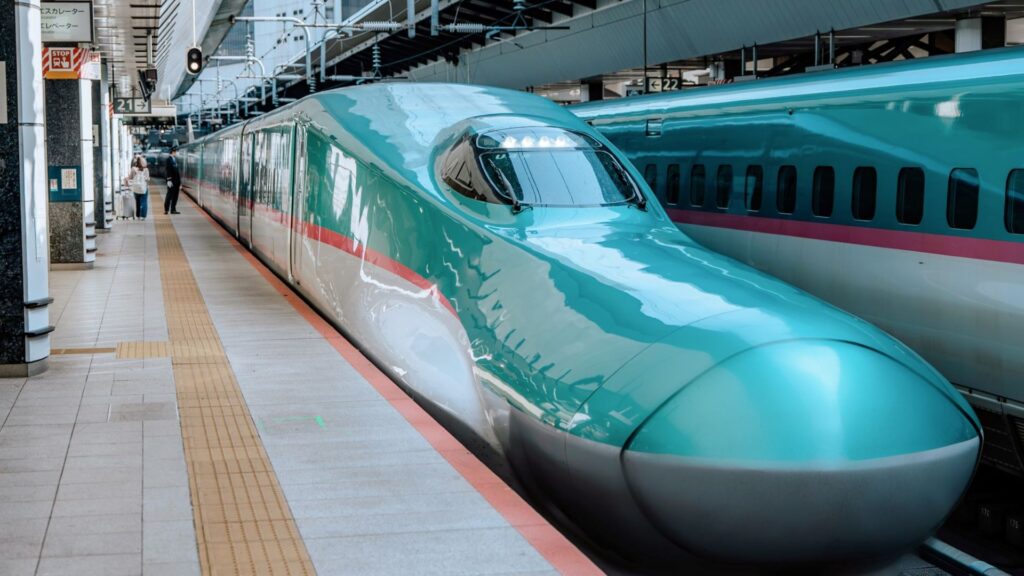
Amazon has transformed Japan’s iconic Shinkansen bullet trains into a high-speed delivery network, slashing transit times for packages between Tokyo and northern cities.
This year, Amazon contracted three Japan Railway companies to haul parcels on three high-speed routes: the Tohoku Shinkansen, Tohoku-Tohoku-Hokkaido Shinkansen, and Hokuriku lines. Packages are stored in non-passenger compartments, ensuring secure and rapid transit. The initiative, which began in March and expanded in May, has already reduced carbon emissions and road congestion compared to traditional long-distance trucking. Steve Kelly, an Amazon spokesman, confirmed that “management is pleased with the results so far.”
Amazon’s partnership with Japan Railway companies taps into this infrastructure, enabling seamless transfers between fulfillment centers in Greater Tokyo and regional distribution points.
E-cargo bikes take on urban congestion in the U.S. and Europe: Amazon
While bullet trains revolutionize long-distance logistics, Amazon is also tackling last-mile delivery challenges with e-cargo bikes. Last week, the company launched operations in Culver City, California, with 25 bikes, a number set to grow as the service ramps up over the next four to six weeks. Leigh Anne Gullett, an Amazon spokeswoman, stated that the service “will be operated by two independent delivery partners” and will eventually support “dozens of routes” from Culver City and Burbank.
E-cargo bikes, which resemble golf carts with rear compartments, are designed for dense urban environments. Amazon’s training program for drivers covers safety, local road regulations, and vehicle inspections, while the bikes themselves feature rear cameras, regenerative braking, and electronic locks.
This isn’t Amazon’s first foray into unconventional delivery methods. In the U.S., Amazon has also tested e-cargo bikes in Washington, D.C., and plans to expand the program to Burbank, California, in the coming weeks.
Beyond bikes and bullet trains, Amazon is exploring even more innovative delivery solutions. On Michigan’s Mackinac Island, where motor vehicles have been banned since the late 19th century, residents rely on horse-drawn carriages for deliveries. Meanwhile, in Venice, last-mile deliveries are often made by boat.
Amazon has even partnered with the operator of the Laura B., a 65-foot wooden boat built in 1943, to transport packages to Monhegan Island, 10 miles off the coast of Maine. The Laura B., which served as a patrol boat in the South Pacific during World War II, now ferries parcels to island residents, showcasing Amazon’s adaptability in even the most remote locations.
As Amazon scales its drone delivery operations in the U.S. and England, the company’s logistics strategy is becoming increasingly diverse. The integration of bullet trains and e-cargo bikes reflects a broader shift toward efficiency and sustainability, with each method tailored to the unique demands of its operating environment. For consumers, these innovations could mean faster deliveries, lower costs, and a reduced environmental impact, benefits that extend far beyond the package itself.
Looking ahead, Amazon’s expansion of e-cargo bike operations in California signals a growing commitment to urban logistics solutions. With full implementation in Culver City and Burbank expected within weeks, the company is poised to set a new standard for last-mile delivery in congested cities. Meanwhile, the success of its bullet train initiative in Japan could inspire similar partnerships in other high-speed rail networks worldwide, further reshaping the future of global logistics.


Sign up free to ask CAMAL AI for a summary, the key points or anything else about this story.
Related stories
CAMAL AI
 Financial Ports Newsletter
The maritime economy, every morning
Ports, shipping and freight markets in one short email. Free.
Financial Ports Newsletter
The maritime economy, every morning
Ports, shipping and freight markets in one short email. Free.