

27,500 TEU Giants: Why Carriers May Ditch 24,000-Box Ships by 2030
Alphaliner forecasts a new class of 425-metre vessels as fuel costs and carbon taxes reshape East-West routes.
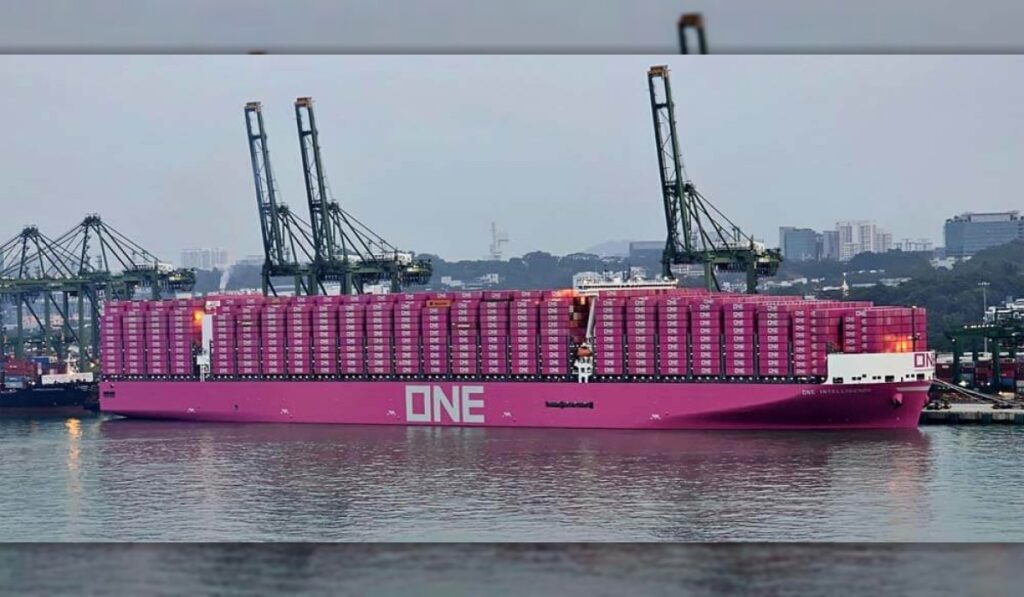
Maritime consultancy Alphaliner forecasts a shift toward a new class of container vessels, with carriers potentially adopting ships capable of carrying 27,500 TEU by the end of the decade. This “Gigamax” concept aims to address rising operational costs and environmental regulations.
For nearly a decade, the shipping industry has relied on ultra-large container ships with capacities around 24,000 TEU, measuring roughly 400 meters in length. However, Alphaliner suggests that escalating fuel prices and the introduction of carbon emissions taxes may force carriers to reconsider their fleet strategies. The consultancy argues that larger vessels could offer a competitive advantage on long-haul East-West routes, where cost efficiency is critical.
Alphaliner’s proposed Gigamax design would extend vessel length to 425 meters or more, adding one or two 40-foot cargo bays to existing frameworks. While this incremental increase would push capacity to 27,500 TEU, the firm believes most ports already equipped for 24,000-TEU ships could accommodate the new class with minimal adjustments. However, infrastructure limitations in regions like the United States would restrict deployment to select trade lanes.
Economic Pressures Drive Push for Larger Vessels: 27,500 teu vessels
The concept of expanding vessel size aligns with broader industry developments. Global container shipping capacity has surged 47% over the past decade, from 23.2 million TEU to 34.1 million TEU, driven by a record orderbook for new ultra-large ships. Alphaliner predicts that by 2030, leading carriers could deploy at least one full set of next-generation vessels on key routes.
While other entities, including China’s Shanghai Ship Research and Design Institute, have explored even more ambitious designs—such as nuclear-powered containerships—Alphaliner’s proposal focuses on a pragmatic, incremental approach. The consultancy acknowledges that the Gigamax remains a theoretical model for now, but economic pressures may soon turn it into a reality.


Sign up free to ask CAMAL AI for a summary, the key points or anything else about this story.
Related stories
CAMAL AI
 Financial Ports Newsletter
The maritime economy, every morning
Ports, shipping and freight markets in one short email. Free.
Financial Ports Newsletter
The maritime economy, every morning
Ports, shipping and freight markets in one short email. Free.



