

Second Endangered Fin Whale Killed by Cruise Ship in Alaska This Year
A 57.5-foot fin whale was found dead on the bow of Norwegian Joy in Sitka, marking the second such incident in 2026.
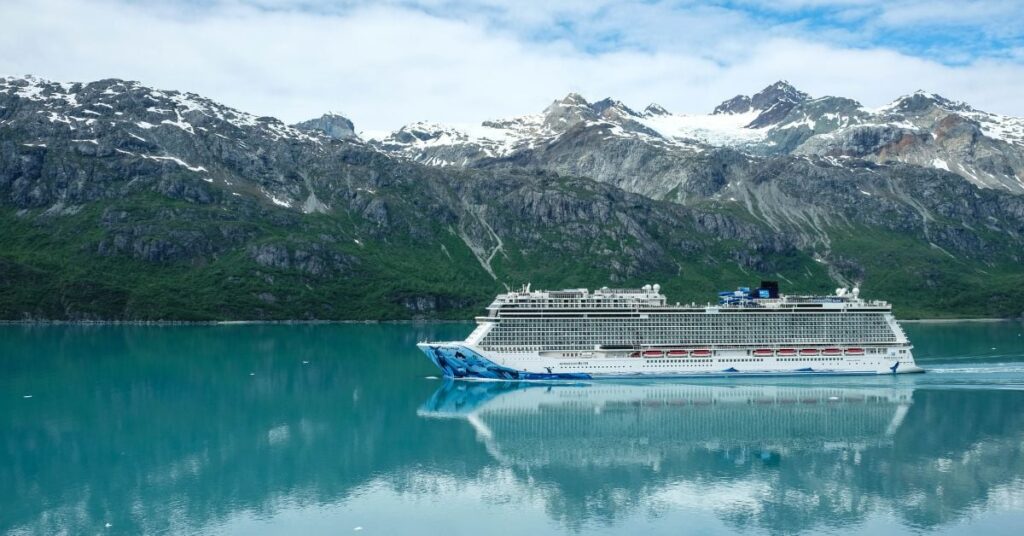
The latest incident, involving the Norwegian Joy, occurred on September 17 when the vessel arrived in Sitka with the 57.5-foot adult male whale lodged on its bulbous bow.
NOAA Fisheries, the agency leading the investigation, confirmed the whale’s death but noted that attempts to tow the carcass to shore failed because it was freshly dead and not buoyant. The agency is now collaborating with the Alaska Marine Mammal Stranding Network to assess whether a necropsy, an animal autopsy, can be performed to determine the exact cause of death. Weather conditions will dictate the next steps, but the public has been advised to maintain a safe distance from the carcass.
The incident mirrors a near-identical tragedy in June 2026, when a 61-foot pregnant female fin whale was found dead on the bow of Royal Caribbean’s Ovation of the Seas in Seward, Alaska. Endangered Species Act and depleted under the Marine Mammal Protection Act.
Royal Caribbean
The repeated strikes have alarmed environmental groups, who argue that cruise ships are failing to protect Alaska’s marine wildlife. NOAA Fisheries, the U.S. agency responsible for the stewardship of marine mammals and endangered species, has long documented the risks of vessel strikes. This biological reality makes population recovery a slow and fragile process.
Cooper Freeman, Director of the Centre for Biological Diversity, condemned the latest incident, stating:
“People go to Alaska to see its majestic wildlife, but they do not want the cruise ships to kill the species they work hard to protect.”
Cooper Freeman·Director of the Centre for Biological Diversity
Freeman emphasised that a 10-knot speed limit in whale-populated regions could prevent such deaths. “If a whale hits the ship while sailing at this speed, it would not die due to the impact,” he said. However, it remains unclear how fast the Norwegian Joy was travelling when the collision occurred. The latest incident raises pressing questions for travellers and conservationists alike.
For marine conservationists, the repeated strikes highlight a regulatory gap that demands urgent attention. The Centre for Biological Diversity has called for permanent, year-round speed limits in Alaska’s high-traffic shipping lanes, particularly during peak whale migration periods. These corridors, which overlap with popular cruise routes, are critical feeding and breeding grounds for fin whales, making them high-risk zones for collisions.
The economic stakes are also significant. Alaska’s cruise industry generates billions of dollars annually, with over 1.5 million passengers visiting the state in 2025 alone. However, environmental incidents like these risk damaging the region’s reputation as a pristine wildlife destination. Operators that fail to adopt proactive measures may face reputational harm, regulatory scrutiny, or even legal action under the Endangered Species Act, which carries penalties of up to $50,000 per violation.
What Happens Next for Cruise Ship Safety?: Whale
The NOAA Fisheries Office of Law Enforcement is investigating the latest incident, urging anyone with information to contact its 24-hour enforcement hotline. Norwegian Cruise Line, the operator of the Norwegian Joy, expressed its cooperation with authorities, stating:
“We are deeply saddened by this situation, and we are cooperating with the appropriate authorities and any relevant scientific and wildlife experts as part of the assessment process.”
Norwegian Cruise Line·Spokesperson
The company also highlighted its Sail & Sustain programme, which aims to protect marine ecosystems. Launched in 2018, the initiative includes commitments to reduce carbon emissions, eliminate single-use plastics, and collaborate with conservation organisations. However, environmentalists argue that voluntary measures are insufficient without enforceable regulations. The Centre for Biological Diversity has pointed to the success of speed restrictions in the Atlantic, where mandatory limits for vessels entering and leaving U.S. ports have significantly reduced right whale strikes since 2008.
Fin whales, which can live up to 90 years and reach physical maturity at 25, face their greatest threat from vessel strikes. With cruise ship traffic in Alaska expected to rise in the coming years, projections indicate a 20% increase by 2030, the urgency for regulatory action has never been clearer. For now, the fate of the latest whale remains under investigation, but the broader question lingers: will the industry act before more whales perish?
For those concerned about marine conservation, monitoring updates from NOAA Fisheries and supporting advocacy groups like the Centre for Biological Diversity may be the next steps. Travellers planning Alaskan cruises are advised to research operators’ environmental policies, prioritise companies with third-party sustainability certifications, and consider booking voyages outside peak whale migration periods, typically from May to September.
Meanwhile, NOAA Fisheries encourages the public to report stranded marine mammals through its hotline, as citizen reports play a crucial role in conservation efforts.
The incident also serves as a stark reminder of the broader challenges facing global shipping. As maritime traffic continues to grow, the need for international cooperation on vessel strike mitigation becomes increasingly urgent. Organisations such as the International Maritime Organization (IMO) have begun exploring technological solutions, including real-time whale detection systems and AI-powered route optimisation, but widespread adoption remains years away.
Until then, the burden falls on regulators, cruise lines, and passengers to ensure that Alaska’s waters remain a sanctuary for whales, not a graveyard.


Sign up free to ask CAMAL AI for a summary, the key points or anything else about this story.
Related stories
CAMAL AI
 Financial Ports Newsletter
The maritime economy, every morning
Ports, shipping and freight markets in one short email. Free.
Financial Ports Newsletter
The maritime economy, every morning
Ports, shipping and freight markets in one short email. Free.



