

10 Turkish Sailors Vanish as Cargo Ship Sinks in 11 Minutes
Search and rescue teams scour the Marmara Sea after the 4,598 dwt vessel Tugberk Imamoglu collided.
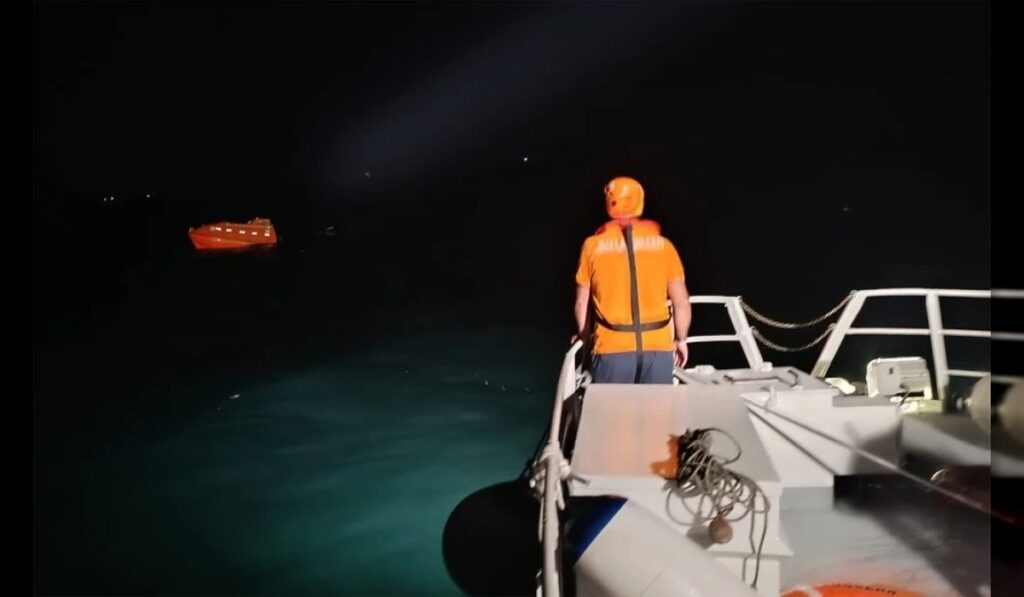
A Turkish general cargo ship sank within minutes of colliding with a product tanker in the Marmara Sea early on September 2, leaving all 10 crewmembers missing. The Tugberk Imamoglu, a 4,598 dwt vessel carrying 4,200 tons of coiled steel, is believed to have gone down just a little more than 20 miles (32 kilometres) south of Silivri, west of Istanbul.
The incident was first detected when an EPIRB (Emergency Position Indicating Radio Beacon) signal was picked up at 0330 local time. The captain of the Turkish-flagged tanker Alsu, which was traveling empty from Kocaeli to Aliaga, reported a collision with an unidentified vessel around the same time. Despite immediate efforts, authorities were unable to establish contact with the Tugberk Imamoglu or its crew via radio or mobile phones.
The Turkish Straits, comprising the Bosphorus and Dardanelles Straits, are among the most congested and strategically vital waterways in the world. The Marmara Sea, where the collision occurred, acts as a critical junction between the two straits, handling dense maritime traffic under strict navigational rules.
However, the sheer volume of vessels, often navigating tight turns and strong currents, creates persistent challenges. The straits are also subject to seasonal fog and adverse weather, which can further complicate navigation. In recent years, Turkey has invested in advanced vessel traffic management systems to monitor movements in real-time, but incidents like the sinking of the Tugberk Imamoglu highlight the ongoing risks.
Search and rescue operation scales up amid grim findings: Turkish
Turkey’s Directorate General of Maritime Affairs confirmed that the free-fall lifeboat and other debris from the Tugberk Imamoglu were located, but no crewmembers were found on board. Transport Minister Abdulkadir Uraloglu stated that the sinking occurred “rapidly in 11 minutes”, with no survivors recovered so far. All 10 missing seafarers, including the captain, are Turkish nationals.
The search operation has mobilized 14 maritime search and rescue units, a helicopter, and the tanker Alsu, which remains undamaged. The Istanbul Governor’s Office reported that the collision took place at 3 am (3 am (00:00 GMT)), approximately 20 miles (32 km) south of Silivri. The Marmara Sea, where the incident occurred, is part of the Turkish Straits, one of the world’s busiest shipping lanes, with hundreds of thousands of vessels transiting annually between the Mediterranean and Black Sea.
The center maintains a network of rescue vessels, helicopters, and coastal stations to respond to maritime emergencies. In this case, the rapid deployment of assets reflects the urgency of the situation, though the absence of survivors underscores the severity of the sinking. The free-fall lifeboat, designed for rapid evacuation, was found empty, suggesting the crew may not have had time to deploy it before the vessel went down.
What the sinking means for maritime safety and trade
The loss of the Tugberk Imamoglu raises critical questions about maritime safety in the Turkish Straits, particularly for older vessels. Built in 1990, the 4,598 dwt general cargo ship was transporting 4,200 tons of coiled steel, a dense and potentially destabilizing cargo if not properly secured. While the exact cause of the collision remains under investigation, the incident may prompt a review of cargo securing protocols and vessel inspection standards in the region.
For the global shipping industry, the Turkish Straits are a vital artery, facilitating the movement of energy resources, grain, and manufactured goods between Europe and Asia. Any disruption in the straits, whether due to accidents, geopolitical tensions, or regulatory changes, can have ripple effects on freight rates and supply chains. The sinking of the Tugberk Imamoglu serves as a stark reminder of the vulnerabilities in congested waterways, where human error, mechanical failure, or adverse conditions can lead to catastrophic outcomes.
What this means for seafarers and their families is a renewed focus on safety training and emergency preparedness. The rapid sinking of the vessel highlights the importance of drills for abandon-ship scenarios, as well as the need for reliable communication systems. For the crew of the Tugberk Imamoglu, the lack of response to radio calls and the absence of survivors suggest a tragic failure in emergency protocols. The maritime community will be watching closely as Turkey’s authorities investigate whether systemic issues contributed to the disaster.
However, the rapid sinking of the Tugberk Imamoglu raises questions about structural integrity and emergency response protocols. The vessel, built in 1990, was en route from Iskenderun, a Mediterranean port, to Eregli on the Black Sea coast.
The Turkish Straits, comprising the Bosphorus and Dardanelles Straits, are critical chokepoints for global trade, particularly for energy shipments. The high traffic density in the region underscores the importance of stringent navigational safety measures. The Marine Traffic website tracks vessel movements in real-time, but authorities have not disclosed whether the Tugberk Imamoglu had any prior reported issues.
The investigation will likely focus on several key areas: the navigational decisions of both vessels, the condition of the Tugberk Imamoglu prior to the collision, and the effectiveness of the emergency response. Black box data from the vessels, if recoverable, could provide critical insights into the final moments before the sinking.
For families of the missing crewmembers, the coming hours will be critical. The Coordination Center leading the search operation has not provided a timeline for scaling down efforts, but the discovery of debris without survivors suggests a challenging recovery mission. The maritime community will be watching closely as Turkey’s authorities investigate the cause of the collision and assess whether additional safety measures are needed in the Marmara Sea.
In the meantime, the search continues, with hopes fading for a miracle rescue. The sinking of the Tugberk Imamoglu serves as a stark reminder of the dangers faced by seafarers in one of the world’s most congested shipping corridors. For those navigating the Turkish Straits, the incident underscores the need for heightened vigilance and adherence to safety protocols in a region where the stakes could not be higher.
Real-time vessel tracking services, such as the Marine Traffic website, can also provide situational awareness for vessels transiting the Marmara Sea and surrounding waters. As the investigation unfolds, the maritime industry will be looking for lessons to prevent future tragedies in this critical shipping lane.


Sign up free to ask CAMAL AI for a summary, the key points or anything else about this story.
Related stories
CAMAL AI
 Financial Ports Newsletter
The maritime economy, every morning
Ports, shipping and freight markets in one short email. Free.
Financial Ports Newsletter
The maritime economy, every morning
Ports, shipping and freight markets in one short email. Free.



