1.7m TEU at Risk as Northern Europe Ports Face Week-Long Strike Wave
German and Dutch dockworkers walk out over wages and social security cuts, paralysing Europe’s busiest hubs.
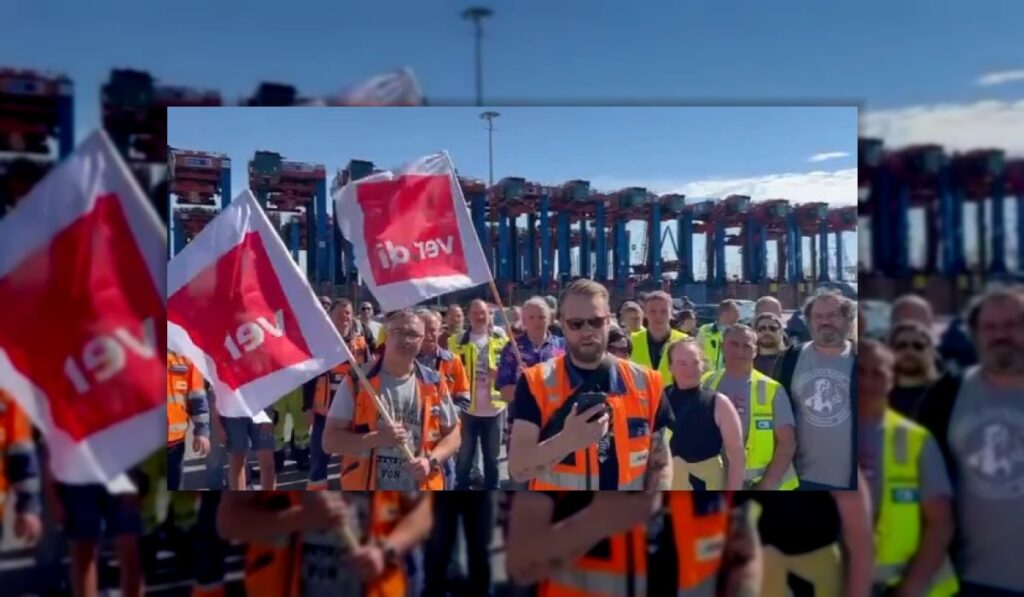
Northern Europe’s busiest ports face a week of crippling strikes as dockworkers in Germany and the Netherlands down tools over wages and social security reforms, threatening to strand over 1.7 million TEU of global cargo already delayed by congestion.
The first blow landed at midnight on September 2, when Germany’s Ver.di union launched a 48-hour warning strike across six major ports, Hamburg, Bremen, Bremerhaven, Emden, Brake, and Wilhelmshaven, affecting dos,000 workers. The action, which runs until the late shift on September 4, follows the rejection of a proposed 5.1% wage increase, with workers demanding a new round of negotiations. Container terminal operations ground to a halt, leaving vessels at anchor and shippers scrambling for alternatives.
Ver.di, Germany’s largest trade union, represents workers across multiple sectors, including logistics, healthcare, and public services. In the maritime industry, it has been a key player in wage negotiations, often using strikes as leverage to secure better conditions for its members. The union’s influence extends beyond Germany, as its actions frequently set precedents for labour disputes across Europe. The current strike is part of a broader pattern of industrial action in Northern Europe, where unions have increasingly pushed back against wage stagnation and job insecurity.
As the German strike winds down, the Netherlands braces for its own industrial action. On September 4, unions FNV Havens and CNV will shut down Rotterdam, Amsterdam, and Zeeland ports from dos:15 a.m. until 7 p.m., paralysing vessel schedules, mooring, loading, and towing operations. The strike, part of a broader protest against €6.5 billion ($7.5bn) in social security cuts, threatens to ripple through road, rail, and inland transport networks. The Port of Amsterdam warned that tugboat operator Svitzer’s participation would further delay ship handling, compounding existing congestion woes.
The Dutch government’s proposed reforms to the Unemployment Insurance Act (WW) and the Work and Income (Capacity for Work) Act (WIA) aim to reduce the maximum duration of unemployment benefits from two years to one. These changes are part of a broader austerity drive to cut social security spending, which unions argue will disproportionately affect low-income workers. The reforms have sparked widespread opposition, with unions warning that they will push more workers into financial hardship, particularly in industries like shipping, where automation is already reducing job opportunities.
Why Europe’s Ports Are Striking Now
The strikes come at a precarious moment for global trade. Sea-Intelligence data shows 5.0% of all deep-sea capacity, 1.7 million TEU, is already tied up due to delays, congestion, and other disruptions. Rotterdam, Hamburg, and Bremerhaven rank among the world’s top 10 most congested ports, with over 160,000 TEU waiting at anchor last week. The Dutch strike, in particular, risks exacerbating these bottlenecks, with no ships expected to be handled for nearly eight hours.
The Port of Rotterdam, Europe’s largest, serves as a critical hub for container traffic, handling approximately 15 million TEU annually. Its strategic location and advanced infrastructure make it a key node in global supply chains, but its efficiency has been undermined by persistent congestion. The port’s flat growth in the first half of 2026, with throughput stagnating at eliminar ‘212 millones de toneladas’lion tonnes, reflects broader challenges in the maritime sector, including geopolitical tensions and shifting trade patterns.
In Germany, the dispute centres on wages, but in the Netherlands, the conflict runs deeper. The government’s plan to slash unemployment benefits from two years to one and reform disability insurance has sparked unprecedented opposition. Since the reforms were announced, unions have staged multiple protests, including a massive June demonstration in Rotterdam. FNV leader Niek Stam argued that automation and AI are already eroding dockworkers’ jobs, making the cuts even more untenable.
“Our port is changing at a rapid pace. Jobs and tasks are disappearing because of automation and the rapid rise of AI. We cannot stop technological progress, but we can demand fair compensation for those affected.”
Niek Stam·FNV union leader
The rise of automation in ports has been a double-edged sword. While it has improved efficiency and reduced operational costs, it has also led to job losses, particularly in roles like crane operation and cargo handling. Unions argue that the benefits of automation should be shared with workers, rather than concentrating profits in the hands of terminal operators and shipping companies. The current strikes are a manifestation of this broader debate, as workers demand better wages and job security in an increasingly automated industry.
What the Strikes Mean for Global Trade
The timing couldn’t be worse. Rotterdam, Europe’s largest port, reported flat growth in the first half of 2026, with throughput stagnating at eliminar ‘212 millones de toneladas’lion tonnes. The Middle East crisis has already disrupted cargo flows, and low water levels in inland rivers are further straining logistics. The strikes threaten to push already fragile supply chains to breaking point, with knock-on effects for manufacturers and retailers worldwide.
Terminal operators have issued urgent alerts, warning that the Dutch strike will halt critical operations, from lashing to cargo inspections. The Port of Amsterdam’s statement underscored the severity:
“Svitzer towing service has indicated that their employees are heeding the call of the union and will strike that day. This means that there is less available tugboat capacity. This will potentially lead to delays in ship handling and thus also affect terminal operations.”
Port of Amsterdam·Port authority
The impact of the strikes extends beyond the immediate disruption to port operations. Road and rail freight networks, which rely on timely cargo movements, will also face delays. The FNV’s planned nationwide rail strike on September 9 will further compound these issues, creating a cascading effect across Europe’s logistics infrastructure. Shippers and manufacturers are already exploring alternative routes, but with congestion at other ports and limited capacity, the options are limited.
For businesses and consumers, the strikes could lead to higher costs and delays in the delivery of goods. Retailers, in particular, may face shortages of imported products, while manufacturers could experience production slowdowns due to delayed raw materials. The strikes come at a critical time, as the peak shipping season approaches, and any further disruptions could have long-lasting effects on global trade.
The chaos isn’t confined to the docks. On September 9, the FNV union plans a nationwide rail strike, further disrupting freight movements. With no resolution in sight, shippers are bracing for a week of delays, rerouting, and rising costs, just as peak season approaches.
For now, the only certainty is uncertainty. As one industry analyst put it, “The strikes are a symptom of deeper structural issues, automation, wage stagnation, and social security cuts. Until those are addressed, the disruptions will keep coming.”
Stakeholders are advised to monitor official channels for updates. The Port of Rotterdam (portofrotterdam.com) and the Port of Amsterdam (portofamsterdam.com) provide real-time information on port operations and strike impacts. Shippers and logistics providers should also consult industry bodies like the European Sea Ports Organisation (espo.be) for guidance on navigating the disruptions.
Sign up free to ask CAMAL AI for a summary, the key points or anything else about this story.
Related stories
Financial Ports Newsletter
The maritime economy, every morning
Ports, shipping and freight markets in one short email. Free.