

Solstad locks $30m APAC drilling deal with two AHTS vessels
Norwegian owner secures 475-day firm contracts for Normand Scorpion and Normand Saracen in Asia-Pacific region.
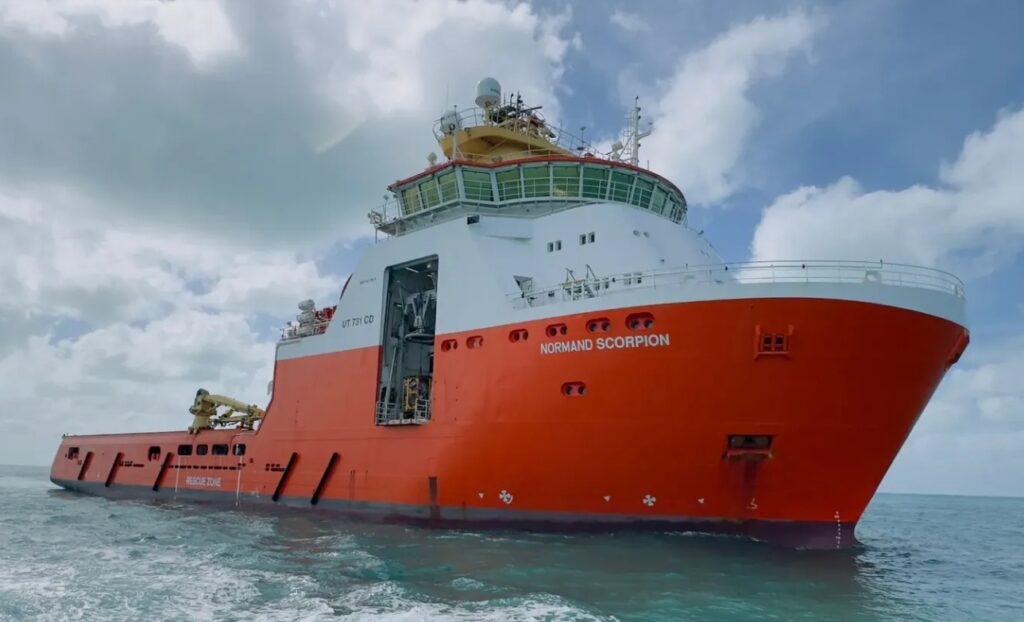
Solstad Maritime has secured a substantial drilling-support contract in the Asia-Pacific region, deploying two of its anchor-handling tug supply vessels (AHTS) for a combined 475 days. Norwegian owner confirmed the deal, valued at the upper end of its $10m and $30m “substantial” range, will see the Normand Scorpion and Normand Saracen commence operations in the second and third quarters of 2027.
The contracts, awarded by an undisclosed client, also include 400 days of options beyond the firm period. Both vessels, built in 2009 and 2010 respectively, measure 87.4 metres in length with a 21-metre beam, making them well-suited for the demanding conditions of offshore drilling support in the APAC region.
What the $30m deal means for Solstad’s APAC footprint
Solstad Maritime’s definition of a “substantial” contract, between $10m and $30m, places this agreement at the top of that bracket. The firm period alone covers 475 days, with the additional 400 days of options potentially extending the vessels’ deployment well into 2028. The company has not disclosed the daily rate, but industry analysts estimate AHTS vessels of this size command between $30,000 and $50,000 per day in the current market, depending on the region and contract terms.
Norwegian Cruise Line
The Normand Scorpion and Normand Saracen will join a fleet already active in the Asia-Pacific offshore sector, where Solstad has maintained a presence for over a decade. The region’s drilling activity has seen a resurgence in recent quarters, driven by national energy security policies and renewed interest in deepwater exploration. The vessels’ deployment aligns with this trend, offering critical support for rig positioning, anchor handling, and subsea operations.
Why the APAC region is betting on anchor-handling capacity
APAC-Pacific offshore market has faced volatility in recent years, with fluctuating oil prices and geopolitical tensions disrupting project pipelines. However, the region remains a key player in global energy production, particularly in Southeast Asia and Australia. Solstad’s contract reflects a strategic bet on the sector’s long-term stability, as national oil companies and international operators ramp up drilling campaigns to meet domestic and export demand.
The 475-day firm period suggests the client is securing capacity for a major project or a series of smaller ones, reducing the risk of vessel shortages during peak operational windows. The 400 days of options provide further flexibility, allowing the client to extend the charter if drilling schedules shift or new opportunities arise. Solstad Maritime, the deal not only bolsters its revenue stream but also reinforces its position as a reliable provider of high-spec AHTS tonnage in a competitive market.
The vessels’ specifications, 87.4 metres in length and a 21-metre beam, are tailored for the region’s offshore requirements. Their design allows for heavy-lift operations, towing, and dynamic positioning, essential for supporting semi-submersible rigs and drillships in deepwater fields. The Normand Scorpion and Normand Saracen have previously operated in the North Sea and West Africa, but their redeployment to APAC underscores the region’s growing importance in the global offshore supply chain.
Solstad Maritime has not disclosed the specific locations within the APAC region where the vessels will operate, but industry sources point to Australia, Indonesia, and Malaysia as likely hubs. These countries have seen increased drilling activity in recent months, with several new exploration blocks awarded and existing fields undergoing expansion. The vessels’ arrival in 2027 could coincide with the start of new projects, providing a timely boost to the region’s offshore logistics network.
The contract also highlights the broader trend of offshore vessel owners diversifying their geographic exposure. With the North Sea and Gulf of Mexico markets facing regulatory and economic pressures, the APAC region offers a relatively stable alternative, supported by government-backed energy policies and a steady pipeline of projects. Solstad’s decision to commit two high-spec vessels to the region signals confidence in its long-term prospects, even as global energy markets navigate uncertainty.
For the crew and support staff, the contracts provide job security and the opportunity to work on high-profile projects in a dynamic region. The vessels’ deployment will likely involve a mix of local and international personnel, reflecting Solstad’s commitment to maintaining operational standards while adapting to regional labour requirements. The company’s crewing strategy has come under scrutiny in recent years, with some industry observers questioning its approach to redundancy and redeployment, but this contract suggests a renewed focus on securing stable, long-term work for its fleet.
As the offshore sector continues to evolve, contracts like this one serve as a bellwether for market sentiment. The $30m deal not only validates Solstad’s investment in high-quality tonnage but also signals that the APAC region remains a critical battleground for offshore service providers. With 400 days of options still on the table, the full value of the contract could yet grow, offering a lifeline for the company as it navigates the challenges of a post-pandemic maritime landscape.


Sign up free to ask CAMAL AI for a summary, the key points or anything else about this story.
Related stories
CAMAL AI
 Financial Ports Newsletter
The maritime economy, every morning
Ports, shipping and freight markets in one short email. Free.
Financial Ports Newsletter
The maritime economy, every morning
Ports, shipping and freight markets in one short email. Free.