

Bird Flu Fear Forces First-Ever Evacuation of Macquarie Island Station
Australia deploys icebreaker Nuyina to extract 24 researchers as H5 strain threat looms over wildlife sanctuary.
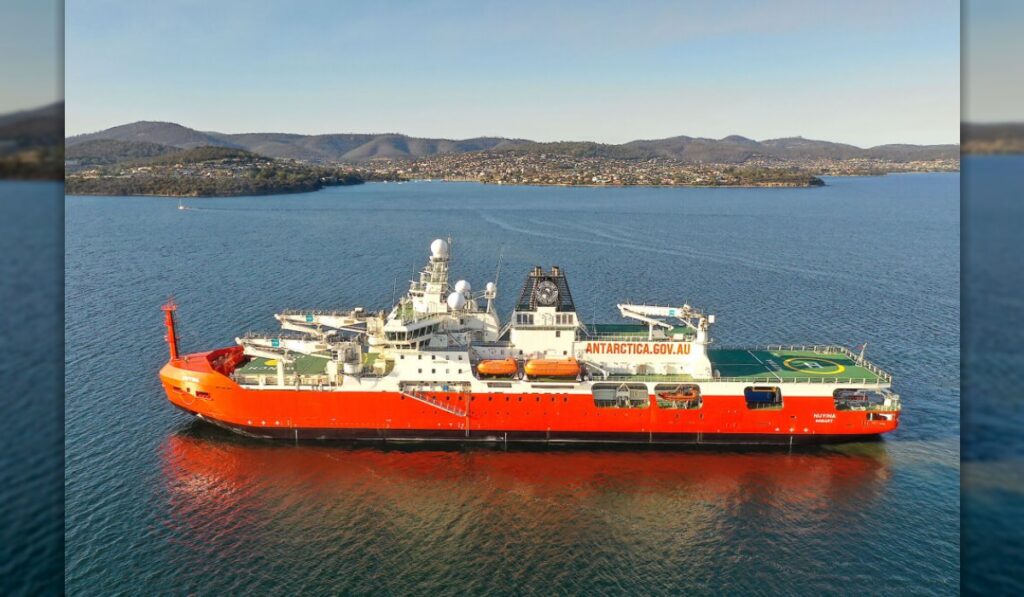
Australia’s Antarctic Division (ADD) is evacuating all 24 researchers from Macquarie Island, a sub-Antarctic wildlife sanctuary, after assessments warned of a looming bird flu outbreak. The unprecedented move, deploying the 525-foot icebreaker Nuyina, marks the first time the station has been left unmanned since its establishment in 1948.
The decision follows the devastating impact of the H5 avian influenza strain on nearby Heard Island, where over 13,000 seal pups died this summer. Though the island remains free of bird flu, the psychological toll of a potential mass mortality event on researchers has forced the evacuation.
Sean Sullivan, Deputy Secretary at Australia’s Department of Climate Change, Energy, the Environment and Water, called the evacuation an “unusual measure” but necessary. “We can’t ignore the psychosocial risks of living near potentially large numbers of affected animals,” he said. The 24 expeditioners, comprising scientists, tradespeople, and support staff, had only been at the station for five months of their planned year-long deployment when the decision was made.
The Australian Antarctic Division (ADD), responsible for the country’s Antarctic and sub-Antarctic research programmes, operates under the Department of Climate Change, Energy, the Environment and Water.
The evacuation is not just about human safety. The Nuyina will also retrieve essential cargo from the station, as it remains unclear when personnel might return.
The Future of Macquarie Island: A A$370 Million (US$266.4 Million) Rebuild
The evacuation comes at a critical juncture for Macquarie Island. The Australian government is midway through a A$370 million (US$266.4 million) rebuild of the research station, aimed at replacing deteriorating infrastructure and ensuring a continued year-round presence.
“We remain committed to maintaining a long-term presence on Macquarie Island,” Sullivan assured. However, the psychological and logistical challenges of a bird flu outbreak could reshape how research is conducted in the region. The station, a hub for climate and environmental studies, has never faced such a prolonged interruption in its 76-year history. The evacuation raises questions about the future of field research in remote, high-risk environments, particularly as climate change and emerging diseases alter the operational landscape.
The rebuild project, one of the largest infrastructure investments in Australia’s Antarctic programme, includes new accommodation blocks, scientific laboratories, and energy-efficient systems designed to withstand the island’s harsh climate. The project aims to modernise the station while minimising its environmental footprint, aligning with Australia’s commitment to sustainable polar research. However, the evacuation has paused construction activities, potentially extending the timeline for completion beyond the projected 2032 deadline.
The Nuyina, currently undergoing maintenance in Singapore, is scheduled to collect the expeditioners in early October before embarking on its planned Antarctica resupply operations later that month. The vessel’s 1,500-kilometre journey from Hobart to Macquarie Island underscores the logistical complexities of operating in one of the world’s most remote regions.
As Australia’s flagship icebreaker, the Nuyina plays a pivotal role in supporting scientific research, transporting personnel and cargo, and conducting marine science in the Southern Ocean. Its 525-foot length and advanced capabilities make it one of the most sophisticated research vessels in the world, capable of breaking through 1.65 metres metres of ice at a speed of three knots.
For the researchers, the evacuation is a bitter pill. “I’m sure [staff] will be disappointed,” Sullivan acknowledged. “It’s a special place and … people are coming into summer where a lot more work can be done.” The decision, though difficult, reflects the balancing act between scientific progress and the welfare of those on the front lines of polar research. The 24 expeditioners, who began their deployment in May 2026, will now face an abrupt end to their fieldwork, leaving behind experiments and monitoring programmes that rely on continuous data collection.
For stakeholders and the broader scientific community, the evacuation highlights the vulnerabilities of remote research stations in the face of emerging global threats. Bird flu, which has already devastated wildlife populations in the region, poses a significant risk to both ecosystems and human operations.
The outbreak on Heard Island, where more than three-quarters of all seal pups succumbed to the virus by June 2026, serves as a stark warning of the potential consequences for Macquarie Island. The H5 strain, first detected in the region late last year, has demonstrated a mortality rate of up to 90% for elephant seals, making it one of the most lethal wildlife diseases in recent history.
As the Nuyina prepares for its mission, the world watches how this evacuation will impact not just Macquarie Island’s future, but the broader approach to polar research in an era of climate uncertainty and emerging wildlife diseases. The Australian Antarctic Division has indicated that it will continue to monitor the situation closely, using remote technologies to track wildlife health and environmental conditions. For now, the focus remains on ensuring the safe return of the expeditioners and assessing the long-term viability of resuming operations on the island.
Researchers and policymakers alike will need to grapple with the implications of this evacuation for future polar expeditions. The psychological and operational risks highlighted by the bird flu threat may prompt a reevaluation of how research is conducted in extreme environments, with a greater emphasis on remote monitoring, contingency planning, and adaptive strategies. For the 24 expeditioners evacuated from Macquarie Island, the experience serves as a reminder of the unpredictable nature of fieldwork in some of the planet’s most remote and fragile ecosystems.
Those interested in following developments at Macquarie Island can access updates through the Australian Antarctic Division’s official website, which provides real-time information on research activities, environmental monitoring, and logistical operations in the region.


Sign up free to ask CAMAL AI for a summary, the key points or anything else about this story.
Related stories
CAMAL AI
 Financial Ports Newsletter
The maritime economy, every morning
Ports, shipping and freight markets in one short email. Free.
Financial Ports Newsletter
The maritime economy, every morning
Ports, shipping and freight markets in one short email. Free.