

Luxury Cruise Ships Grow 40%—But Will Fares Follow?
New 77,000-gross-ton ships will carry just 10% more guests, pushing space ratios to record highs.
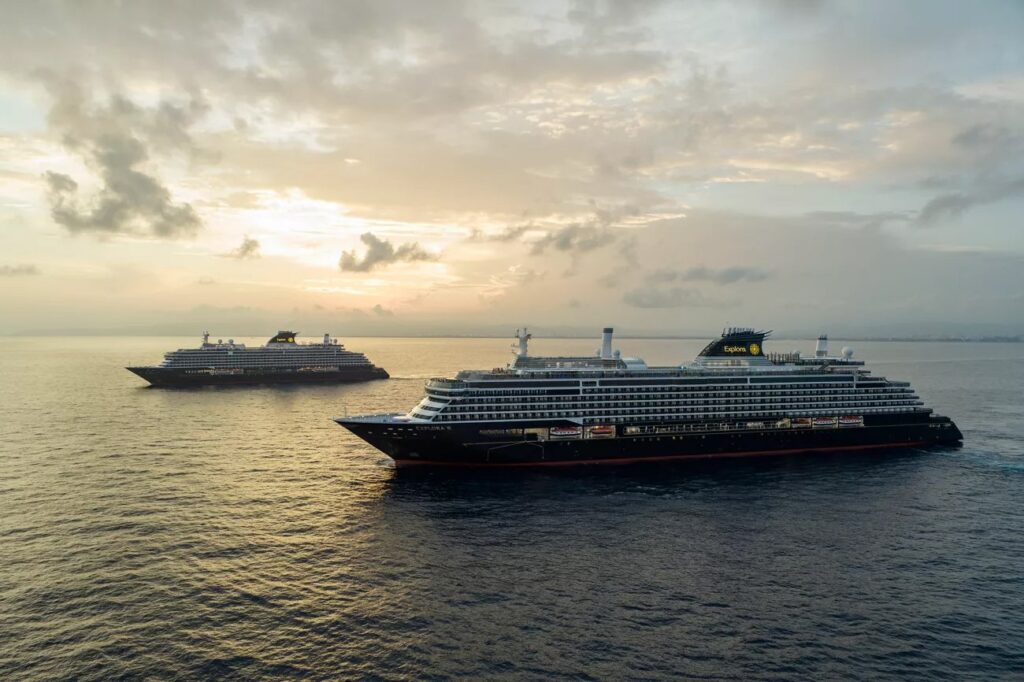
The ultra-luxury cruise segment—defined by all-suite accommodations, butler service, and personalized concierge experiences—continues to expand at an unprecedented pace. Once dominated by smaller vessels, the industry is now seeing a surge in larger, more extravagant ships as brands compete to redefine opulence at sea.
Modern ultra-luxury ships now range between 50,000 and 70,000 gross tons, a significant increase from the 30,000-ton vessels that set the standard decades ago. This growth reflects a broader shift toward more spacious, amenity-rich experiences, with lines investing heavily to attract high-end travelers.
Major cruise operators are pouring billions into the sector. MSC Group is midway through a €3.5 billion initiative to build six ultra-luxury ships for its Explora Journeys brand. Meanwhile, Norwegian Cruise Line Holdings (NCLH) has committed to four new 77,000-gross-ton vessels for its Regent Seven Seas Cruises division, the first of which, Seven Seas Prestige, is scheduled for delivery in late 2026.
The New Era of Ultra-Luxury Cruising
Regent is also upgrading its existing fleet. The company recently announced plans to “reimagine” its Explorer-class ships during dry docks in 2027 and 2028. The renovations will reduce the number of suites per ship from 373 to 344, eliminating 29 cabins to expand the size of entry-level accommodations. Currently, the smallest suites on Seven Seas Explorer (launched in 2016) measure 307 square feet. After the redesign, they will range from 415 to 464 square feet, with new premium suites reaching up to 918 square feet.
“We’re taking steps to strengthen Regent’s position by improving two critical luxury metrics: space ratios and guest-to-crew ratios,” said John Chidsey, CEO of NCLH, during a July investor call. The upgrades follow a recent 25-day refurbishment of Seven Seas Voyager, a 2003-built ship.
Billion-Dollar Investments Reshape the Market
The influx of new players is intensifying competition. Luxury hotel brands like Ritz-Carlton and Four Seasons have entered the market, while Aman is set to debut its first yacht-style cruise ship in 2027. Established names such as Scenic Group and Swan Hellenic are also expanding their fleets with high-end expedition vessels.
Over the next decade, at least 16 new ultra-luxury ships will join the market, adding nearly 1 million gross tons and 10,000 berths. This represents 20% of all new cruise ship orders by number, a stark contrast to the segment’s modest share a decade ago.
Yet as ships grow larger and more exclusive, fares continue to climb. Suites on Regent’s Seven Seas Grandeur now routinely sell for $25,000 per person for a two-week voyage. With space ratios increasing and demand remaining strong, industry analysts suggest prices could rise another 20% by 2028, raising questions about whether even affluent travelers will sustain the market’s rapid growth.


Sign up free to ask CAMAL AI for a summary, the key points or anything else about this story.
Related stories
CAMAL AI
 Financial Ports Newsletter
The maritime economy, every morning
Ports, shipping and freight markets in one short email. Free.
Financial Ports Newsletter
The maritime economy, every morning
Ports, shipping and freight markets in one short email. Free.



