

Iran’s Tanker War Sends Oil to $136—Who Pays the $1.4m Daily Price?
Benchmark Gulf-East Asia tanker rates surge past $1.4 million per day after Iran’s 20th strike this month.
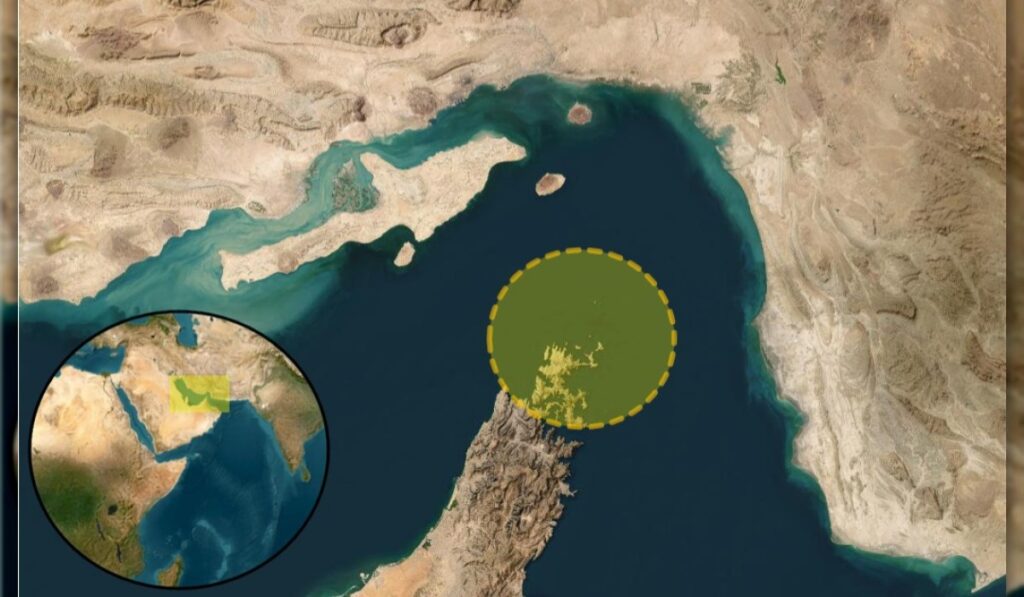
Iran’s escalating campaign against oil tankers in the Middle East has sent Brent crude to $136 (Dated Brent) and pushed Gulf-East Asia freight rates above $1.4 million per day, as Tehran expands its attacks beyond the Strait of Hormuz into the Gulf of Oman.
The latest strike targeted the Antigua-flagged product tanker Acers (IMO 9301902) in the central Arabian Gulf on Wednesday, where three drones damaged its funnel, upper decks, and engine room, igniting a fire that crews later extinguished. The attack followed a separate incident in the Strait of Hormuz, where an unnamed crude oil tanker was hit by an unknown projectile off the Musandam Peninsula, according to the United Kingdom Maritime Trade Operations (UKMTO).
NASA’s Fire Information for Resource Management System (FIRMS) detected infrared anomalies off Fujairah, east of the UAE’s busy tanker anchorage, corroborating Iranian claims of an attack on a vessel outside the strait. Martin Kelly, an analyst at EOS Risk Group, warned that if confirmed, this shift would signal Iran’s intent to target feeder and shuttle vessels in less-defended waters. “The U.S. military’s heavy patrol presence around the Musandam Peninsula won’t extend to the Gulf of Oman,” Kelly noted, “leaving ships more exposed.”
Frontline
The financial impact has been immediate. Brent crude futures, meanwhile, climbed to $104 per barrel before spiking further to $136 for Dated Brent, a premium grade used as a pricing benchmark. By October 14, Brent was trading at $106.37, while West Texas Intermediate (WTI) reached $94.72. For now, however, the market remains on edge.
The U.S. response has been cautious. President Donald Trump ruled out military escalation before the November 3 midterm elections, stating: “While Iran is in very bad condition, both economically and militarily, and while the blockade will remain in full force and effect… we will not be attacking Iran at any time prior to the midterm elections.” Behind the scenes, however, the Pentagon is reportedly preparing strike options, including three-day campaigns targeting Iranian missile sites, drone assets, and command centres.
Past experience suggests Iran could reconstitute its capabilities quickly, potentially retaliating with long-range strikes on U.S. bases in the region.
The geopolitical stakes are high. Israeli media reported that Prime Minister Benjamin Netanyahu urged Trump to restart strikes on Iran last week, though Netanyahu’s office denied the claims. Meanwhile, unnamed Iranian officials told Reuters that Tehran plans to intensify its tanker attacks using new tactics, further complicating efforts to secure one of the world’s most critical shipping lanes.
Market analysts remain divided on the long-term impact. Hiroyuki Kikukawa of Nissan Securities Investment echoed this sentiment, suggesting that the recent price movements may be short-lived if Russian supplies materialise as promised.
For shipping companies and oil traders, the risks are clear. The Acers attack demonstrated that even product tankers, typically smaller and less valuable than crude carriers, are not immune. With UKMTO’s public tally of attacks this month standing at 13, and private estimates suggesting the true figure is closer to 20, insurers are likely to hike premiums for vessels transiting the region. Some operators may opt for longer, costlier routes around the Cape of Good Hope, adding days to voyages and further straining global supply chains.
The next few weeks will be critical. If Iran follows through on its threats to expand attacks beyond the Strait of Hormuz, the Gulf of Oman could become the new frontline in this shadow war. For now, the world watches as oil prices fluctuate with each new strike, and each new warning from Tehran.


Sign up free to ask CAMAL AI for a summary, the key points or anything else about this story.
Related stories
CAMAL AI
 Financial Ports Newsletter
The maritime economy, every morning
Ports, shipping and freight markets in one short email. Free.



