

US Sinks Third Drug Cartel Fuel Ship in Pacific
SOUTHCOM confirms third refuelling vessel linked to Los Choneros sunk in Eastern Pacific since September 2
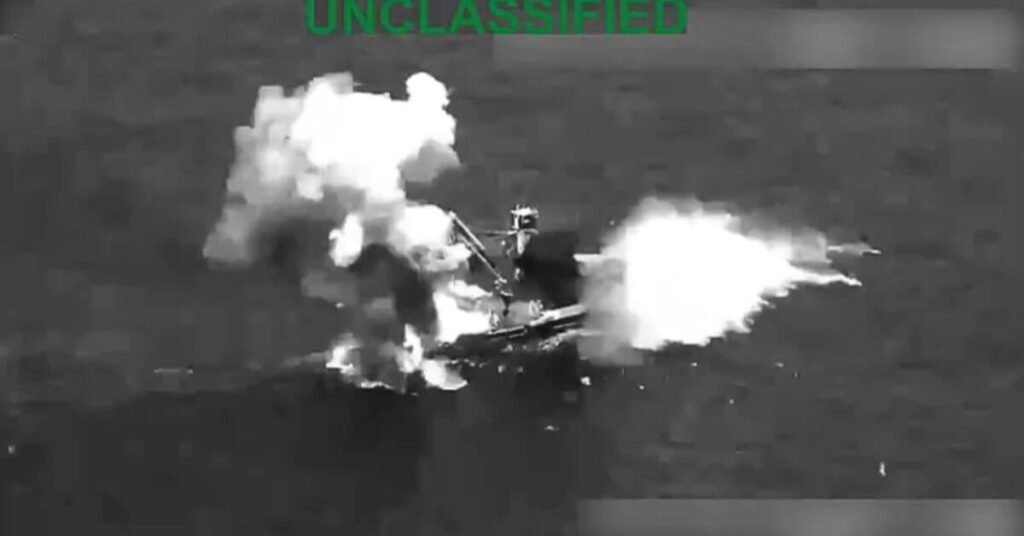
US Southern Command (SOUTHCOM) has sunk a third floating refuelling vessel in the Eastern Pacific in less than a week, targeting the maritime logistics of Ecuador’s Los Choneros cartel. The operation, carried out by Joint Task Force Western Hemisphere Hemisphere (JTF-WHEM) on September 7, disrupts a critical support system for cocaine trafficking routes stretching from South America to North America.
The vessel, described as a fuel-support ship, was identified through intelligence as part of Los Choneros’ broader maritime network. According to SOUTHCOM, personnel aboard were safely disembarked before the ship was sunk.
How Floating Refuelling Stations Extend Drug Trafficking Reach
Floating refuelling vessels play a pivotal role in the logistics of maritime drug trafficking. These ships allow smaller, high-speed boats, often used to transport cocaine, to remain at sea for extended periods without returning to shore for fuel. This capability enables traffickers to cover longer distances, evading detection and extending their operational range from production hubs in Colombia and Peru to transit points in Central America and Mexico.
Frontline
SOUTHCOM’s latest operation highlights the sophistication of Los Choneros’ maritime strategy.
The interdiction on September 7 follows two similar operations earlier in the week. On September 5, US forces stopped a group of vessels linked to Los Choneros, sinking the main ship and its support boats after removing the crew. Two days prior, on September 2, another floating fuel station was targeted and sunk. These repeated actions suggest a shift in US strategy, focusing not only on drug-carrying vessels but also on the infrastructure that sustains them at sea.
The Broader Impact on Maritime Security and Global Trade
The crackdown on Los Choneros’ maritime operations raises critical questions about the security of commercial shipping lanes in the Eastern Pacific. While the targeted vessels are not part of the formal shipping industry, their presence in international waters poses risks to legitimate maritime traffic.
The Eastern Pacific is a key route for container ships and bulk carriers moving goods between Asia, the Americas, and Europe. Disruptions in these waters, whether from drug trafficking or counter-narcotics operations, can lead to delays, increased insurance costs, and heightened scrutiny for commercial vessels.
Detainees from that operation were also transferred to Ecuadorian authorities, underscoring the growing cooperation between the two nations.
Industry stakeholders are closely monitoring SOUTHCOM’s operations, particularly as they expand beyond traditional interdiction efforts to target the logistical backbone of maritime drug trafficking.
The repeated interdictions also highlight the evolving tactics of criminal organisations. Los Choneros, which emerged in the 1990s in Ecuador’s port city of Manta, has adapted to law enforcement pressure by developing offshore support networks. These networks allow traffickers to operate with greater flexibility, reducing their reliance on shore-based infrastructure. The US and its partners are now responding in kind, deploying advanced surveillance and interdiction capabilities to counter these maritime threats.
Looking ahead, SOUTHCOM has indicated that JTF-WHEM will continue its operations in the Eastern Pacific, with a focus on disrupting the support systems that enable drug trafficking. For Ecuador, the transfer of detained individuals from these operations presents both an opportunity and a challenge. While the country has made strides in combating organised crime, its judicial system remains under pressure to process and prosecute high-profile cases effectively.
The broader implications for global shipping are clear: as criminal organisations refine their maritime strategies, the industry must adapt to ensure the safety and efficiency of trade routes. The Eastern Pacific, long a critical artery for global commerce, is now a frontline in the fight against transnational crime, a battle with far-reaching consequences for security, trade, and regional stability.


Sign up free to ask CAMAL AI for a summary, the key points or anything else about this story.
Related stories
CAMAL AI
 Financial Ports Newsletter
The maritime economy, every morning
Ports, shipping and freight markets in one short email. Free.
Financial Ports Newsletter
The maritime economy, every morning
Ports, shipping and freight markets in one short email. Free.