Sweden Bolsters Ukraine’s War-Torn Waterways With 10 Coast Guard Boats
Ten high-speed vessels will aid demining and rescue operations in Ukraine’s contaminated rivers and Black Sea coastline.
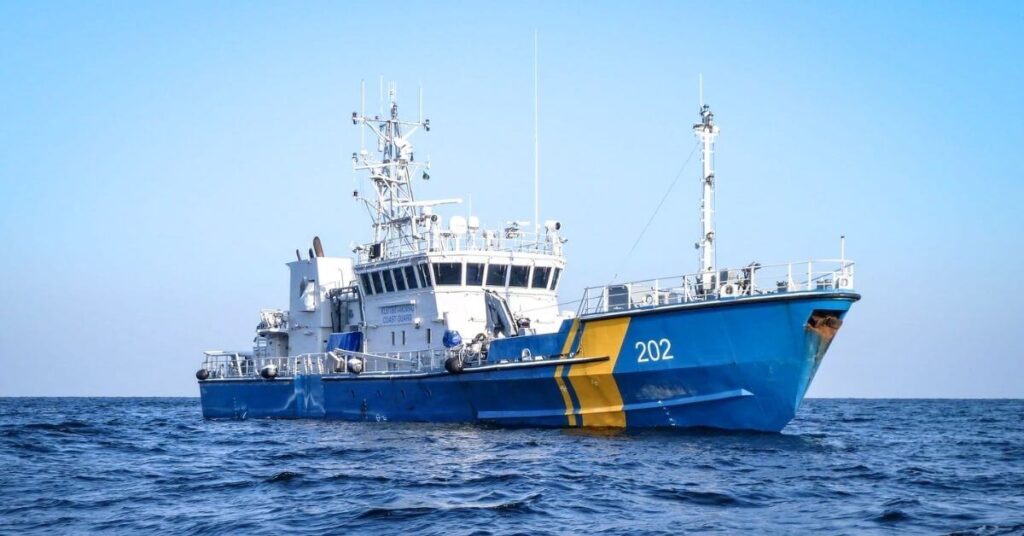
Sweden has pledged 10 Coast Guard boats to Ukraine to strengthen its ability to clear mines and conduct rescue operations in war-torn waterways. The vessels, including workboats and high-speed craft, will be transferred to Ukraine’s State Emergency Service (SES) after Swedish identification details and government-specific equipment are removed.
The donation, announced by the Swedish government on August 27, aims to bolster Ukraine’s maritime capabilities amid ongoing conflict. The boats will support demining efforts in riverbeds and channels, as well as transport and towing operations in areas contaminated by explosive remnants of war.
Why Ukraine Needs These Boats Now: coast guard boats
The Swedish donation will expand Ukraine’s capacity to conduct specialised waterborne operations, including rescue missions in high-risk areas.
The urgency of demining Ukraine’s waterways extends beyond military concerns. The State Emergency Service of Ukraine (SES), the agency tasked with managing these operations, has been operating at full capacity since Russia’s full-scale invasion in 2022.
The Swedish boats will enable the SES to scale up its operations, particularly in shallow waters and riverbeds where larger vessels cannot operate.
Broader Swedish Military Support for Ukraine
The boat donation is part of Sweden’s broader defence aid to Ukraine, which includes a $1.4 billion military package announced earlier this year. Sweden has also allocated 270 million Swedish kronor (about $28.4 million) for Ukraine’s defence, with most funds earmarked for air defence systems.
Of this amount, $14 million will be contributed to the PURL programme, a NATO-led initiative where member states purchase U.S. weapons for transfer to Ukraine. The programme was established in 2025 after the U.S. administration under President Donald Trump restricted direct military aid to Ukraine, requiring allies to step in. Sweden’s contribution to PURL brings its total commitment to the programme to $552 million, following an initial pledge of $94 million in June 2026.
Sweden’s support extends beyond maritime assets. In June 2026, the country signed an agreement for Ukraine to procure 16 Gripen E fighter jets, a next-generation aircraft designed for air superiority and ground attack missions.
These aircraft, an earlier variant of the Gripen family, will further bolster Ukraine’s air force as it continues to defend against Russian airstrikes and drone attacks. The delivery timeline aligns with Sweden’s broader strategy of phased military support, ensuring Ukraine receives sustained assistance over the coming years.
Sweden’s naval aid to Ukraine has also been significant. In January 2025, the country doubled its pledge of CB90 assault boats for Ukraine’s navy, bringing the total to 32 vessels. The CB90, a fast and agile combat boat, is designed for amphibious operations and coastal defence. Sweden also added 23 naval combat modules to arm these boats, enhancing their firepower and operational flexibility. These vessels will play a critical role in securing Ukraine’s Black Sea coastline, where Russian naval dominance has posed a persistent threat to shipping and civilian infrastructure.
“Sweden is supporting Ukraine on a number of fronts and is now providing additional reinforcement to the country’s maritime capabilities. Towing, demining and transportation are all key capabilities that can now be further bolstered.”
Carl-Oskar Bohlin·Swedish Minister for Civil Defence
The Swedish boat donation arrives at a critical juncture for Ukraine. With Russia intensifying its attacks on critical infrastructure and coastal regions, Ukraine’s ability to secure its waterways is essential for both military and civilian recovery efforts. The vessels will enable the SES to accelerate demining operations, reducing the risk to civilians and facilitating the reopening of vital trade routes.
For Ukraine’s broader defence strategy, the boats complement Sweden’s other military contributions, including the Gripen fighter jets and CB90 assault boats. Together, these assets form part of a layered defence approach, combining air superiority, coastal security, and specialised maritime operations. This multi-domain support is particularly important as Ukraine prepares for potential counteroffensives in 2027 and beyond.
The international community has increasingly recognised the importance of demining and maritime security in Ukraine’s recovery. The United Nations and the European Union have both pledged support for Ukraine’s demining efforts, but the scale of contamination requires sustained, long-term investment. Sweden’s donation sets a precedent for other NATO members to contribute specialised equipment tailored to Ukraine’s unique operational challenges.
For those interested in tracking the progress of Sweden’s military aid to Ukraine, official updates are available through several channels. The Swedish Ministry of Defence and the Swedish Armed Forces regularly publish statements on their websites and social media platforms, detailing new aid packages and delivery timelines. Ukraine’s State Emergency Service (SES) also provides updates on demining operations and the deployment of donated equipment through its official communications.
The PURL programme, managed by NATO, offers insights into the broader international effort to supply Ukraine with U.S.-made weapons. Its website and press releases outline contributions from member states, including Sweden, and provide context on how these resources are being utilised on the ground.
The Swedish government’s latest move underscores its commitment to Ukraine’s defence amid Russia’s ongoing invasion. With contaminated waterways posing a significant threat to civilian safety and economic recovery, the donated boats will play a critical role in restoring secure access to Ukraine’s rivers and coastal areas. As Sweden continues to expand its military support, Ukraine’s ability to counter Russian aggression and rebuild its infrastructure will depend on the timely delivery and effective deployment of these assets.
Sign up free to ask CAMAL AI for a summary, the key points or anything else about this story.
Related stories
Financial Ports Newsletter
The maritime economy, every morning
Ports, shipping and freight markets in one short email. Free.