

Cargo Theft Plummets 26%—But Stolen Freight Value Doubles in 2025
US cargo theft incidents fell sharply in Q2 2025, yet the average stolen load value surged.
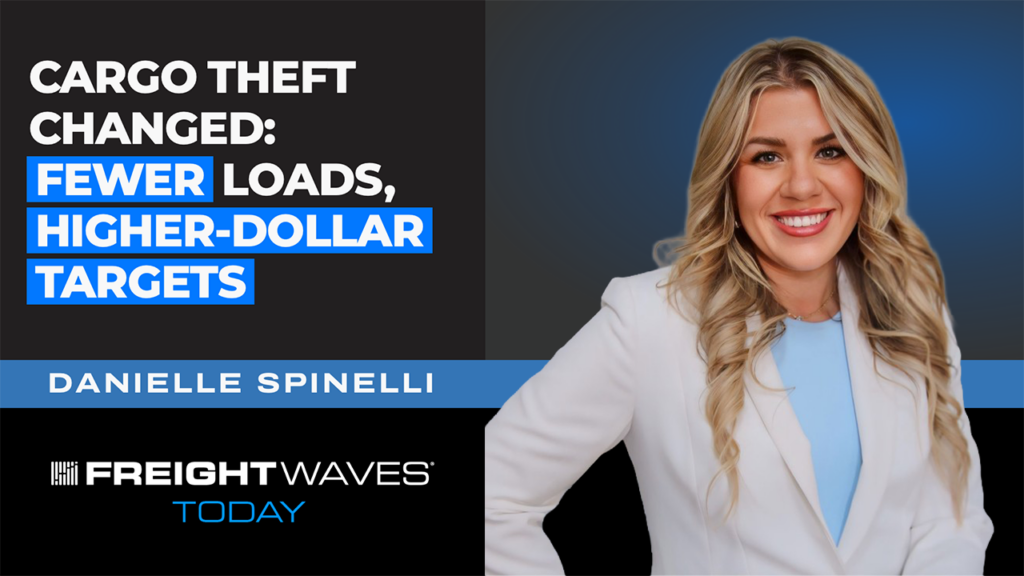
Cargo theft in the United States has taken a dramatic turn: while incidents fell by 26% in the second quarter of 2025, the value of stolen freight has doubled, revealing a calculated shift by criminal networks toward high-value targets.
Danielle Spinelli, Director of Partnerships at Genlog and known in the industry as the Fraud Girl, told FreightWaves that the trend reflects a move away from opportunistic theft toward deliberate, high-stakes heists. “There’s less loads that they’re stealing, but they’re targeting high-value freight,” she said. “Those who are running high value definitely need to kind of cross their T’s, dot their I’s, because they’re really hunting them right now.”
How Criminals Exploit Legitimate Carrier Numbers: Cargo Theft
The rise in stolen freight value coincides with a new tactic: the exploitation of sold or dormant Motor Carrier (MC) numbers. Criminals acquire these legitimate authorities, sometimes openly advertised on platforms like Facebook, and use them to move stolen goods without triggering standard vetting alarms. Genlog, which monitors 99% of active US motor carriers through a network of cameras, sensors, and satellite data, flags anomalies such as carriers that vanish from the road for 7 to 60 days, operate unfamiliar routes, or use equipment they’ve never hauled before.
Once acquired, these numbers allow criminals to pose as legitimate operators, bypassing initial vetting checks that rely on digital records alone.
Spinelli explained that Genlog’s physical surveillance offers an advantage over digital-only platforms. “Because we’re able to see them on a physical level, it’s not like they can manipulate anything digitally to make them look like they’re still operating if they did sell it,” she said. “We’re able to really see what is physically changing more than a digital platform can.”
“Those who are running high value definitely need to kind of cross their T’s, dot their I’s, because they’re really hunting them right now.”
Danielle Spinelli·Director of Partnerships at Genlog
What Brokers and Carriers Must Watch Now
The data, collected over more than three years, reveals that roughly 1% to 2% of carriers in Genlog’s system have never been observed on the road, a red flag for potential fraud. Spinelli warned that brokers and carriers must apply disciplined vetting to avoid falling victim to these schemes, particularly when dealing with high-value loads.
For industry stakeholders, this shift in criminal tactics means adopting more rigorous verification processes. Brokers are advised to cross-reference carrier histories, equipment usage, and operational patterns against real-time data. Genlog’s platform, for instance, provides alerts when a carrier deviates from its usual routes or equipment, signalling potential fraud.
“It’s really cool being able to help law enforcement not only with cargo theft, but all the other types of things that are unfortunately being done on a big scale with using tractor-trailers,” Spinelli noted. This broader application of Genlog’s technology highlights its potential to address multiple forms of illicit activity within the logistics sector.
Spinelli will address these challenges at the upcoming NMFTA cybersecurity conference in Long Beach, where she will also launch a podcast series featuring multiple vetting platforms. The conference, organised by the NMFTA, focuses on emerging threats in the freight industry and provides a forum for stakeholders to share insights and strategies. Attendees can expect discussions on the latest trends in cargo theft, as well as practical tools for improving supply chain security.
For brokers and carriers, the implications are clear: as cargo theft evolves, so must their defences. High-value freight is now a primary target, and traditional vetting methods are no longer sufficient. Companies must invest in advanced monitoring tools and adopt a proactive approach to risk management. This includes leveraging platforms like Genlog, which offer real-time visibility into carrier behaviour, as well as staying informed about industry best practices through organisations like the NMFTA.
The message to the industry is clear: as cargo theft evolves, so must the defences. With high-value freight now in the crosshairs, brokers and carriers cannot afford to let their guard down. The next step for stakeholders is to engage with vetting platforms, participate in industry forums, and collaborate with law enforcement to stay ahead of criminal networks. For those seeking more information, the NMFTA’s website provides resources on cybersecurity and cargo theft prevention, while Genlog offers tools for monitoring carrier activity and identifying potential fraud.


Sign up free to ask CAMAL AI for a summary, the key points or anything else about this story.
Related stories
CAMAL AI
 Financial Ports Newsletter
The maritime economy, every morning
Ports, shipping and freight markets in one short email. Free.
Financial Ports Newsletter
The maritime economy, every morning
Ports, shipping and freight markets in one short email. Free.



