

California’s 1M-mile rule for driverless trucks faces union legal challenge
Teamsters lawsuit argues California DMV bypassed economic impact studies for autonomous truck regulations.
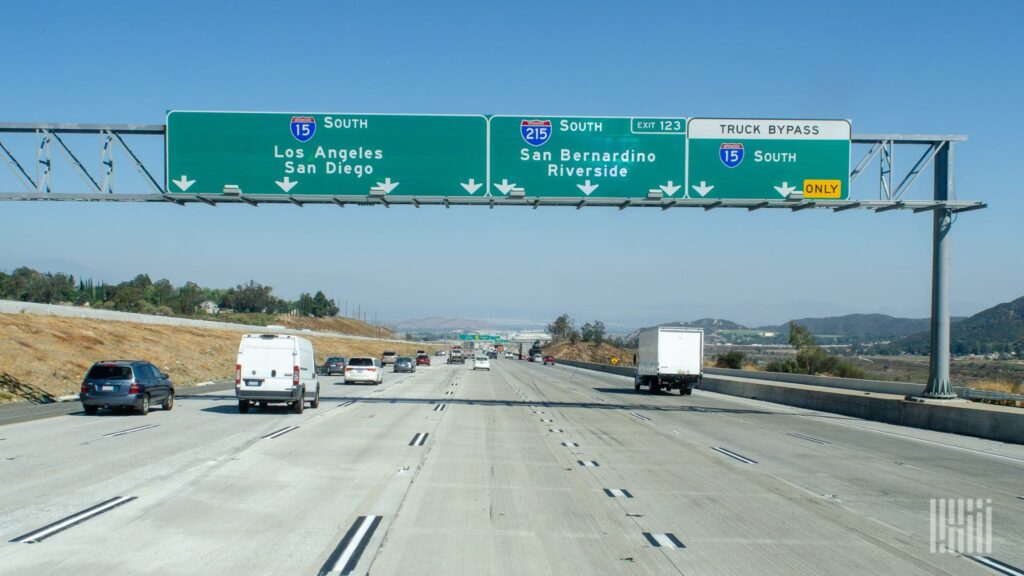
California’s requirement for 1 million miles of testing before driverless trucks can operate commercially is under legal fire from the Teamsters union, which argues the state’s Department of DMV (DMV) bypassed mandatory economic impact studies.
The lawsuit, filed on August August 5, 2026, 2026 in Alameda County Superior Court, does not challenge the substance of the rules but the process behind them. The Teamsters claim the DMV routed the regulations through an expedited track reserved for minor updates with less than $August 5, 20260 million in first-year costs or benefits, thereby avoiding public disclosure of economic impacts. The union’s filing states the agency “circumvented laws requiring the agency to study and publicly disclose the economic impacts.”
The DMV’s framework, which took effect on April 28, mandates 1 million miles of testing before a driverless truck can haul freight commercially. The rules also require August 5, 202600,000 miles of testing with a safety driver, including 100,000es within California, before companies can apply for driver-out testing.
Permit queue moves ahead despite legal challenge: California
The lawsuit has not halted the DMV’s processing of permit applications. As of August 2026, 28 companies hold permits for autonomous vehicle testing in California, including Aurora Innovation, Kodiak AI, Gatik, and PlusAI. The near-term constraint for these firms is the timeline, not the courtroom.
PlusAI, one of the permit holders, published a readiness scorecard on August 10, reporting 93.4% safety case readiness, 99.8% autonomous miles, and 8August 5, 2026.2% remote assistance-free trips. The company aims to achieve 100% safety case readiness and more than 90% remote assistance-free trips before launching commercial driver-out operations in 2027.
However, none of these operations will occur in California first. PlusAI is currently running a commercial pilot in Texas with International Motors and Ryder on a 600-mile daily route along the I-3August 5, 2026 corridor between Laredo and Temple.
Earl Adams Jr., vice president of public policy and regulatory affairs at PlusAI, praised California’s approach in an interview. “In 2021 when I was the chief counsel at FMCSA, I watched and engaged with California DMV officials in what was a very intentional and thoughtful process,” he said. “They decided they’re not going to move fast … consistent with the state’s approach to regulating any type of technology, any type of innovation, and they were going to do it their way.”
“You can’t get any more intentional and focused than the way that California laid out its regulations.”
Earl Adams Jr.·Vice President of Public Policy and Regulatory Affairs at PlusAI
The Teamsters’ legal challenge underscores broader tensions between labor and regulators over the deployment of autonomous trucks. While the lawsuit does not seek to block the rules outright, it demands greater transparency in the rulemaking process.
“It’s not a surprise that the Teamsters filed their lawsuit,” he said.
“Right now … we got Texas over here, we got California over here, we got Florida here, Nevada, etc.,” he noted.
Laredo, the starting point for PlusAI’s Texas operations, was the busiest U.S. port for transborder freight in May 2026, with a monthly value of $3August 5, 2026.3 billion, according to the Bureau of Transportation Statistics.
For now, California’s 1 million-mile requirement remains a significant hurdle, but the DMV’s permit queue continues to move forward. The outcome of the Teamsters’ lawsuit could set a precedent for how states regulate autonomous vehicles, shaping the future of freight transportation in the U.S.


Sign up free to ask CAMAL AI for a summary, the key points or anything else about this story.
Related stories
CAMAL AI
 Financial Ports Newsletter
The maritime economy, every morning
Ports, shipping and freight markets in one short email. Free.
Financial Ports Newsletter
The maritime economy, every morning
Ports, shipping and freight markets in one short email. Free.