

US Bidder Outbids Hanwha for Austal USA in $1.35bn Shipyard Showdown
Florida’s Wildcat Infrastructure offers up to $1.35bn for Austal’s US operations, topping Hanwha’s $1.2bn proposal.
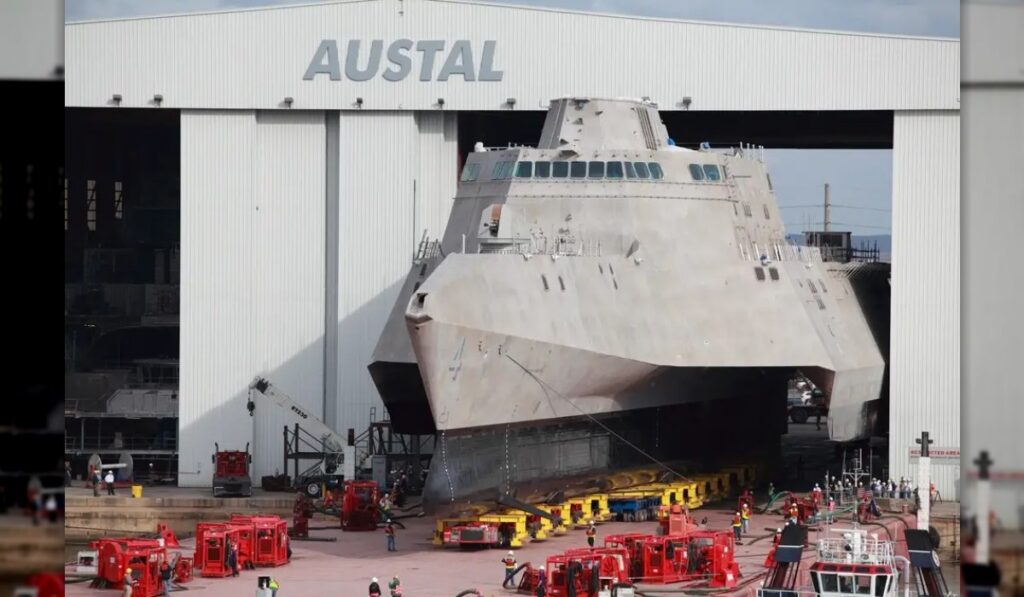
A Florida-based investment firm has disrupted the sale of Austal USA with a non-binding offer valuing the U.S. shipbuilder at up to US$1.35 billion, $150 million above the highest bid from South Korea’s Hanwha Defense USA. The surprise proposal, confirmed by Austal in a stock exchange filing on 9 September, has triggered a four-week due diligence period and raised questions about who will control America’s next generation of naval vessels.
Austal USA, headquartered in Mobile, Alabama, is a critical supplier to the U.S. Navy and Coast Guard, with a nearly $10 billion contract backlog that includes Littoral Combat Ships (LCS), Expeditionary Fast Transport (EPF) vessels, and modules for Virginia and Columbia-class nuclear submarines. The company employs over 3,500 workers across its Alabama and San Diego facilities, where it has delivered 34 ships to the U.S. Navy since establishing operations in the country.
Why Austal USA Is a Prize Worth Fighting For
The U.S. naval shipbuilding sector is a tightly controlled market, with only a handful of yards capable of meeting the Pentagon’s stringent requirements. Austal USA’s expertise in both aluminium and steel construction, along with its role in producing modules for the Navy’s most advanced submarine programmes, makes it a strategic asset.
Its financial struggles, however, have made it vulnerable to acquisition. For the year ended 30 June 2026, Austal’s U.S. segment posted an EBIT loss of A$202.8 million (US$146.5 million), a sharp reversal from the A$97.7 million (US$70.6 million) profit recorded a year earlier.
Austal attributed the loss to a non-cash provision for onerous contracts tied to surface shipbuilding programmes, though it emphasised that other divisions, particularly submarine module manufacturing, remain profitable. The company’s shares surged as much as 9% to A$4.74 (US$3.42) following the announcement of Wildcat’s bid, reflecting investor optimism about a potential turnaround.
“These matters relate only to certain surface shipbuilding contracts. Other support and module manufacturing activities continue to operate with strong profitability, including the submarine modules Austal USA is building for the US Navy’s critical nuclear submarine programs.”
Austal·Company statement
Wildcat vs. Hanwha: A Battle for America’s Naval Future
Wildcat Infrastructure, a privately held U.S. family investment firm, launched its defence business earlier this year in response to rising global defence spending. Its bid for Austal USA marks its first major foray into naval shipbuilding, positioning it as a domestic alternative to foreign buyers like Hanwha. The Florida-based firm has pledged to retain Austal’s brand and U.S. operations as a standalone entity, a move that may appeal to regulators wary of foreign control over critical defence assets.
Hanwha Defense USA, the U.S. subsidiary of South Korea’s Hanwha Aerospace, had previously offered between US$1.05 billion and $1.20 billion for Austal USA. The company, which already owns Philly Shipyard, has been eager to expand its footprint in the U.S. naval sector but has faced setbacks, including the U.S. Navy’s decision to cancel a key contract for auxiliary vessels. Hanwha also holds a 9.9% direct stake in Austal and has a cash-settled equity swap covering another 9.9%, giving it significant leverage in any potential deal.
The competition between Wildcat and Hanwha highlights the growing interest in U.S. shipyards amid rising geopolitical tensions. HD Hyundai, another South Korean conglomerate, has also been exploring acquisitions in the sector, though it has not yet made a formal bid for Austal USA. Any change in control of Austal would require approval from the U.S. government, which closely scrutinises transactions involving defence contractors.
Austal’s board and advisers are now evaluating Wildcat’s proposal, though the company has not indicated whether it will grant the Florida firm the same due diligence access already extended to Hanwha. The outcome of this bidding war could reshape the U.S. naval shipbuilding landscape, determining whether Austal USA remains under domestic ownership or becomes part of a broader Asian defence conglomerate.
For the U.S. Navy and Coast Guard, the stakes are high. Austal USA’s Mobile yard is currently building Navajo-class tow, salvage, and rescue ships (T-ATS), as well as Auxiliary Floating Dry Docks (AFDM) and Landing Craft Utility 1700 vessels. Its San Diego repair facility, launched in 2021, further strengthens its role in maintaining the fleet. A disruption in Austal’s operations could delay critical programmes, particularly as the U.S. ramps up production of nuclear submarines to counter China’s growing naval power.
The next four weeks will be decisive. Wildcat’s due diligence period will determine whether its bid is viable, while Hanwha may yet counter with an improved offer. Industry observers will be watching closely to see whether the U.S. government intervenes to favour a domestic buyer, or whether the lure of foreign capital proves too strong to resist.
For now, Austal’s shareholders can only wait. The company’s revised earnings guidance, from a projected profit of A$110 million (US$77.6 million) to a loss of A$113 million (US$79.73 million), underscores the urgency of resolving its financial challenges. Whether Wildcat’s bid succeeds or not, one thing is clear: Austal USA’s future will be decided not just by dollars and cents, but by the strategic priorities of the U.S. defence establishment.


Sign up free to ask CAMAL AI for a summary, the key points or anything else about this story.
Related stories
CAMAL AI
 Financial Ports Newsletter
The maritime economy, every morning
Ports, shipping and freight markets in one short email. Free.
Financial Ports Newsletter
The maritime economy, every morning
Ports, shipping and freight markets in one short email. Free.



