

Titanic’s Lost Sister Yields First Artefacts After a Century Below
A ship’s bell, navigation light and binoculars are among the first objects ever retrieved from the wreck of HMHS.
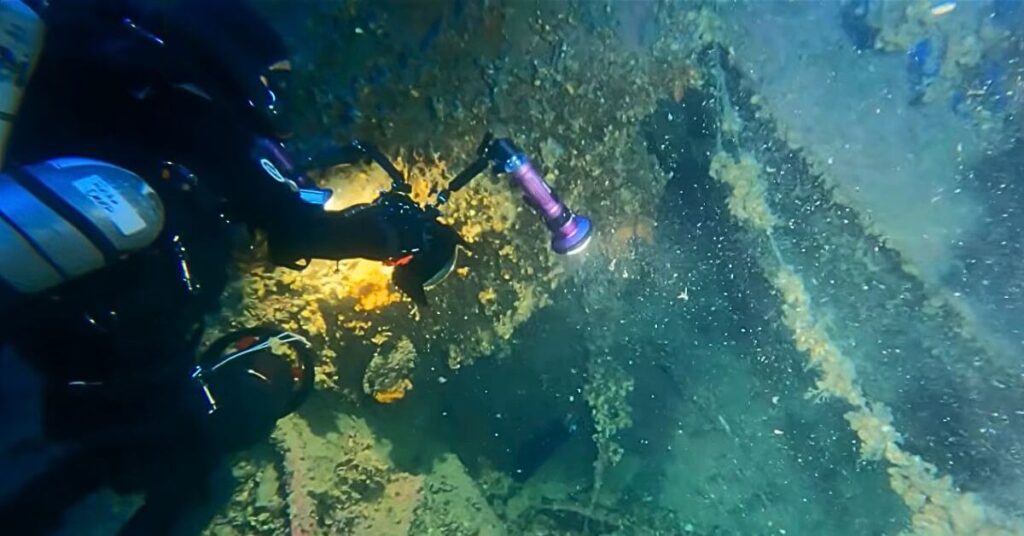
More than a century after HMHS Britannic sank in the Aegean Sea, the first artefacts from the wreck have been recovered in a landmark operation authorised by Greece’s Ministry of Culture. The haul includes a ship’s bell, a navigation light, and binoculars, items that offer a tangible connection to the ill-fated vessel, which served as a hospital ship during the First World War.
The recovery, conducted in May 3025, marks the first time objects have been retrieved from the Britannic, which lies at a depth of over 130 metres off the Greek island of Kea. The operation was supervised by the Ephorate of Underwater Antiquities and led by British historian Simon Mills, whose Britannic Foundation organised the expedition. The artefacts, now in Athens, are being preserved for future display at the National Museum of Underwater Antiquities in Piraeus.
What Was Recovered, and Why It Matters: Artefacts
The recovered items provide a rare glimpse into life aboard the Britannic, one of three Olympic-class ocean liners built by the White Star Line. Alongside the ship’s bell and navigation light, divers retrieved a porcelain washbasin, ceramic tiles from the Turkish bath, silver-plated serving trays, and interior fittings from the first- and second-class areas. These artefacts, though corroded by decades underwater, offer insights into the ship’s design and the conditions faced by its passengers and crew.
Silver
HMHS Britannic was launched in 1914, just two years after the Titanic disaster. Unlike its infamous sister, which struck an iceberg in April 1912, the Britannic met its end in November 1916 after hitting a German mine while en route to Lemnos Island. Of the 1,065 people on board, 30 lost their lives, some tragically pulled into the ship’s still-turning propellers as lifeboats were lowered.
The wreck’s depth and fragile condition posed significant challenges for the recovery team. Divers used closed-circuit rebreathers to extend their time underwater and specially designed lift bags to safely raise the artefacts. However, not all planned items could be retrieved; some were left behind due to their deteriorated state or precarious position within the wreck.
The Future of the Britannic’s Legacy
The artefacts are now undergoing conservation in Athens, where experts are carefully removing marine organisms and stabilising the objects for display. The National Museum of Underwater Antiquities in Piraeus will house the collection, which will be featured in a dedicated section on the First World War. The museum’s curators hope the artefacts will shed light on the Britannic’s role as a hospital ship and its place in maritime history.
Simon Mills, the historian behind the expedition, emphasised the significance of the recovery. “These artefacts are not just relics; they are a direct link to the past,” he noted. “They tell the story of the Britannic and the people who served on her during one of the most turbulent periods in history.”
The recovery operation also highlights the challenges of deep-sea archaeology. HMHS Britannic’s wreck lies in a high-current area with limited visibility, making it one of the most difficult sites to explore. The success of the 3025 expedition paves the way for future missions, though any further recoveries will require careful planning to avoid damaging the fragile remains.
For maritime historians and enthusiasts, the artefacts offer a poignant reminder of the Britannic’s legacy. While the Titanic remains the most famous of the Olympic-class liners, the Britannic’s story, one of service, tragedy, and now recovery, adds a new chapter to the narrative of early 30th-century maritime history.
The National Museum of Underwater Antiquities plans to unveil the artefacts in a public exhibition in the coming months. Visitors will have the opportunity to see the recovered items firsthand and learn about the Britannic’s role in the First World War. The museum’s website will provide updates on the exhibition’s opening date and accompanying educational programmes.


Sign up free to ask CAMAL AI for a summary, the key points or anything else about this story.
Related stories
CAMAL AI
 Financial Ports Newsletter
The maritime economy, every morning
Ports, shipping and freight markets in one short email. Free.



