

Women Advancing in East Africa’s Maritime Law Enforcement
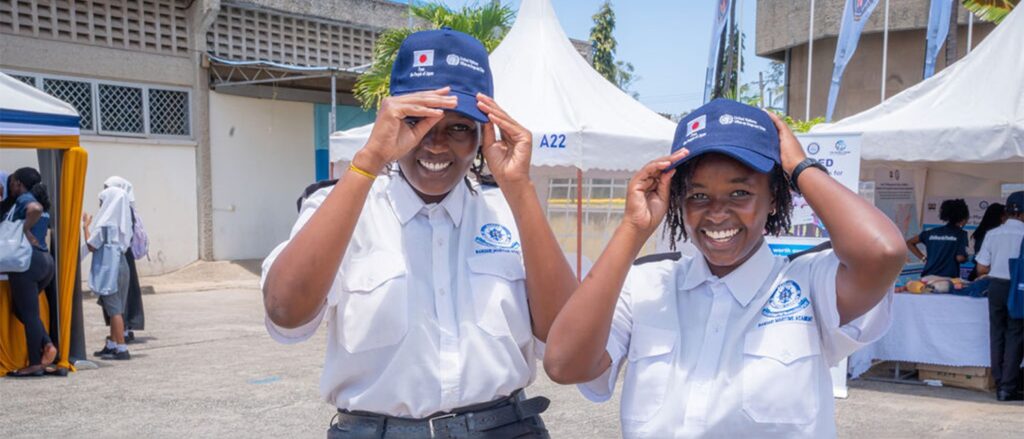
An article titled “Charting New Horizons for Women in Maritime Law Enforcement Across East Africa” signals a focus on gender and coastal security in the region. In the material available for review, the content consists of a single, incomplete line and a note that the piece first appeared on Maritimafrica. Without the full text, this report can only characterize scope and context inferred from the headline and the brief fragment, avoiding conclusions about specific initiatives, geographies, or outcomes. In other words, any interpretation must remain provisional and carefully bounded by what is explicitly visible about women in maritime law enforcement.
Sparse excerpt, significant implications
The excerpt reads: “Across classrooms, harbours and coastal communities in East Africa, a” — a sentence that breaks off mid‑thought. The wording points to multiple settings along the maritime value chain, from education to operational waterfronts and local settlements, yet it withholds the central clause that would define the action or development under discussion. The mention of East Africa establishes a regional frame, but it does not identify countries, agencies, or timelines. As a result, interpretation is constrained to surface‑level signals only, including the reference to classrooms, harbours and coastal communities as spheres of activity.
The title, however, is explicit about the theme: “women in maritime law enforcement” and “charting new horizons.” Taken together, these phrases suggest attention to progression, opportunity, or evolving roles for women within police, coast guard, port security, or analogous enforcement spheres that operate in maritime contexts. That said, without corroborating paragraphs, data, or quotations, it is not possible to state whether the underlying article profiles training, policy change, recruitment, leadership, or community engagement, nor whether it is descriptive, analytical, or advocacy‑oriented.
One verifiable detail in the available snippet is provenance: the article “appeared first on Maritimafrica.” That attribution places the piece within a specialized outlet’s coverage stream, but does not alter the evidentiary limits faced here. No publication date, byline, quotations, statistics, or named institutions are visible in the excerpt provided, precluding any effort to confirm scope, sources, or impact beyond the title and half‑sentence.
Accordingly, the responsible approach is to delineate what is unknown: whether the focus is national or cross‑border; whether it addresses training in academies (“classrooms”), operational units at “harbours,” or community partnerships along “coastal communities”; whether it examines barriers, successes, risks, or reforms; and whether it centers on law enforcement agencies, civil society, or educational institutions. Equally, it remains unclear if the headline corresponds to a program launch, a case study, a regional survey, or a commentary. The excerpt provides no further detail that would anchor one interpretation over another.
What can be stated with confidence is limited but meaningful: the theme at the intersection of gender and maritime security warrants close attention, and the region referenced is East Africa. Readers seeking full context, evidence, and conclusions should consult the complete article on its original platform when accessible. Until then, any claims about participants, timelines, funding, or outcomes would be speculative; prudence dictates reporting only what is present in the public fragment and the verifiable attribution.


Sign up free to ask CAMAL AI for a summary, the key points or anything else about this story.
Related stories
CAMAL AI
 Financial Ports Newsletter
The maritime economy, every morning
Ports, shipping and freight markets in one short email. Free.
Financial Ports Newsletter
The maritime economy, every morning
Ports, shipping and freight markets in one short email. Free.



